







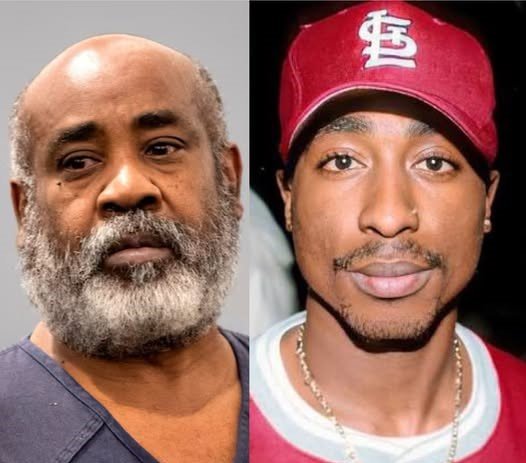
Nearly three decades after Tupac Shakur was killed in a Las Vegas drive-by shooting, the long-running murder case has ended with a guilty verdict.
Duane “Keffe D” Davis, a former gang leader, was found guilty Monday of murder with a deadly weapon in connection with the death of the celebrated rapper.
Shakur was shot on September 7, 1996, while riding in a car in Las Vegas. He was 25 years old and at the height of a career that would eventually make him one of the most influential figures in hip-hop.
Davis, 63, appeared calm as the verdict was delivered in a Las Vegas courtroom. He later said he planned to appeal the conviction.
Prosecutors argued that Davis played a central role in organizing the attack even though he was not the person who pulled the trigger.
During the trial, jurors heard a recording of a 2008 police interview in which Davis acknowledged being inside the vehicle used in the shooting. He said, however, that he did not fire the shots that struck Shakur.
According to prosecutors, Davis provided the weapon and directed his nephew, Orlando Anderson, to carry out the shooting.
Anderson had been identified by investigators as the alleged gunman, but he consistently denied having any role in Shakur’s killing. He died in an unrelated shooting in 2008.
A murder that remained unsolved for decades
Shakur’s killing became one of the most closely followed unsolved cases in American popular culture. For years, the lack of an arrest fueled numerous theories and speculation surrounding what happened that night.
Prosecutors said the shooting was motivated by retaliation following a confrontation in Las Vegas earlier that evening involving Anderson, Shakur and members of their respective groups.
The case unfolded against the backdrop of the bitter East Coast-West Coast rivalry that dominated hip-hop during the 1990s. Gang affiliations involving the Bloods and Crips also played a significant role in the tensions surrounding the rap scene.
Davis had previously been associated with the South Side Compton Crips.
The verdict produced an emotional reaction inside and outside the courtroom. Members of Shakur’s family held hands, hugged and cried as the guilty verdict was announced.
Outside the courthouse, supporters and longtime fans also celebrated the development, with some cheering while others became emotional.
Shakur’s legacy has remained strong despite his death. He has sold more than 75 million records worldwide, and his music and influence continue to shape hip-hop decades after his death.
The conviction represents the first successful prosecution directly tied to the murder of the rap icon.