


An innovative farming project in Senegal is combining rice cultivation with fish farming to improve food production, household incomes and public health.
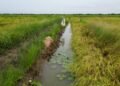
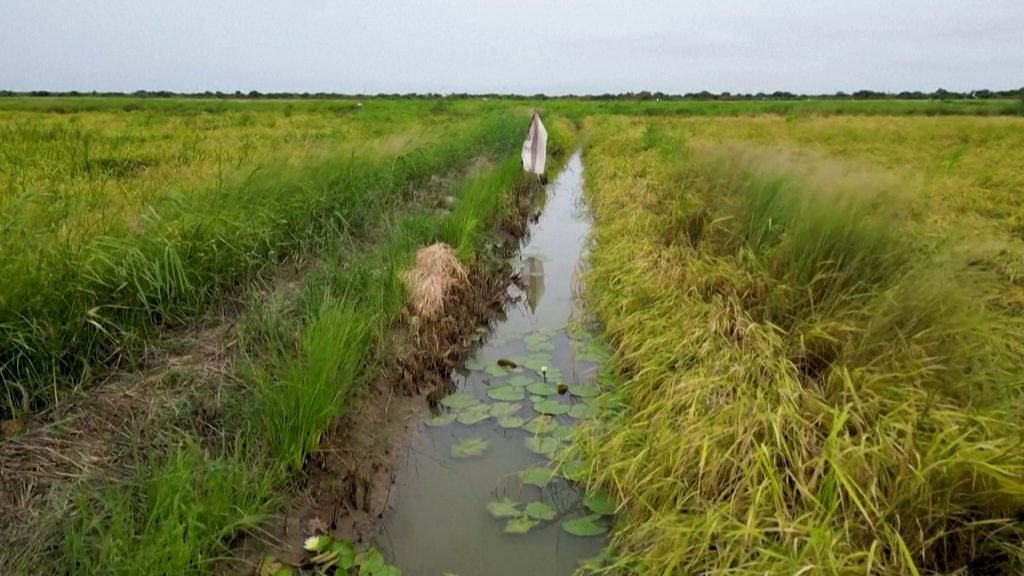
Researchers are introducing native fish into rice paddies in rural northern Senegal. The fish feed on freshwater snails and insects that can affect farming communities.
At the same time, their waste adds nutrients to the soil. Farmers can also harvest the fish later for food or sale.

For rice farmer Abdoulaye Diop, the results are easy to notice.
“The fields where there are fish are always greener than those without them.”
Fish Target Disease-Carrying Snails
The project is also addressing schistosomiasis, a parasitic disease linked to freshwater snails.
Rice farmers often spend many hours working in flooded fields. As a result, they can face increased exposure to contaminated freshwater.
Researchers worked with 405 households in northern Senegal to test the rice-fish system.
The trials used native Nile tilapia and African bonytongue. Researchers found that the fish reduced snail and insect populations.
The system also improved soil nutrients and increased rice yields by more than 25 percent.
One Field, Two Sources of Food
The approach allows farmers to produce rice and fish in the same field.
Fish benefit from the flooded rice environment. In return, they can help control some pests and contribute nutrients to the soil.
Farmers can then harvest the fish at the end of the production cycle.
They may eat the fish themselves or sell them in local markets.
That creates an additional source of protein and income for rural families.
A Low-Input Farming Model
Researchers say the system could offer a practical, low-input option for farming communities.
Instead of expanding farmland, farmers can increase the value of existing fields by combining different forms of production.
The benefits could include:
- Higher rice yields
- Additional fish production
- More nutrients in the soil
- Lower snail populations
- Reduced disease-transmission risks
- Additional household income
The model therefore links agriculture with public health and environmental sustainability.
Supporting Senegal’s Food-Sovereignty Goals
The experiment also fits into Senegal’s wider push for stronger domestic food production.
President Bassirou Diomaye Faye has promoted greater use of science, technology and innovation to strengthen food sovereignty.
His administration has also called for stronger agricultural markets, better distribution networks and increased processing of locally produced goods.
Improved storage and conservation facilities are another part of the strategy.
Agriculture and the Blue Economy
Senegal is also looking to expand its blue economy while protecting natural resources.
Aquaculture is part of that effort. The government has highlighted fish farming, agricultural cooperatives, modern fishing systems and improved post-harvest facilities as areas with economic potential.
The rice-fish experiment brings several of these priorities together.
It combines food production with aquaculture while creating opportunities for rural households.
A Potential Model for Rural Development
The fish swimming through Senegal’s rice paddies could become more than a scientific experiment.
The approach shows how one farming system can address several challenges at once.
It can produce more food, create additional income and improve soil quality. It may also help reduce exposure to disease-carrying snails.
For Senegal’s rural communities, that combination could make rice farming more productive, resilient and profitable.