






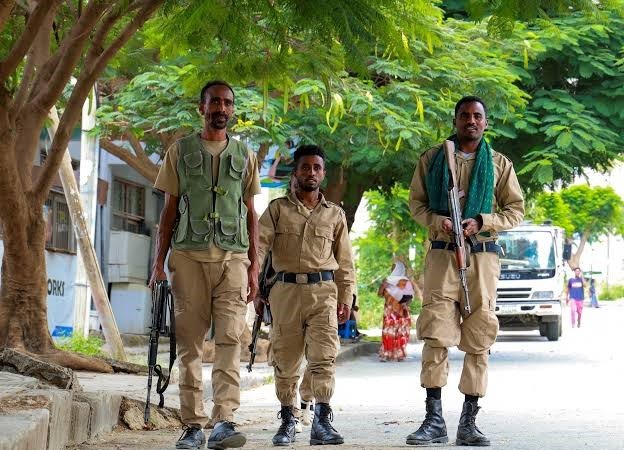
Heavy fighting has continued across northern Ethiopia, raising fresh concerns about the safety of civilians and the possibility of another major humanitarian crisis in the conflict-affected region.
Clashes between forces aligned with the Tigray People’s Liberation Front (TPLF) and Ethiopia’s federal government have intensified since September 22, with violence spreading beyond Tigray into neighbouring Afar and Amhara regions. Human Rights Watch has urged all sides to protect civilians and civilian infrastructure.
The TPLF has taken control of several airports and launched operations in neighbouring areas. Tigrayan authorities have described their actions as a defensive war against Prime Minister Abiy Ahmed’s federal government.
The renewed hostilities have already triggered population displacement. A humanitarian source cited in reports estimated that at least 150,000 people may have been displaced in Afar, although precise figures remain difficult to establish because communications and access to affected areas have been disrupted.
Humanitarian concerns grow
Human Rights Watch has warned that the escalation is taking place against a backdrop of previous atrocities and unresolved humanitarian needs from Ethiopia’s earlier northern conflict.
Laetitia Bader, deputy Africa director at Human Rights Watch, said renewed fighting was increasing the risk to civilians at a time when international attention to Ethiopia had declined amid other crises in the region.
The organisation has also raised concerns about attacks affecting civilian areas. In a separate September 25 report, HRW said an apparent Ethiopian government airstrike on a residential compound in Mekelle on August 20 injured 13 civilians, including seven children, and called for an investigation into the attack as a possible war crime.
Accusations of foreign involvement
Ethiopia’s army chief, Field Marshal Birhanu Jula, has accused Eritrea and Sudan of supporting armed groups fighting government forces.
He said Ethiopian forces were confronting groups allegedly organised with the backing of external actors.
The accusations have not been independently established, while Eritrea has previously denied allegations of supporting Ethiopian rebels. Reuters reported that the Ethiopian government has accused the anti-government alliance of receiving outside support.
The TPLF is part of a seven-group alliance formed this month by armed and opposition groups seeking to challenge Abiy’s government. The coalition includes groups from several regions of Ethiopia, although analysts have questioned how effectively the diverse groups can coordinate.
Communications disrupted
The security situation has also made independent reporting increasingly difficult.
Communications in Tigray have been severely disrupted, while the headquarters of Tigrai TV in Mekelle was reportedly struck by a drone.
The disruptions have raised fears among residents that the region could again experience the isolation seen during the 2020–2022 conflict, when access to electricity, banking services and humanitarian assistance was severely affected.
UN Secretary-General António Guterres has expressed concern over the renewed violence, particularly reports involving drones and civilian harm.
The latest escalation has renewed international calls for de-escalation and protection of civilians as Ethiopia faces the risk of further displacement and humanitarian deterioration.
BBC