






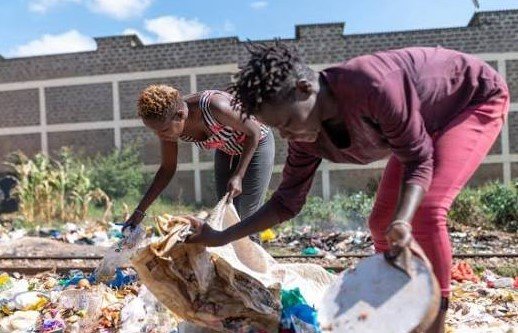
For Charity Atudo, every day begins with the same question: how will she provide food for her six children?
A widow living in Lokoja, Kogi State, Charity has turned to collecting discarded cans, plastic bottles and other recyclable materials as a way of keeping her family afloat amid Nigeria’s difficult economic conditions.
She walks through different parts of the city in search of items that residents, restaurants, supermarkets and businesses have thrown away.
After gathering enough materials, she takes them to dealers and sells them for whatever income the day’s collection can generate.
On a good day, Charity says she can make about ₦5,000, although her earnings depend largely on the quantity of recyclable materials she finds.
“I can collect the cans. I see big cans and bottles that people use to drink. If I go to restaurants, sometimes I go to supermarkets and pick up the cans. I take them to the market and sell them.”
The work is far from easy. Charity spends hours walking around the city and searching through discarded materials, often under intense heat and in the presence of people passing by.
Yet she continues because the money, however small, helps put food on the table for her children.
Charity left school after circumstances prevented her from continuing her education. Her situation became even more difficult following the death of her husband, leaving her to shoulder the responsibility of raising six children alone.
The nature of her work has also exposed her to stigma. Searching through discarded materials is often viewed negatively by members of society, but Charity says she has chosen to continue rather than allow embarrassment to prevent her from providing for her family.
People familiar with her situation describe her as hardworking and determined.
One person who spoke about her struggle said Charity remains committed to caring for her children despite the limited income from waste collection.
“She is working hard in order to feed those children. Even though the income is not big, she is taking care of them from picking those cans.”
A livelihood that also helps the environment
Charity’s daily routine provides more than an income for her household. It also removes recyclable materials from the streets and channels them into the recycling chain.
Plastic bottles, cans and other waste materials that are left unmanaged can create environmental problems. Waste dumped on roads and in drainage channels can obstruct waterways and contribute to flooding.
Environmental experts have also warned that some plastic materials can remain in the environment for hundreds of years, making proper waste management and recycling increasingly important.
By collecting materials that might otherwise remain scattered around the city, Charity is contributing in a small but practical way to waste recovery.
But for the widow, environmental benefits are secondary to the immediate needs of her children.
The money she earns goes towards food, cooking oil and other household necessities.
“I am helping myself. I am taking care of myself,” she said.
Charity’s experience reflects the difficult choices some vulnerable Nigerian families face as they search for ways to survive.
For her, discarded cans and bottles are not simply waste. They have become a source of income, a means of feeding six children and a daily reminder that even difficult work can provide a lifeline when other opportunities are limited.