







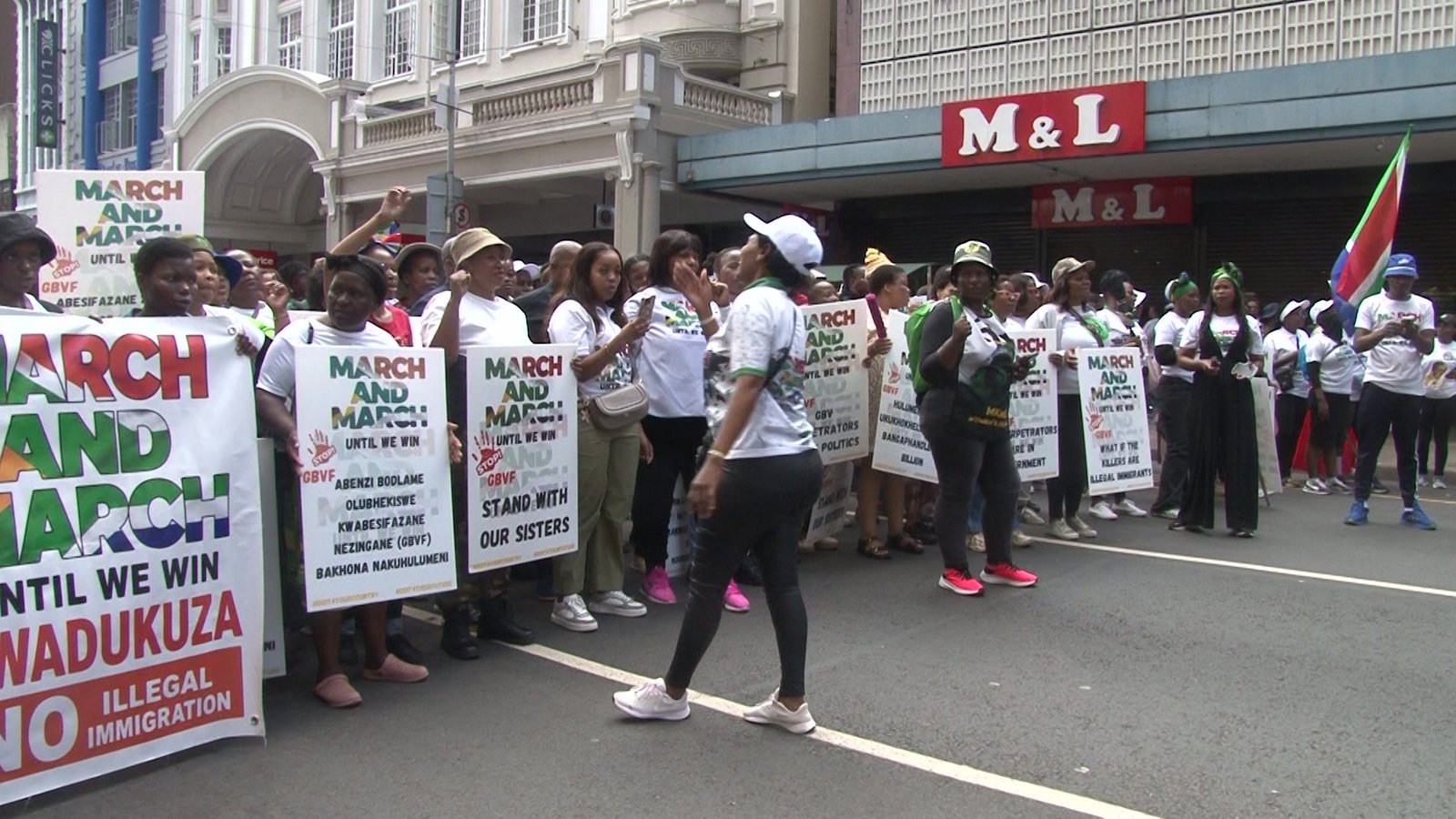
Hundreds of people marched through Durban on Wednesday, September 30, demanding stronger government action against undocumented immigration in South Africa.
The demonstration was organised by March and March, an anti-migrant movement that had designated September 30 as a deadline for undocumented foreign nationals to leave the country.
The date was announced by the group in August following months of demonstrations over undocumented immigration.
Protest Follows Earlier Nationwide Mobilisation
The Durban march followed a larger mobilisation on June 30, when thousands of people demonstrated in several South African cities.
March and March had warned that it would organise further protests if undocumented migrants did not leave the country.
The June demonstrations were accompanied by violence in some areas, increasing concerns among migrant communities and prompting some foreign nationals to seek assistance or leave areas where tensions were high.
Migrants Raise Safety Concerns
Durban has emerged as one of the areas where tensions have been particularly visible.
Refugees and migrants living in makeshift conditions had expressed concerns about their safety ahead of the September 30 protest.
Some migrants were moved to the Lindela Repatriation Centre after spending months living on the streets, while others remained in Durban.
The situation has heightened concerns among migrant and refugee communities about possible intimidation or attacks during periods of anti-immigration mobilisation.
Protesters Cite Immigration and Social Concerns
March and March has linked its campaign to concerns about undocumented immigration, crime and pressure on communities and public services.
However, the organisation also said the September 30 demonstration would address gender-based violence and femicide.
The group called on men to participate in efforts against violence against women, making the issue part of the wider programme of the demonstration.
Activists Challenge Anti-Migrant Claims
The movement’s position has faced criticism from peace activists and others who dispute claims that migrants are responsible for South Africa’s broader social problems.
Peace activist Ela Gandhi said ahead of the demonstration that claims blaming migrants for violence were untrue.
Her comments reflected a broader argument that problems such as crime, unemployment and pressure on public services should not automatically be attributed to foreign nationals.
Immigration Debate Intensifies
The latest demonstration has once again placed South Africa’s immigration policy and treatment of foreign nationals at the centre of public debate.
Protesters are calling for tougher enforcement against undocumented migration, while migrant and refugee communities are seeking protection from intimidation and violence.
Authorities face the challenge of allowing lawful peaceful demonstrations while protecting residents and preventing attacks against foreign nationals.
The September 30 mobilisation is therefore likely to add further pressure to an already contentious national discussion over immigration enforcement, public services, crime and the rights of migrants.