







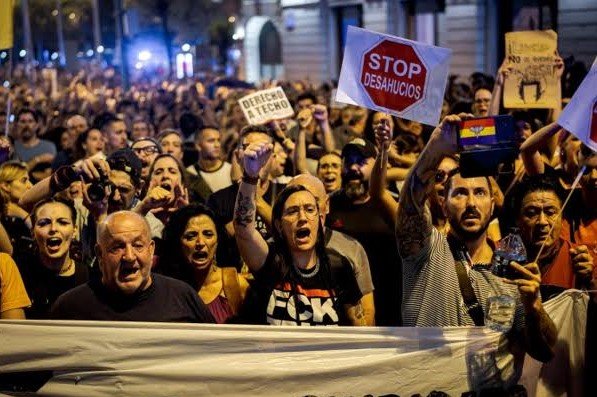
Thousands of people have taken to the streets across Spain to demand stronger tenant protections, lower rents and an end to evictions after the country’s parliament rejected emergency housing measures proposed by Prime Minister Pedro Sánchez’s coalition government.
Around 50 demonstrations were planned for Saturday in major cities, including Madrid, Barcelona and Valencia, as public anger over rising housing costs continued to grow.
In Valencia, a spokesperson for the city’s Tenants’ Union said frustration over the housing crisis was widespread. Some demonstrators reportedly clashed with police near the Palau de les Arts Reina Sofía, where a real estate summit was taking place.
Spanish media reported that some protesters removed barriers and threw objects at police officers, who responded with rubber bullets.
The demonstrations followed nationwide outrage over the eviction of an 87-year-old woman last month after she reportedly struggled to pay a substantial increase in rent. The incident intensified calls for government action to make housing more affordable and protect vulnerable tenants.
Protesters are demanding rent reductions, stronger safeguards against eviction and restrictions on investment funds purchasing residential properties. The government has referred to some of these investors as “vulture funds.”
Madrid Sees Major Demonstration
Madrid hosted one of the largest protests, with estimates of attendance varying significantly.
The Madrid Tenants’ Union estimated that approximately 500,000 people participated, while government officials put the figure at around 70,000.
Demonstrators also established a temporary encampment at Puerta del Sol, one of the capital’s main public squares, where some protesters had reportedly been staying for several days.
Speaking ahead of the demonstration, a protester identified as David told Spanish public broadcaster RTVE that participants were motivated by their determination to secure change.
The Madrid Tenants’ Union criticised the failure of the proposed housing legislation, arguing that the parliamentary decision would worsen a crisis affecting working-class households. The group has also called for a general strike over housing conditions.
Parliament Rejects Emergency Housing Proposals
The legislation presented by Sánchez’s minority coalition government was divided into two separate decrees.
The first included proposals to suspend evictions involving vulnerable tenants until 2030, extend certain rental contracts by two years, increase taxes on tourist apartments and restrict residential property purchases by investment funds.
The second decree proposed the automatic renewal of rental contracts, a measure supported by sections of the political left and tenant organisations.
However, lawmakers rejected both proposals. The first decree was defeated by 178 votes to 172, while the second was rejected by 184 votes to 166.
The conservative People’s Party and the far-right Vox party had already announced their opposition to the measures. The government therefore needed support from smaller nationalist parties to secure parliamentary approval.
The defeat has intensified speculation about Sánchez’s political options, including the possibility of an early general election. The next election was not scheduled until the following summer.
Spain’s housing crisis has become a major source of public debate, with tenants’ groups continuing to demand policies that address rental affordability, housing security and access to accommodation.