






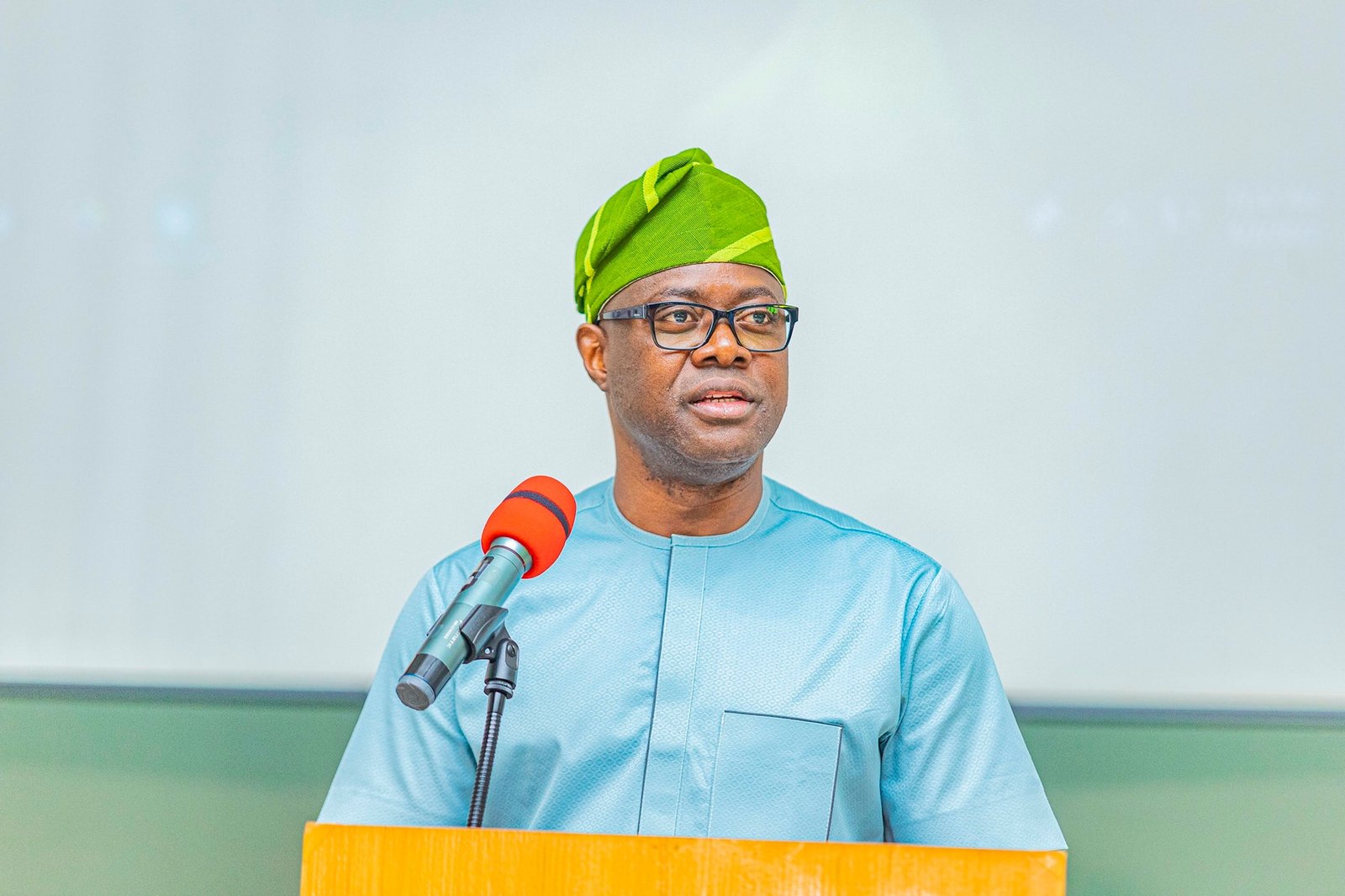
As Nigeria continues to grapple with economic hardship, insecurity, education challenges and concerns about governance, Oyo State Governor and Allied Peoples Movement (APM) presidential candidate, Seyi Makinde, has presented his proposed roadmap for national transformation under the banner of the Reset Nigeria Agenda.
Makinde unveiled the manifesto in Abuja on Wednesday, November 4, alongside his running mate, Lawal Musa Daura.
The agenda is built around four major pillars: economic restructuring, security reform, education transformation and a reset of Nigeria’s socio-political system.
Although the proposals outline the direction Makinde hopes to take if elected president, attention is increasingly turning to a critical question: what would his administration actually accomplish within its first 100 days in office?
A manifesto may communicate a candidate’s vision, but voters also need to understand how the promises will be funded, implemented and measured.
The published document identifies key priorities but does not provide a detailed timetable outlining specific first-100-days actions.
Economic Reset: Tackling the Cost of Living
On the economy, Makinde proposes reducing the structural costs that make production, transportation and business operations expensive.
His plan emphasises infrastructure connecting farmers to markets, businesses to consumers and workers to employment opportunities.
It also proposes reducing unnecessary administrative procedures and improving information-sharing among public institutions.
However, translating these proposals into tangible economic relief would require clear priorities, funding arrangements and effective partnerships with state governments and the private sector.
Nigerians would want to know which projects would receive immediate attention and how the proposed reforms would affect food prices, transportation costs, employment and business operations.
Security Reform: Intelligence and Accountability
Security is another major pillar of the Reset Nigeria Agenda.
Makinde proposes strengthening intelligence gathering, improving cooperation among security agencies and establishing clearer systems for responding to threats.
He also advocates reviewing major security incidents to identify operational failures and prevent similar occurrences.
The Oyo State administration points to its emergency response number, 615, control room, CCTV infrastructure and coordination among security agencies as examples of initiatives that could inform a wider national approach.
However, implementing a national security framework would involve significantly more complex coordination between federal security agencies, state authorities and local communities.
A successful plan would need to explain how intelligence would be shared, who would be responsible for responding to threats and how security performance would be independently assessed.
Education: Measuring Learning Outcomes
In education, Makinde argues that Nigeria should measure the success of its schools by what children actually learn rather than relying only on enrolment figures or the number of buildings constructed.
His proposals include addressing the reasons children remain outside the education system, including poverty, insecurity and long distances to schools.
He also advocates stronger technical and vocational education, apprenticeships and better connections between education and employment opportunities.
Makinde cites the removal of the ₦3,000 levy in Oyo public secondary schools as an example of his administration’s approach.
At the national level, however, education reform would require extensive cooperation with state governments and relevant education authorities because the challenges differ considerably across the country.
Governance: Devolution and Institutional Reform
The fourth pillar focuses on restructuring Nigeria’s political and administrative system.
Makinde argues that excessive concentration of power at the federal level limits the ability of states to address their development priorities.
His proposals include devolving more responsibilities to states and reviewing the division of powers over areas such as security and natural resources.
However, significant changes to Nigeria’s constitutional arrangements would require legislative action, cooperation among federal and state institutions and, where necessary, constitutional amendments.
These reforms cannot be achieved through presidential executive orders alone.
The First 100 Days: From Promises to Performance
The first 100 days of a Makinde presidency would provide an early opportunity to demonstrate whether the Reset Nigeria Agenda is more than a collection of policy proposals.
A credible implementation plan would need to identify immediate priorities, responsible institutions, funding requirements and realistic deadlines.
It should also distinguish between reforms that can begin through executive action and those requiring approval from the National Assembly, constitutional amendments or cooperation with state governments.
Regular public updates would be equally important, allowing Nigerians to assess progress, identify delays and hold the administration accountable.
Ultimately, the success of the Reset Nigeria Agenda would not be determined by the number of promises contained in its manifesto, but by whether those promises translate into measurable improvements in people’s lives.
For Nigerian voters, the central question remains: can Seyi Makinde turn his vision for a reset Nigeria into practical results, beginning with his first 100 days in office?