






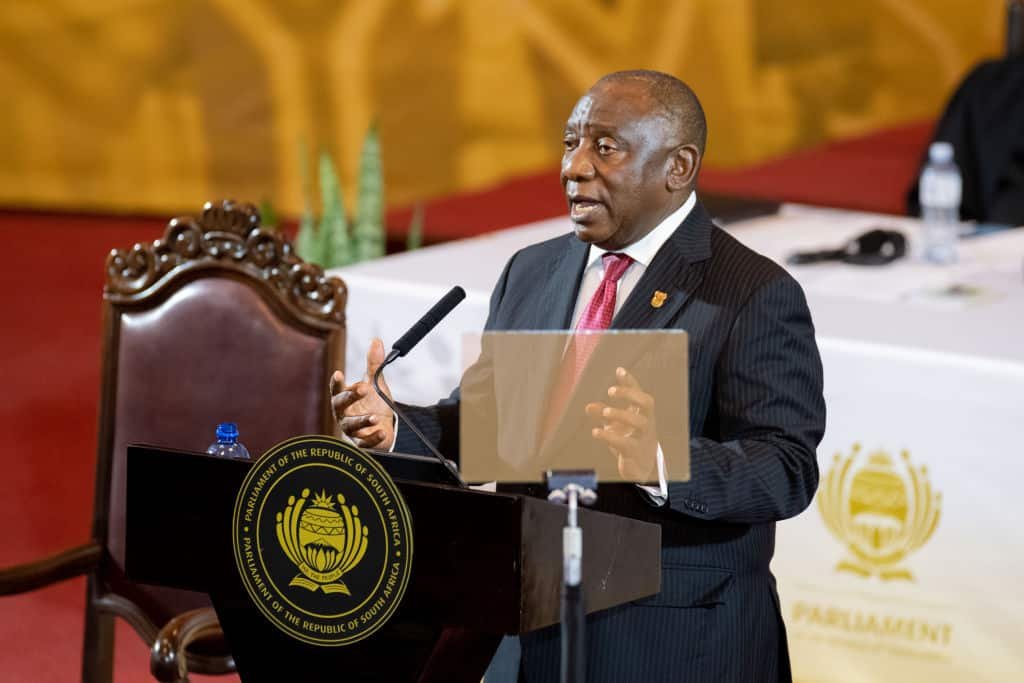
South African President Cyril Ramaphosa has called on political parties to put communities first during coalition negotiations following the African National Congress’ worst-ever performance in local government elections.
Ramaphosa made the appeal on Sunday after the Electoral Commission announced the results of the 2026 municipal elections, which left many municipalities facing coalition negotiations.
“The people have spoken. Their verdict must be respected. Their concerns must be heard and their expectations must now be met,” the president said.
He urged political parties to ensure that disagreements over political power do not disrupt essential services or prevent local governments from meeting the needs of residents.
ANC records its weakest electoral performance
The ANC, which has governed South Africa nationally since the end of apartheid, emerged as the largest party but suffered a major decline in support.
According to the Electoral Commission’s official declaration, the ANC received 30.89 per cent of the vote, while the Democratic Alliance (DA) came second with 24.60 per cent.
The uMkhonto weSizwe Party secured 9.61 per cent, followed by the Economic Freedom Fighters (EFF) with 6.25 per cent and ActionSA with 5.68 per cent.
The result represents a significant setback for the ANC, whose support has declined amid public concerns over unemployment, corruption, crime and inadequate municipal services.
Coalition negotiations ahead
With no party securing an outright majority in many municipalities, political parties now face negotiations to establish governing coalitions.
The DA secured outright control in 12 municipalities, including its stronghold of Cape Town, while the ANC won outright control in 51 municipalities, according to the Electoral Commission.
Newly elected municipal councils are required to hold their first meetings within 14 days of the formal declaration of results. During those meetings, councillors will elect mayors and other office-bearers.
The negotiations are expected to shape the leadership of several major cities and determine how local governments will operate over the next five years.
Voter turnout increases
Electoral Commission chairperson Mosotho Moepya said voter turnout reached approximately 52 per cent, representing an increase of about six percentage points compared with the 2021 municipal elections.
However, voting will have to be repeated at one polling station in the Northern Cape after ballot papers were destroyed during an incident involving political party supporters.
Service delivery remains a major concern
Issues including water shortages, electricity interruptions, unemployment and poor municipal services featured prominently during the election campaign.
Ramaphosa’s appeal places pressure on political parties to ensure that coalition negotiations produce stable administrations capable of addressing residents’ concerns.
For millions of South Africans, the real test of the election will be whether the new municipal leadership can improve living conditions and deliver reliable basic services.