






Only one survivor has been reported after a wooden boat carrying migrants towards Spain’s Canary Islands capsized off Senegal’s northwestern coast.
The death toll from a migrant boat disaster off the coast of Senegal has risen to 39 after rescuers recovered four additional bodies, authorities have confirmed.
The wooden fishing boat, known locally as a pirogue, was carrying people attempting to reach Spain’s Canary Islands when it capsized in the waters near Lompoul, in Senegal’s northwestern Louga region.
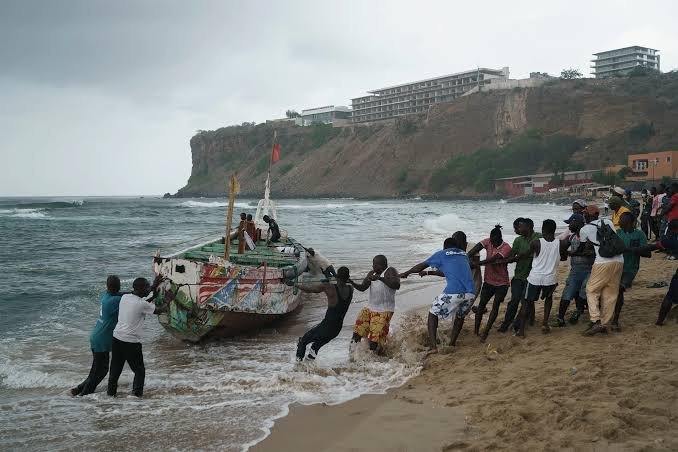
Footage from the scene shows the badly damaged vessel lying on a beach, with its hull broken into two sections.
Emergency teams have spent three days searching an approximately 25-kilometre stretch of coastline for victims and possible survivors. Only one person has so far been reported rescued alive, while the exact number of passengers aboard the boat remains unknown.
Families struggle to identify victims
Louga Regional Governor Ndeye Nguenar Mbodj said four additional bodies were recovered on Monday, raising the confirmed death toll from 35 to 39.
The governor said several victims had been identified and their remains handed over to relatives. The latest official update from Senegal’s Press Agency reported that 24 bodies had been identified and returned to families, while other remains were still awaiting identification.
Authorities also requested permission to bury some bodies locally because of their advanced state of decomposition and difficulties preserving the remains.
The victims were reportedly from communities in the surrounding region, including Thieppe and Potou.
A judicial investigation has been opened to establish the circumstances surrounding the disaster.
Dangerous journey towards Europe
The tragedy has once again highlighted the dangers of the Atlantic migration route linking West Africa to Spain’s Canary Islands.
Thousands of people attempt the crossing in search of employment and better living conditions in Europe. Many journeys are made in overcrowded wooden fishing boats that are often unsuitable for long-distance travel across the Atlantic.
The route is particularly dangerous because of rough seas, long distances and the risks associated with poorly equipped vessels.
Tighter coastal surveillance and patrols have also been cited as factors pushing some migrant boats towards longer and more hazardous routes.
The latest disaster adds to the continuing human cost of irregular migration across the Atlantic, with families in Senegal mourning relatives whose journeys in search of a better future ended in tragedy.