







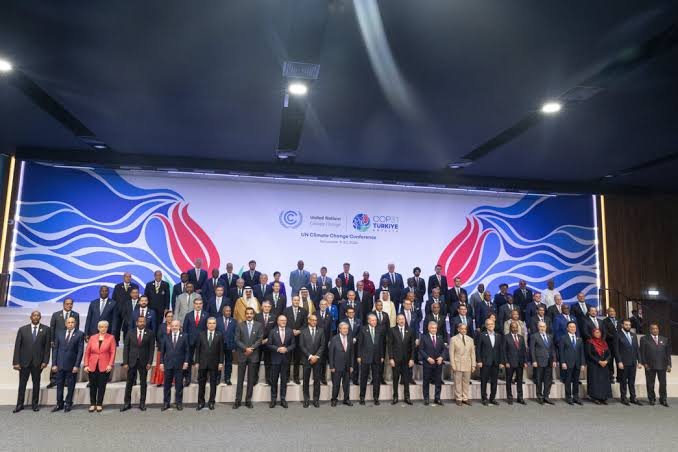
Negotiations at the United Nations COP31 climate summit in Antalya, Turkey, have faced another major setback as countries remain divided over whether a final agreement should include a commitment to reduce dependence on fossil fuels.
Delegates were expected to resume discussions on Sunday after negotiations extended beyond the original Friday deadline, with countries struggling to reach a consensus on measures to address global warming.
The disagreement centres on the omission of coal, oil and gas from successive draft agreements, raising concerns among countries pushing for a clear commitment to move away from fossil fuels.
A third and reportedly final draft was circulated to delegates in the early hours of Sunday. Countries were given until 6:00 a.m. local time to raise objections before a scheduled meeting at 9:00 a.m. to consider its approval.
Disagreement Over Fossil Fuels Divides Countries
An earlier draft agreement presented during the summit included a proposal for a faster transition away from fossil fuels.
However, a revised version released on Thursday removed references to coal, oil and gas, triggering strong objections from several countries and raising the possibility of a walkout.
The European Union, Panama, Solomon Islands and Côte d’Ivoire were among those seeking to restore a commitment on reducing fossil fuel dependence.
On the other side of the disagreement, Saudi Arabia and other fossil fuel-producing countries opposed the inclusion of such language.
The dispute has become one of the most difficult issues facing negotiators at the summit.
EU and Saudi Arabia Seek Compromise
In an attempt to prevent the negotiations from collapsing, representatives of the European Union and Saudi Arabia were brought together on Saturday to explore possible compromises.
The two sides have been deeply divided over how the final climate agreement should address the future of fossil fuels.
COP31 President and Turkish Environment Minister Murat Kurum told delegates early on Sunday that he believed outstanding concerns had been addressed.
He urged countries to examine the proposed decision carefully, expressing confidence that negotiations were moving closer to an agreement.
“We are closer than ever to agreement on the remaining issues,” Kurum said.
Pacific Nations Describe Fossil Fuel Language as a Red Line
Several countries have insisted that any meaningful climate agreement must recognise fossil fuels as a major contributor to global warming.
Panama’s Environment Minister, Juan Carlos Navarro, said it was unacceptable for a COP agreement to avoid mentioning fossil fuels.
Tuvalu’s Climate Minister, Maina Talia, also described the issue as a red line for his country, arguing that fossil fuel emissions address the root cause of the climate crisis.
Low-lying island nations have repeatedly raised concerns about the consequences of rising sea levels and extreme weather, making the future of fossil fuel use particularly important to their climate negotiations.
Failure to Reach Consensus Could Delay Agreement
Under the UN climate negotiation process, major decisions require consensus among participating countries.
If delegates fail to approve the proposed agreement, the summit could end without a final deal, with negotiations potentially reconvened next year.
Such an outcome would be unusual. The report notes that the UN climate process has experienced this situation only once since the annual COP meetings began in 1995.
With negotiating teams already adjusting travel arrangements and the original deadline having passed, the pressure is increasing on delegates to reach an acceptable compromise.
The outcome of the final discussions could determine whether COP31 produces a new global climate agreement or ends with countries still divided over the future of fossil fuels.