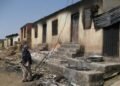




The deaths of 37 people held in the custody of the Nigeria Security and Civil Defence Corps (NSCDC) in Niger State have raised serious questions about detention conditions, medical care, accountability and the circumstances surrounding their final hours.
The detainees were among people arrested during operations against suspected illegal mining in Niger State on September 15 and 16, 2026.
By the early hours of September 17, 37 detainees had been found dead at an NSCDC facility in Minna.

The circumstances surrounding the deaths remain under investigation, and authorities have yet to establish a definitive medical cause.
What happened?
According to accounts from the Niger State government, 67 artisanal miners and people suspected of illegal mining were arrested during operations in areas including M.I. Wushishi Housing Estate and Lukoto.
The detainees were subsequently taken to an NSCDC facility in Minna.
Thirty-seven of them were later found dead.
The victims should be described as suspected illegal miners or detainees arrested on suspicion of illegal mining. Their detention did not, by itself, establish criminal guilt, as that would ultimately require determination through the judicial process.
Some reports have also indicated that teenagers were among those detained, making questions about age verification and child-protection procedures particularly important to the investigation.
The cause of death remains unknown
One of the most important facts in the case is that there is currently no confirmed explanation for the deaths.
The NSCDC initially referred to a possible disease outbreak but later stressed that the actual cause had not been established and that medical and laboratory examinations would be necessary.
Other accounts have raised different possibilities.
Governor Mohammed Umaru Bago said investigators were considering whether overcrowding, poor ventilation or exposure to hazardous substances associated with mining could have contributed to the deaths.
An intelligence report cited in media coverage also raised overcrowding and inadequate ventilation as possible factors.
Survivors reportedly described the detention room as extremely crowded. One survivor, Dauda Shehu, said detainees were calling for help as people began collapsing.
Another allegation claimed that a substance was sprayed inside the facility shortly before some detainees became ill. That claim remains an allegation and requires independent forensic verification.
No conclusion should be drawn before the forensic evidence
The competing accounts make one point particularly important for journalists and the public:
The cause of death must not be declared as fact until the medical and forensic investigations establish it.
It would therefore be premature to report that the detainees were poisoned, suffocated, deliberately killed or died from an infectious disease as an established fact.
Autopsy findings, laboratory analysis, medical records, witness testimony, custody records and other available evidence will be critical.
Government orders investigations
President Bola Ahmed Tinubu has ordered investigations into the deaths and directed that anyone found responsible should face the law.
The Federal Ministry of Interior also announced an independent 10-member panel headed by retired DSS Deputy Director-General Jonathan Kure.
The panel was given a two-week mandate to investigate the circumstances surrounding the arrests and deaths.
Its responsibilities include identifying the deceased, examining the conditions of their arrest and detention, determining the medical and forensic cause of death and establishing whether negligence, misconduct or other forms of responsibility were involved.
Interior Minister Olubunmi Tunji-Ojo also warned against the destruction or concealment of evidence and intimidation of witnesses.
Security personnel suspended
Twenty NSCDC personnel were initially suspended in connection with the incident, with the number later increasing to 24.
Among those affected was Niger State NSCDC Commandant Suberu Siyaka Aniviye.
However, suspension should not be interpreted as evidence that any individual caused the deaths.
It is an administrative measure pending the outcome of investigations.
The NSCDC Commandant General, Ahmed Audi, ordered the Corps’ flag to be flown at half-mast for three days and said personnel found culpable would face disciplinary action and possible prosecution.
Niger State launches its own inquiry
The Niger State Government has also established a committee of inquiry chaired by Deputy Governor Yakubu Garba.
Authorities have ordered forensic examinations and autopsies, while the police, Department of State Services and NSCDC are conducting investigations.
The various inquiries will need to be properly coordinated to ensure that evidence is preserved and that different investigative findings can be independently assessed.
Protests followed the deaths
News of the deaths triggered protests in Minna.
Authorities subsequently imposed an overnight curfew as demonstrations escalated.
There were reports of damage to public and private property, while security personnel were deployed to manage the situation.
Claims concerning the use of force during the protests, including allegations of shootings, also require independent verification and should form part of the wider investigation.
The questions that remain
The deaths raise several questions that investigators and journalists should continue to pursue:
- Who exactly were the 67 people arrested?
- How many of those detained were minors?
- What was the official capacity of the detention facility?
- How many people were placed in each cell?
- When were the detainees last medically examined?
- Were any of them already sick or injured?
- What do custody registers and duty logs show?
- Were medical personnel called when detainees became ill?
- When did emergency responders arrive?
- What do autopsy and toxicology results reveal?
- Was CCTV footage available and preserved?
- Were families promptly notified?
- Were legal and child-protection procedures followed?
- What happened during the final hours before the deaths?
- Did anyone fail in a legal or administrative duty?
The evidence must answer the questions
The deaths of 37 people in state custody demand more than competing narratives.
They require evidence, transparency and accountability.
Until the autopsy results, laboratory findings and investigative reports are made available, the responsible position is to distinguish clearly between confirmed facts, official claims, witness accounts and allegations.
The central question remains unchanged:
How did 37 people die while in state custody, and who, if anyone, bears responsibility?
The answer should come from evidence rather than speculation.