


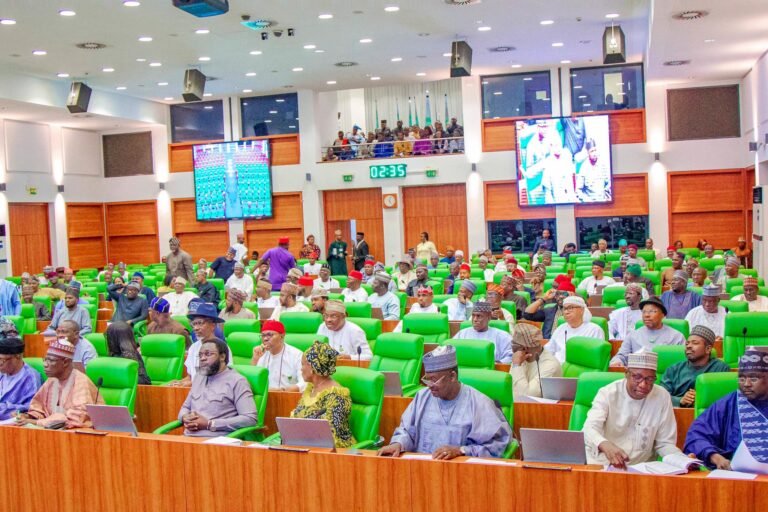
A heated session unfolded in the House of Representatives on Thursday as some lawmakers staged a walkout during deliberations on the controversial bill seeking to establish state police, despite the legislation eventually scaling its second reading.

The dramatic development highlighted the deep divisions among federal lawmakers over one of Nigeria’s most debated constitutional reforms. While supporters argued that state police would strengthen grassroots security and improve responses to rising insecurity, opponents warned that the proposal could be abused by state governments for political purposes.
Tensions rose during the debate as members exchanged opposing views on the merits and possible consequences of decentralizing policing in Nigeria. The disagreement culminated in a walkout by a group of lawmakers, who protested aspects of the legislative process and their concerns over the bill’s implications.
Despite the protest, the House proceeded with legislative business, and the bill successfully passed its second reading through a voice vote, paving the way for further scrutiny at the committee stage.
Proponents of the bill maintained that Nigeria’s current centralized policing system has struggled to effectively address growing security challenges, including terrorism, banditry, kidnapping, communal violence, and other criminal activities across the country. They argued that state-controlled police formations would improve intelligence gathering, enhance rapid response capabilities, and complement the efforts of existing federal security agencies.
However, critics expressed fears that governors could misuse state police to intimidate political opponents, suppress dissent, or influence elections if adequate constitutional safeguards are not put in place.
The proposed legislation will now undergo detailed committee consideration, where lawmakers are expected to examine key provisions, receive stakeholder submissions, and recommend amendments before it returns to the House for further legislative action.
The debate over state police remains one of the most significant constitutional issues in Nigeria, reflecting the country’s search for effective solutions to persistent security challenges while balancing national unity, democratic accountability, and the constitutional distribution of powers between the federal and state governments.