


Ecuador’s security forces are deeply engaged in a fierce struggle against formidable drug trafficking organizations. The police are contending with escalating gang violence, illegal arms, and corruption, all of which contribute to one of Latin America’s gravest security challenges.

Ecuador, once known as one of the more peaceful countries in South America, has seen a dramatic rise in violence in recent years. Competing criminal groups vie for dominance over the cocaine trafficking routes that connect neighboring Colombia and Peru to global markets.
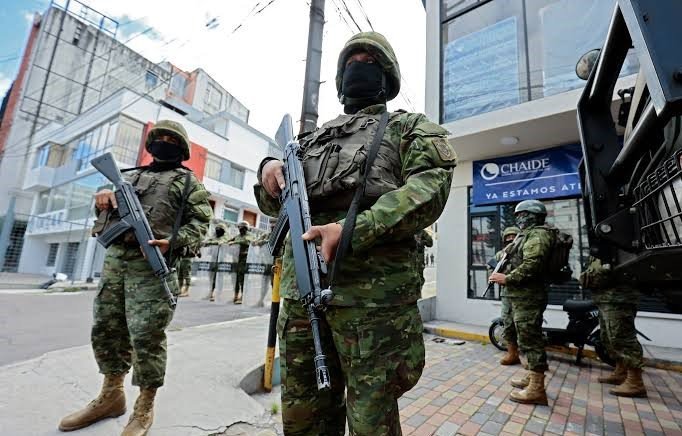
Police officers on the frontline report facing gangs that are more sophisticated and heavily armed, utilizing military-grade weaponry, thus complicating and endangering security operations.
In response, authorities have escalated raids, bolstered intelligence efforts, and increased border surveillance to dismantle networks involved in drug trafficking, kidnapping, extortion, and money laundering.
Nevertheless, security experts caution that corruption within public institutions continues to thwart efforts against organized crime. This allows criminal groups to infiltrate state structures and evade law enforcement.
The Ecuadorian government has taken steps by deploying additional military personnel to support police operations and enforcing stricter legal measures to dismantle organized crime and restore public order.
Officials emphasize that tackling drug cartels remains a national priority, highlighting that success will demand consistent investment in law enforcement, judicial reforms, intelligence capabilities, and regional cooperation.
As Ecuador presses on with its crackdown, citizens are hopeful that enhanced security measures and institutional reforms will help reduce violence and restore stability in a nation increasingly affected by the influence of transnational criminal organizations.