






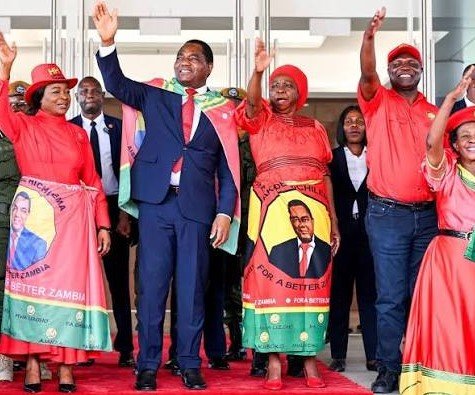
Zambians are set to head to the polls on Thursday in a highly anticipated presidential election that will gauge whether the recent economic developments are enough to counter the widespread frustration with the high cost of living in one of Africa’s most stable democracies.
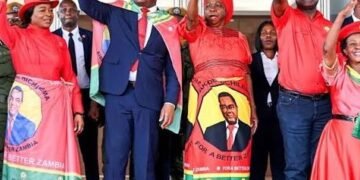
The current president, Hakainde Hichilema, faces Brian Mundubile, a former ally of the late president Edgar Lungu. Mundubile has emerged as a leading contender for the fragmented opposition after gaining support from a coalition of rival parties.
Approximately 8.7 million voters, with women in the majority, will decide if Hichilema’s economic reforms warrant another term or if the opposition can channel widespread dissatisfaction into a comeback.
Hichilema, leader of the United Party for National Development (UPND), achieved presidency in his sixth attempt in 2021, succeeding a nation in sovereign default due to heavy borrowing during Lungu’s tenure. His victory marked a peaceful transfer of power to an opposition party through elections—a rarity in Africa.
Since then, his government secured a landmark debt restructuring agreement, reinstated an International Monetary Fund program, and returned the economy to growth, drawing praise from international lenders and investors.
However, many Zambians feel these benefits have been slow to reach the general population. Rising food prices, unemployment, and persistent poverty remain critical issues in a country where more than 70% of people live on less than three dollars a day, according to World Bank data.
“There’s global acknowledgment of our progress, but it needs to translate to local impact,” said Semi Malama, a 26-year-old medical student.
Zambia is Africa’s second-largest copper producer, with the government aiming to triple production by 2031. Chinese companies play a significant role in the mining sector, highlighting Beijing’s substantial economic influence in Zambia.
The opposition has capitalized on financial strains among households, arguing that reforms have not improved living conditions despite signs of economic recovery.
Before Mundubile consolidated opposition backing, Hichilema’s re-election seemed almost assured. Now, analysts suggest the election has evolved into a head-to-head battle between Hichilema and Mundubile.
While 14 candidates are officially in the race, it largely boils down to Hichilema and Mundubile, a 55-year-old former minister. “The opposition energy resonates with youth, women, and rural voters,” noted Joseph Siegle from the Africa Center for Strategic Studies.
READ ALSO: Stop Chasing Foreign Investors, Empower Africans – Lumumba
Mundubile seeks to consolidate support from Lungu’s Patriotic Front strongholds in the north and east but faces challenges expanding beyond this base due to his late entry into the race and connections to the Lungu era.
With nearly half of registered voters aged 18 to 35, the youth vote could be decisive.
“Ultimately, the election depends on whether voters see continuity as best for consolidating recent gains or opt for change to tackle immediate economic challenges,” said Zenge Simakoloyi from the Institute for Security Studies.
The campaign has been marred by violence and intimidation claims. Clashes between rival supporters have been dispersed with tear gas by police. Accusations from Mundubile’s National Republican Party (NRPUP) suggest authorities have restricted their campaign efforts.
Mundubile recently alleged snipers were present at an event in Mongu, calling such incidents “just the tip of the iceberg.”
Polling stations open on Thursday at 06:00 local time (04:00 GMT) and close 12 hours later. Zambians will also elect an expanded parliament, with directly elected members rising to 226 from 156.
Presidential results are expected by August 17, requiring a candidate to win more than 50% of valid votes to avoid a run-off. “Small swings” in province-wide support could be decisive, according to Simakoloyi.
This vote will also test Zambia’s standing as a politically stable nation amid rising concerns over dissent suppression and narrowing political freedoms.