






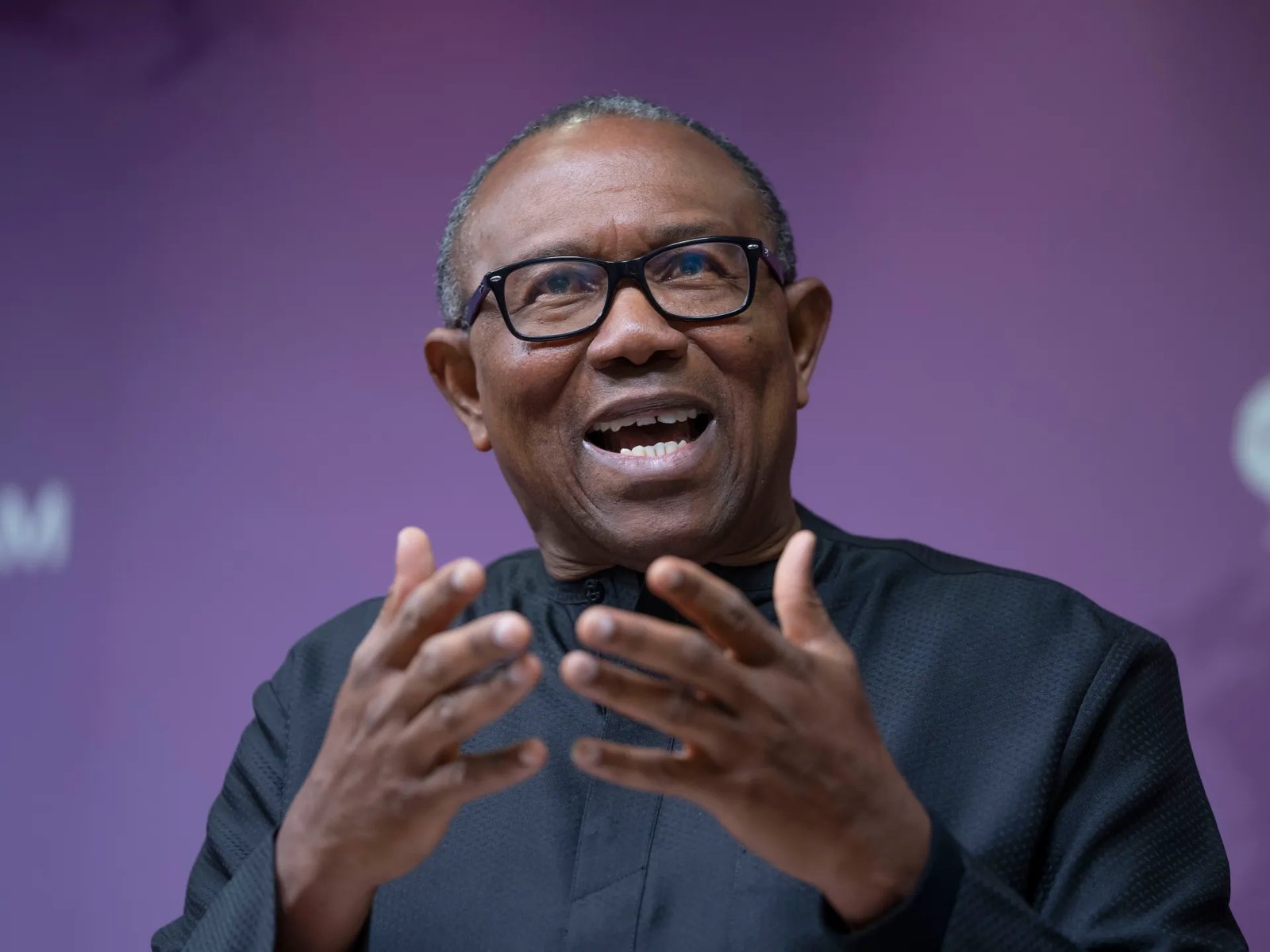
Presidential candidate of the Nigeria Democratic Congress (NDC) for the 2027 election, Peter Obi, has expressed concern over what he described as the declining standard of democratic values and institutions in Nigeria.
Obi raised the concerns on Tuesday while speaking at the 2026 Goodluck Jonathan Foundation Democracy Dialogue held in Bauchi, the Bauchi State capital.
The former Anambra State governor used his personal experience of legal battles over his election to illustrate what he described as a significant change in Nigeria’s democratic environment.
Obi Recalls Three-Year Court Battle
Obi recalled spending three years in court challenging his election as governor of Anambra State.
According to him, several judges whom he had never personally met ruled in his favour during the legal process.
He said the experience demonstrated a level of judicial independence and fairness that, in his assessment, appears increasingly difficult to find in Nigeria today.
“I was in court for three years challenging my election. Five judges I never met ruled in my favour,” Obi said.
He added that the Court of Appeal also had five judges who ruled in his favour during the legal proceedings.
Obi contrasted his experience with what he described as troubling developments within Nigeria’s present political and judicial environment.
‘We Are Facing a Crisis’
The former governor criticised what he described as the weakening of democratic standards, particularly in relation to elections, the legislature, the legal profession and religious institutions.
He alleged that educated professionals are sometimes involved in helping politicians manipulate elections, while lawmakers have taken steps that he believes weaken accountability for electoral offences.
Obi also criticised the involvement of lawyers and religious figures in defending or supporting politicians facing serious allegations.
According to him, these developments point to a broader crisis affecting the country’s democratic institutions.
He further expressed concern about what he described as external influences on the judiciary.
Obi Calls for Change
The NDC presidential candidate urged Nigerians to critically examine the direction in which the country’s democracy is heading.
He called for greater scrutiny of democratic institutions and warned against normalising practices that undermine electoral credibility, judicial independence and accountability.
Obi argued that the consequences of today’s political decisions would eventually affect younger generations.
“We need to change course because today’s transgressions will one day affect our children,” he said.
His comments came amid broader discussions about the quality of democracy in Nigeria and the ability of political parties and judicial institutions to protect democratic principles.
Goodluck Jonathan Foundation Dialogue
The 2026 Goodluck Jonathan Foundation Democracy Dialogue focused on the theme, “Beyond elections, can political parties and the judiciary save African democracy?”
The forum brought together prominent Nigerian political figures, constitutional experts, civil society representatives and other stakeholders to discuss the challenges confronting democratic governance across Africa.
Former President Olusegun Obasanjo chaired the event, while former President Goodluck Ebele Jonathan, whose foundation organised the dialogue, was also in attendance.
Former Vice President Namadi Sambo and Bauchi State Governor Bala Mohammed were among the other prominent figures at the gathering.
The event provided a platform for discussions on the future of democracy, electoral reforms, judicial independence and the role of political parties in strengthening democratic institutions.
Wider Debate on Nigeria’s Democracy
Obi’s remarks add to the growing national debate over the state of democracy and governance in Nigeria.
The former governor has consistently advocated stronger institutions, credible elections and greater accountability in public office.
His latest comments suggest that he believes the challenges facing Nigeria extend beyond individual elections and require deeper institutional reforms.
As political parties and citizens prepare for another election cycle, questions surrounding electoral integrity, judicial independence and the effectiveness of democratic institutions are expected to remain central to national discussions.
For Obi, the choice facing Nigerians is whether to continue with practices that he believes are weakening democratic institutions or pursue reforms capable of leaving stronger institutions for future generations.