






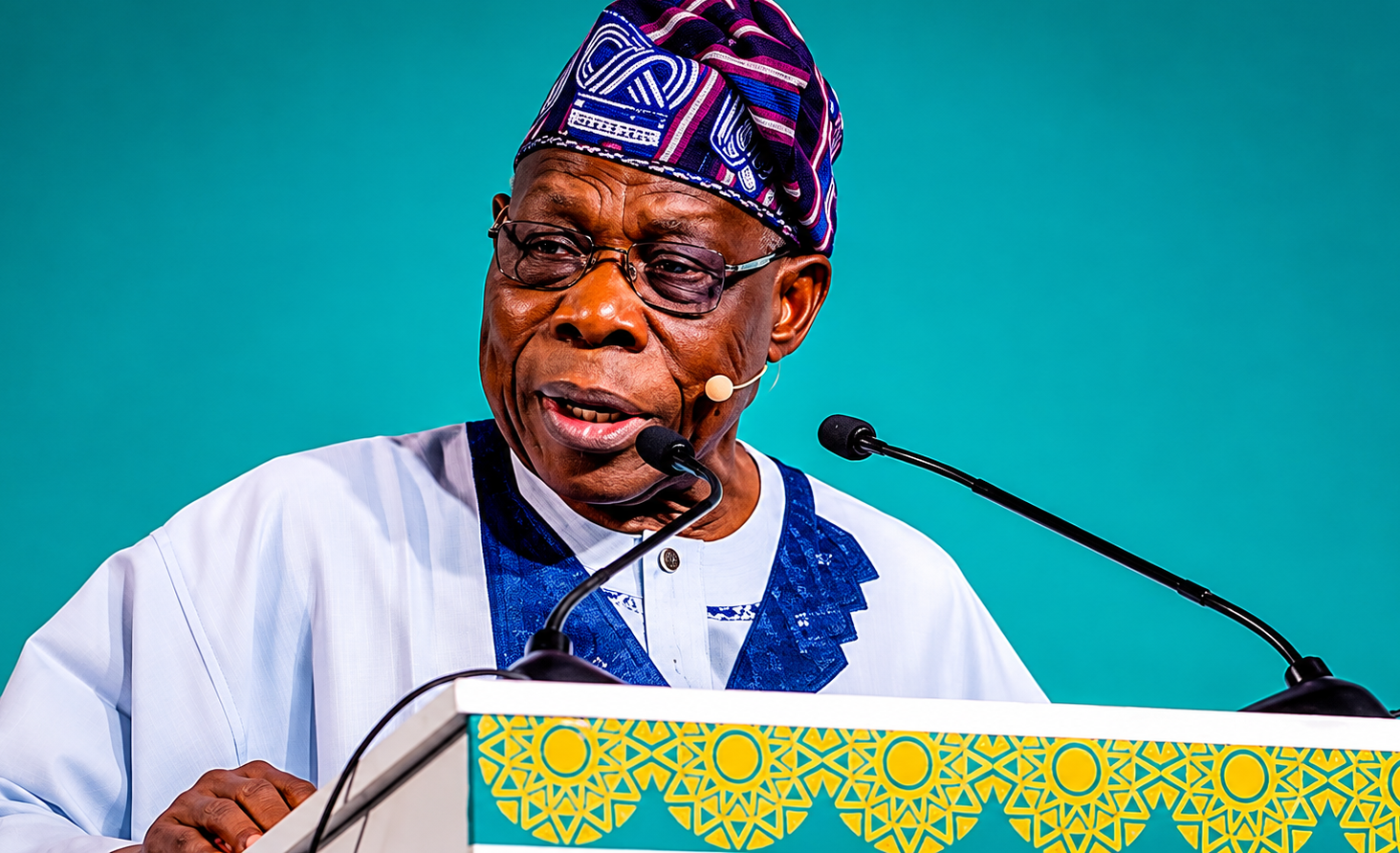
Former President Olusegun Obasanjo has expressed criticism of the democratic model practiced across much of Africa, highlighting that it often lacks contextual relevance to the continent. He pointed out that this model fosters a winner-takes-all political landscape.
According to Obasanjo, many African countries have inherited Western liberal democracy, which was not originally tailored to meet the continent’s unique realities. He compared this adoption to wearing an ill-fitting garment.
Obasanjo noted that this model fosters a political environment where those who win elections tend to neglect those who lose. He shared these views on Tuesday at the 2026 Goodluck Jonathan Foundation Democracy Dialogue held in Bauchi, the capital of Bauchi State.
He explained that Western liberal democracy benefits from roots in monarchy, allowing for a government with an included loyal opposition. However, in African languages, ‘opposition’ is often interpreted as ‘enemy,’ raising the question of whether a loyal enemy can exist. Therefore, he argued, there is often a tendency to suppress opponents.
The form of democracy currently in practice lacks African context and content. He likened using an unsuitable model to wearing a poorly fitted dress—it’s either too small or too large, making it unsatisfactory. The prevailing system emphasizes winner-takes-all politics, where defeating an opponent by just one vote grants complete victory.
READ ALSO: Stop Chasing Foreign Investors, Empower Africans – Lumumba
Obasanjo also expressed concern over poor diversity management within this framework, emphasizing that a functional democracy must recognize and nurture diversity. He highlighted Nigeria’s rich diversity as essential to its identity, suggesting that without it, fragmented republics could emerge.
Additionally, Obasanjo criticized the growing role of money and inducements in politics, which he said are escalating rapidly. While acknowledging that poverty and illiteracy hinder democracy, he also noted gender imbalances in Nigerian politics since the Fourth Republic’s beginning.
He pointed out that despite the current system’s shortcomings, Nigeria has yet to elect a female governor after more than two decades. He lamented that those elected often lack enduring attributes and values.
Obasanjo called for more than simply adopting political party systems and judicial frameworks, stressing that democracy should be seen as an evolving process. He encouraged African countries to reassess the system, just as Western nations are re-evaluating aspects of their own.
He suggested crafting a system that reflects African history, culture, and values—whether termed democracy or African democracy—to ensure it aligns with African context and content.
The dialogue, led by Obasanjo, was attended by former President Goodluck Ebele Jonathan and former Vice President Namadi Sambo. The event was hosted by Bauchi State Governor Bala Mohammed and included constitutional experts and civil society representatives from across Africa.