


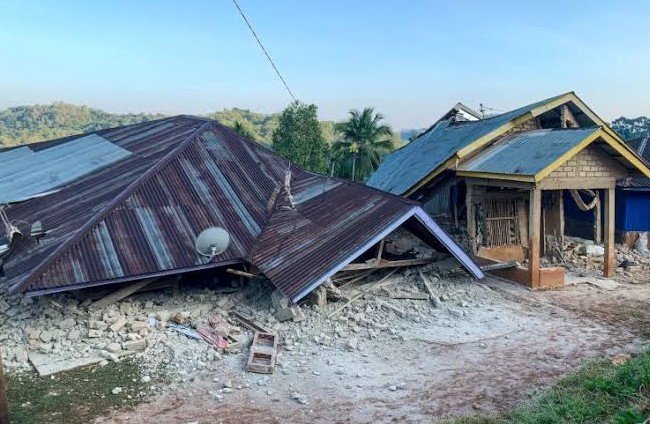
MAUMERE, Indonesia — At least 38 people have been killed after a 7.7-magnitude earthquake struck eastern Indonesia early Saturday, according to the country’s national disaster mitigation agency, BNPB.
The death toll has continued to climb throughout the day as search and rescue operations expand across the hardest-hit areas. BNPB head Suharyanto said 13 people had been injured, two of them seriously, and that victims remained trapped in several collapsed buildings — now the primary focus of rescue teams. Two helicopters and a plane were being readied to assist the response.
The quake struck shortly before 5:00 a.m. local time (22:00 GMT Friday), with its epicentre roughly 68 kilometres north-northwest of the city of Ende in East Nusa Tenggara province. Indonesia’s meteorology and geophysics agency measured its depth at between 10 and 15 kilometres — shallow enough to cause particularly severe surface damage. The quake struck around 600 miles (1,000km) from Bali and was followed by strong aftershocks, including one measuring magnitude 6.1.
Video from the port in Maumere showed large chunks of concrete breaking off the terminal building onto passengers waiting to board an inter-island ferry, with some thrown into the sea after a ship’s gangway collapsed. East Nusa Tenggara governor Emanuel Melkiades Laka Lena told reporters that a number of victims were killed in their sleep by collapsing rubble.
Arnold Welianto, a resident of Talibura, a coastal village in Sikka, said he was jolted awake by violent shaking and rushed straight to his child’s room. He told the BBC that many residents had already fled into the hills, while others gathered along the roadside after noticing the sea had receded — a warning sign that triggered widespread panic as the water remained unusually low for some time. He later found that patients at the local community health centre had already been evacuated.

A tsunami warning was issued in the immediate aftermath but lifted roughly three hours later after no significant sea-level rise was detected. In the meantime, streams of residents were seen moving inland on motorbikes. BNPB said around 2,000 people evacuated or relocated on their own initiative.
As of Saturday afternoon, three fatalities had been recorded in Sikka province, six in Manggarai province, and five in East Manggarai province, according to the disaster agency, which expects the toll to rise further as rescue teams reach more remote areas. At least two people were seriously injured and 11 sustained minor injuries.
Many residents in Talibura are choosing to remain outdoors, too fearful of continuing aftershocks to return home, Welianto said. In Ruteng, a city west of the epicentre, university lecturer Yulian Juita Ekalia said she had moved her stove outside to cook, fearing further tremors. She told AFP she had never experienced an earthquake so powerful, comparing the shaking to standing on a trampoline.
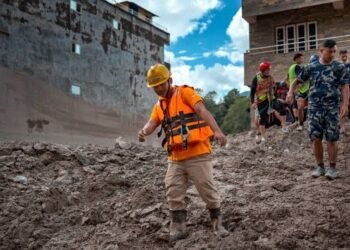
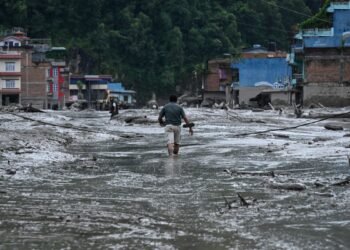
The remote, mountainous terrain of the affected region is expected to slow efforts to assess the full scale of destruction. Preliminary reports indicate 54 houses were severely damaged, along with five healthcare facilities, three places of worship, six government buildings, an educational institution and a warehouse. Manggarai province has emerged as one of the worst-affected areas, BNPB said, and has urged residents to remain calm, avoid coastal areas, and stay away from structures showing visible damage.
The region carries a history of devastating seismic events — a similarly powerful earthquake struck the same stretch of coastline in December 1992, triggering a tsunami that killed more than 2,500 people on Flores.