







MiniPay, the stablecoin wallet developed by Opera, is entering a major new phase in 2026 as the platform expands beyond digital-wallet transfers and moves further into everyday payments.
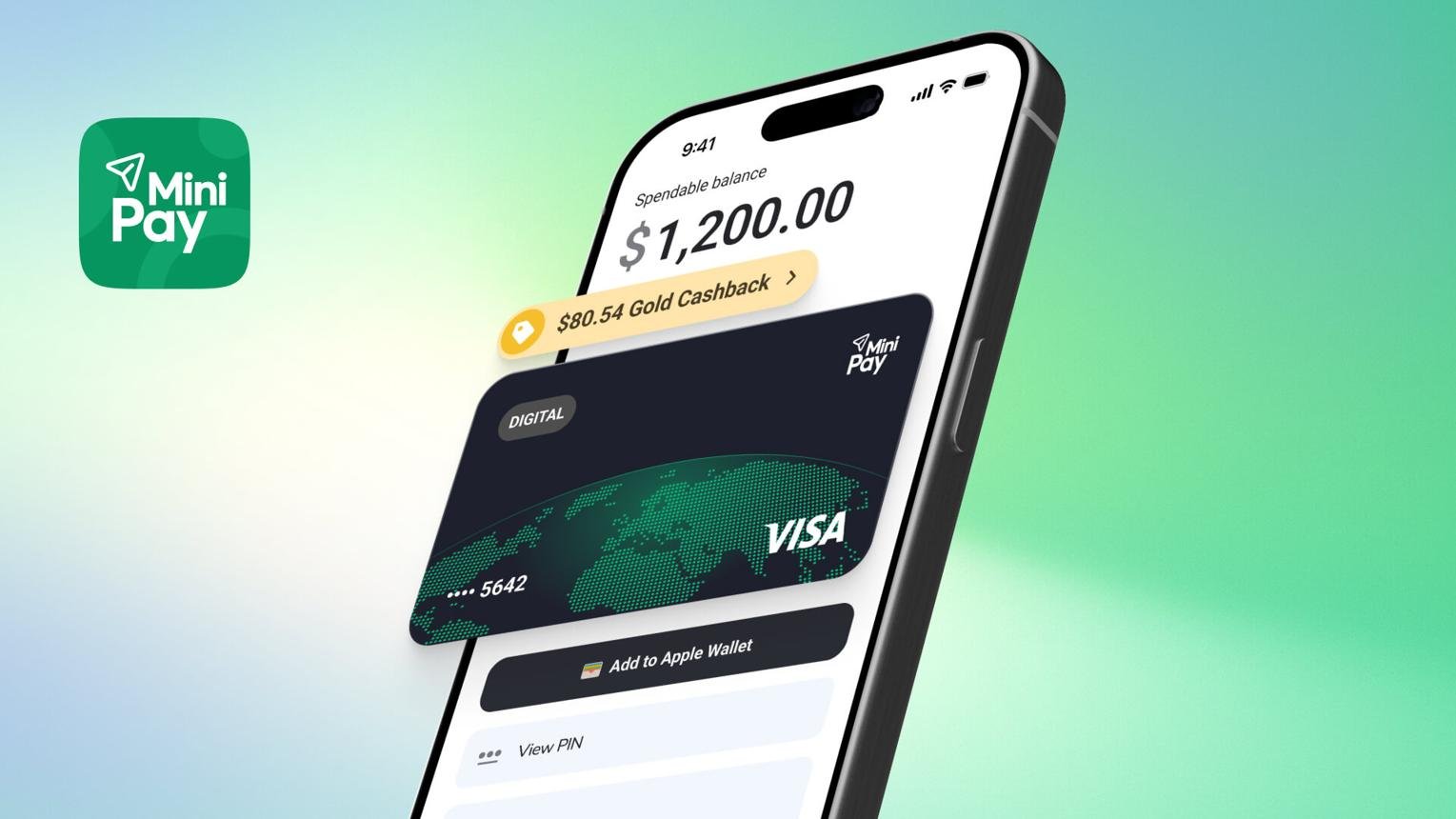
The latest development attracting attention is the MiniPay Card, a digital Visa debit card that allows eligible users to spend stablecoin balances at millions of merchants around the world.
At the same time, the MiniPay application continues to receive updates, with the latest Google Play version recorded on August 13, 2026. The app now promotes stablecoin purchases, global transfers, local-currency cash-out and support for 66 countries.
For users across Africa and other emerging markets, MiniPay’s development could be significant because it attempts to connect stablecoins with everyday financial activities without requiring users to understand complicated blockchain infrastructure.
MiniPay launches Visa debit card
One of the biggest MiniPay developments of 2026 came in June when Opera announced the launch of the MiniPay Card in partnership with Visa and Gnosis Pay.
The digital card is designed to allow eligible MiniPay users to spend stablecoin balances at more than 175 million merchant locations worldwide, with availability initially limited to selected markets.
The card is particularly important because it addresses one of the biggest challenges facing cryptocurrency and stablecoin wallets: how to turn digital assets into something people can use in everyday life.
Instead of transferring stablecoins to another platform before spending them, eligible MiniPay users can use the card infrastructure to spend their balances through the Visa network.
However, availability depends on the user’s country and eligibility, so the card should not be assumed to be available to every MiniPay user.
MiniPay reaches more than 16 million activated wallets
MiniPay has also recorded significant user growth.
Opera and its partners reported that MiniPay had surpassed 16 million activated wallets across more than 65 countries by the time of the June 2026 card launch.
Earlier in May, reports also highlighted MiniPay’s growth beyond 15 million activated wallets, demonstrating the increasing adoption of stablecoin-based payments through mobile devices.
The numbers are important because MiniPay is increasingly positioning itself not simply as a cryptocurrency wallet but as a consumer payments platform.
The latest MiniPay app update
The MiniPay application was updated on August 13, 2026, according to its Google Play listing.
The current application description highlights several major functions, including:
- Holding stablecoins
- Buying USDT, USDC and USDm
- Sending money internationally
- Swapping between stablecoins
- Depositing cryptocurrency and converting it into stablecoins
- Cashing out into local currency
- Using MiniPay across 66 countries
The platform says users can send stablecoins internationally using their phones, while local-currency conversion is facilitated by third-party providers.
MiniPay and USDT
Another major development earlier in 2026 was the expansion of Tether’s USDT support within MiniPay.
Tether announced in February that MiniPay had expanded support for USD₮ and Tether Gold, giving users the ability to hold and transfer dollar- and gold-linked digital assets through the wallet.
The development was particularly relevant to emerging markets, where stablecoins are increasingly being used for cross-border transfers and as a way of accessing dollar-denominated value.
At the time, Opera reported more than 12 million activated MiniPay wallets, showing how rapidly the platform was expanding.
Why MiniPay is important for Africa
Africa is an important market for MiniPay.
The platform has focused heavily on countries where mobile-phone usage is widespread but access to traditional financial services can be expensive or inconvenient.
Stablecoins can provide an alternative method of moving dollar-denominated value across borders.
For example, a user may receive USDT through MiniPay and later convert the funds into local currency through an available third-party provider.
The approach can potentially make international transfers faster and more accessible.
However, users should remember that exchange rates, fees, limits and availability of cash-out providers can vary by country.
MiniPay is built on Celo
MiniPay is a self-custodial stablecoin wallet built on the Celo blockchain.
The connection to Celo is important because Celo has developed a strong focus on mobile-friendly blockchain applications and stablecoin payments.
MiniPay’s growth has therefore also contributed to greater activity within the wider Celo ecosystem.
A Celo community update published in May reported more than 16 million MiniPay wallet activations, more than 470 million transactions and more than 50 Mini Apps during the first quarter of 2026.
Mini Apps expand MiniPay beyond a wallet
MiniPay is also building an ecosystem of Mini Apps.
These applications allow users to access different services directly through the MiniPay environment.
The idea is similar to the way people use mobile banking or super-app platforms: rather than opening multiple applications, users can access financial and Web3-related services from one ecosystem.
The Celo Q1 update reported more than 50 Mini Apps live, with more than 400 million Mini App transactions recorded to date.
If this ecosystem continues to grow, MiniPay could become more than a stablecoin wallet.
It could develop into a broader digital financial platform.
Is MiniPay a cryptocurrency?
MiniPay itself is not a cryptocurrency token.
It is a wallet and payments application that allows users to hold and transact with stablecoins.
The wallet currently supports dollar-denominated stablecoins including USDT, USDC and USDm, according to its current app listing.
This distinction is important because some users may mistakenly search for a “MiniPay coin” or expect MiniPay itself to have a cryptocurrency price.
The platform is primarily infrastructure for using stablecoins.
What about fees?
One of MiniPay’s major selling points is low-cost money movement.
The platform says sending stablecoins can be done quickly, while some top-ups and withdrawals can be available with zero fees in selected markets through selected third-party providers.
However, users should always check the actual fee displayed before completing a transaction.
Third-party providers may impose their own fees, exchange rates, limits or eligibility requirements.
MiniPay Card availability
Although the MiniPay Card is a major development, users should understand that it is not automatically available everywhere MiniPay operates.
Opera’s announcement says the card is being made available to eligible users in selected markets across Europe, Africa, Latin America and Southeast Asia.
Therefore, Nigerian and other African users should check directly inside the MiniPay application or through official MiniPay information to determine whether the card is currently available in their specific market.
What should MiniPay users watch next?
Several developments could shape MiniPay’s future.
1. Wider MiniPay Card availability
Expansion of the Visa card into additional countries would be an important milestone.
2. More stablecoin support
The platform could continue adding stablecoins and improving conversion between different digital-dollar assets.
3. More Mini Apps
The growth of Mini Apps could turn MiniPay into a broader consumer financial ecosystem.
4. Local payment integration
Better connections between stablecoins and local currencies could make MiniPay increasingly useful for everyday transactions.
5. International transfers
Cross-border stablecoin transfers remain one of MiniPay’s strongest potential use cases.
Important security warning
MiniPay is a self-custodial wallet, meaning users have significant responsibility for protecting their wallet credentials.
Users should never share their private keys, recovery phrase or security information with anyone claiming to be MiniPay support.
Scammers may use fake websites, social-media accounts or messages promising free USDT, special MiniPay rewards or guaranteed profits.
Users should only use official MiniPay channels and verify the destination address before sending funds.
The future of MiniPay
MiniPay’s development in 2026 represents a significant shift in how stablecoins can be presented to ordinary mobile users.
Instead of asking users to understand complicated cryptocurrency exchanges, blockchain networks and gas fees, MiniPay is attempting to make stablecoin transactions feel more like ordinary mobile payments.
The introduction of the Visa-powered MiniPay Card could be particularly important because it connects digital-dollar balances with traditional global payment infrastructure.
But the platform still faces challenges.
These include regulatory requirements, stablecoin adoption, country-specific restrictions, third-party payment providers and competition from other digital-wallet platforms.
MiniPay is entering a new phase in 2026.
The Opera-backed stablecoin wallet has expanded to more than 16 million activated wallets, supports stablecoins including USDT and USDC, operates across dozens of countries and continues to develop its Mini Apps ecosystem.
The launch of the MiniPay Card with Visa and Gnosis Pay could be its most important development yet, potentially allowing eligible users to spend stablecoin balances at more than 175 million merchant locations worldwide.
Meanwhile, the MiniPay app continues to receive updates, with the latest Google Play version updated on August 13, 2026.
The bigger story is not simply cryptocurrency.
It is the attempt to make digital dollars usable in everyday life.
If MiniPay can continue combining stablecoins, mobile payments, local cash-out services, Mini Apps and global card payments, it could become an increasingly important part of the digital-finance landscape across Africa and other emerging markets.
For users, the next major question is how widely MiniPay’s card and other payment services will expand—and whether stablecoin payments can become a normal part of everyday financial life.