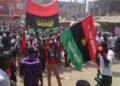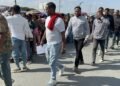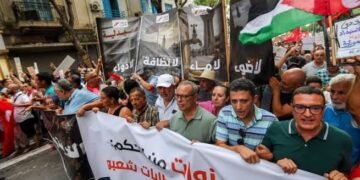







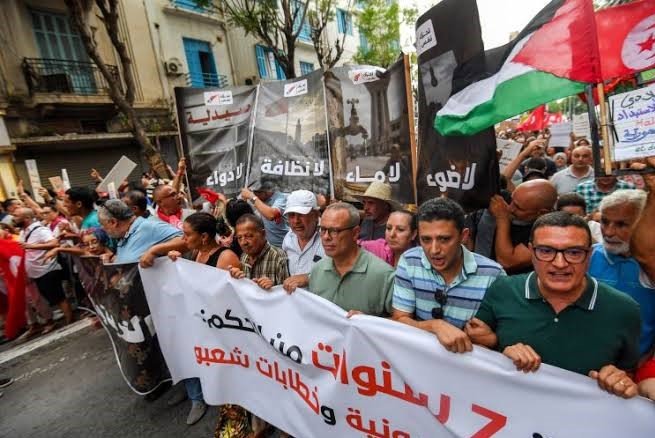
Hundreds gathered in the streets of Tunisia’s capital, Tunis, on Thursday, calling for President Kais Saied’s resignation and the reinstatement of democratic freedoms.
These demonstrations arise amidst escalating political tensions and worsening economic issues, including widespread shortages of water and electricity affecting communities nationwide.
Protesters Demand Change
The protest was organized by Nafas, a newly established opposition group aimed at uniting political parties and independent voices against Saied’s leadership.
Protesters called for enhancements in essential public services, solutions to medicine shortages and rising living costs, and greater respect for political and civil liberties.
Some participants used slogans from Tunisia’s 2011 Arab Spring uprising, including demands for the regime’s downfall and the French slogan “Dégage,” meaning “Get out.”
Protester Youssef Hleli participated because he felt the country was heading in the wrong direction.
“The country has hit a wall. There is no water or electricity,” he claimed, suggesting that Tunisia was lagging behind other nations.
Heatwave Worsens Power and Water Problems
This demonstration also coincided with an extreme heatwave, adding strain to Tunisia’s electricity and water infrastructure.
The record demand for electricity led state-owned utility STEG to implement power rationing in various regions.
Electricity shortages also impacted water-pumping stations, exacerbating existing issues over access to drinking water.
The combination of political dissatisfaction and declining public services has increased pressure on the government.
Growing Calls for Saied to Step Down
The latest protest follows a July demonstration on the anniversary of Saied’s 2021 decision to dismiss the government and suspend parliament.
Since then, critics have accused him of weakening democratic institutions and suppressing political opposition, independent media, and civil society.
Recent protests have included more direct calls for Saied to leave office, shifting from criticism of specific policies to demands for a leadership change.
Saied Defends His Actions
Saied has justified his political actions by stating they were necessary to combat corruption and restore stability in Tunisia.
He has also accused some opponents of receiving foreign funding and attempting to incite unrest or undermine national interests.
Tunisia, the birthplace of the Arab Spring pro-democracy uprisings in 2011, is once more navigating a challenging political and economic landscape as opposition groups rally public support against Saied.