






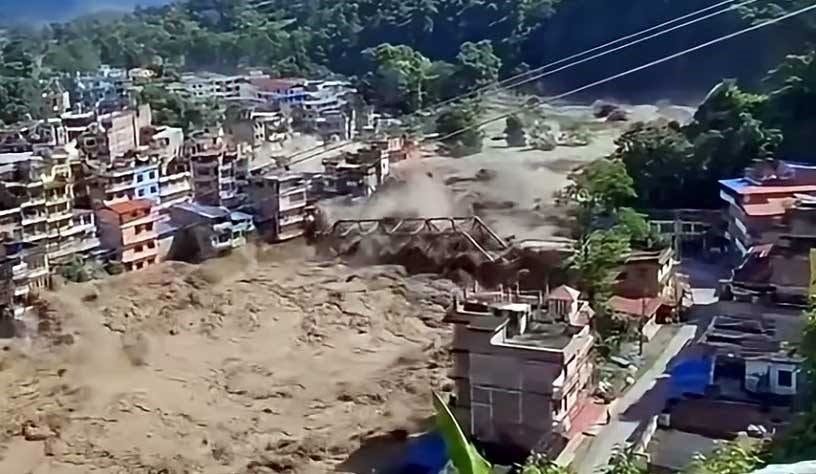
The death toll from devastating floods across parts of Nepal and Tibet has risen above 700, while difficult terrain is making it increasingly challenging for emergency teams to deliver aid to affected communities.
The disaster has caused widespread destruction, with homes, roads and other infrastructure damaged by powerful floodwaters. Thousands of people have been affected as rescue workers continue efforts to reach communities cut off by the disaster.
Officials and humanitarian teams are facing serious logistical difficulties because of the mountainous terrain and damage to key transport routes. In some areas, reaching survivors has become extremely difficult, forcing responders to rely on limited access routes and other emergency measures.
The scale of the destruction has also complicated efforts to establish the exact number of casualties and missing people. Authorities continue to assess the situation as rescue and recovery operations remain underway.
Emergency workers are prioritising the search for survivors, evacuation of people in danger and delivery of essential supplies, including food, clean water and medical assistance.
The disaster has raised renewed concerns about the vulnerability of communities living in mountainous areas to sudden floods and other extreme weather events.
As rescue efforts continue, authorities are expected to provide further updates on casualties, missing persons and the humanitarian response.