






A remarkable medical story involving a Nigerian-born surgeon and an unborn baby continues to inspire people years after the groundbreaking operation was performed.
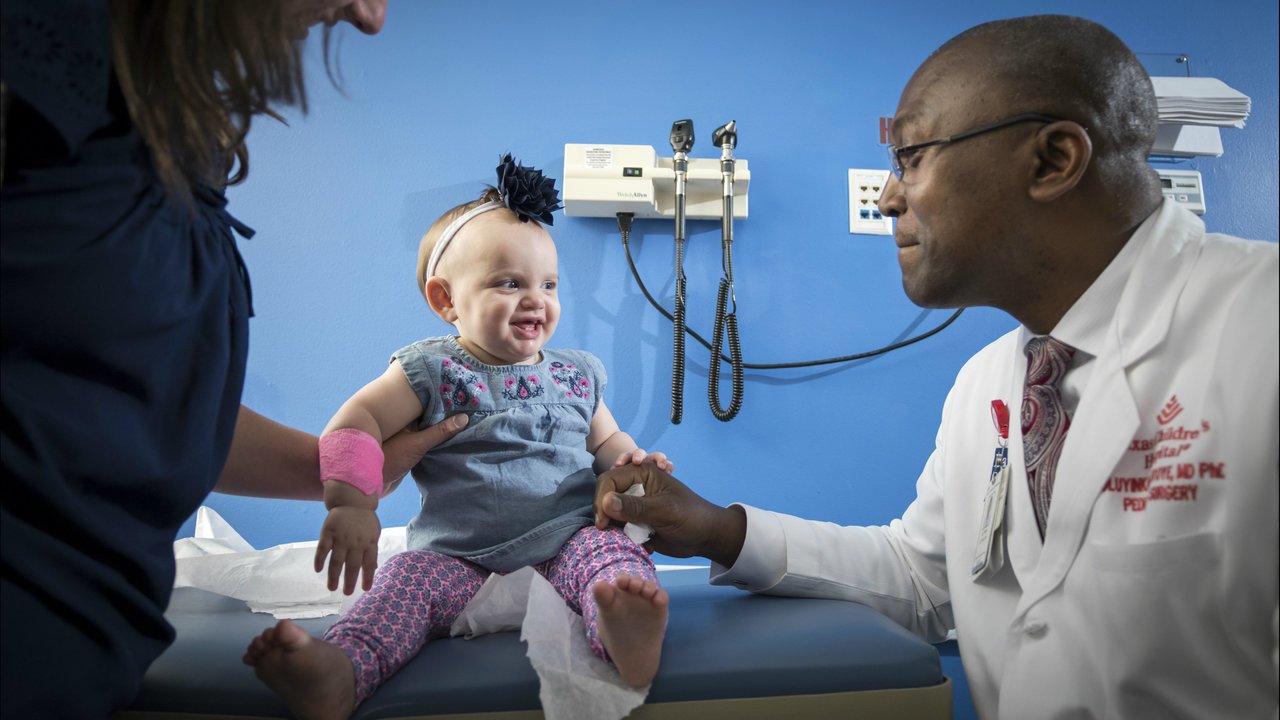
In 2016, Dr. Oluyinka Olutoye was part of the medical team that carried out an extraordinary fetal surgery to save the life of an unborn baby diagnosed with a potentially fatal tumour.
The baby, Lynlee, was still in her mother’s womb when doctors discovered that a large tumour was growing from the base of her spine. The condition was placing enormous pressure on her developing heart and threatened her survival.
At approximately 23 weeks into the pregnancy, doctors were faced with an extremely difficult choice. Delivering the baby at that stage would expose her to the severe risks associated with extreme prematurity. But allowing the tumour to continue growing could cause her heart to fail before she was ready to be born.
The medical team decided to attempt something extraordinary.
Olutoye’s Role in the Historic Operation
Among the specialists involved was Dr. Oluyinka Olutoye, a Nigerian-born pediatric and fetal surgeon who was part of the team at Texas Children’s Hospital.
Olutoye co-led the operation with Dr. Darrell Cass, working alongside a large multidisciplinary team of specialists.
The procedure required exceptional precision. Surgeons opened the mother’s uterus and carefully positioned the fetus so they could operate while maintaining the baby’s connection to the placenta and umbilical cord.
That connection was critical because it continued supplying oxygen and blood to the baby during the operation.
The surgeons removed about 90 percent of the tumour before carefully returning the baby to the womb.
The procedure reportedly lasted several hours and carried significant risks for both mother and child.
More Time Inside the Womb
Rather than delivering Lynlee immediately after the operation, doctors closed the uterus and allowed the pregnancy to continue.
The baby remained in her mother’s womb for almost another three months, giving her developing body valuable time to mature.
At about 36 weeks, Lynlee was eventually delivered by Caesarean section.
Her extraordinary medical journey earned her the nickname “the baby born twice.”
The description refers to the fact that she had been partially removed from the womb during the fetal operation, treated by surgeons and then returned to the uterus before being delivered normally at a much later stage.
A Milestone in Fetal Medicine
Lynlee’s case demonstrated the extraordinary possibilities of modern fetal medicine, particularly when doctors identify serious conditions before birth.
The operation was not the work of one surgeon alone. It depended on the coordination of surgeons, fetal medicine specialists, anesthesiologists, nurses and other medical professionals.
However, Olutoye’s involvement became particularly significant for Nigerians because of his background and his contribution to one of the most remarkable fetal surgery cases to receive international attention.
His career demonstrates how medical professionals of Nigerian origin have contributed to complex medical care and research far beyond the country’s borders.
Years after the operation, Lynlee’s story remains a powerful reminder of how advances in medicine can give doctors an opportunity to treat certain life-threatening conditions before a child is even born.