







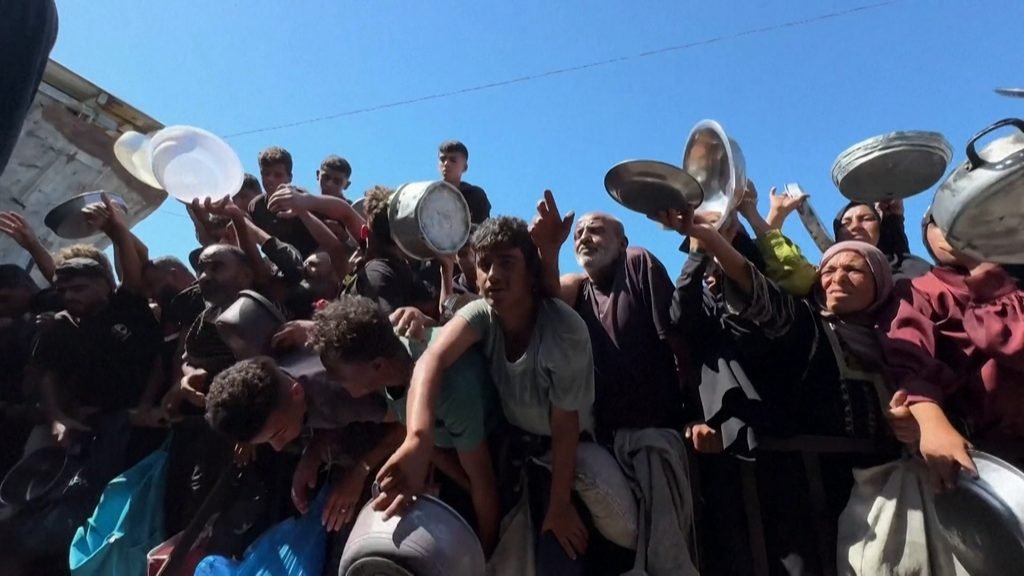
Hunger remains a major concern in Gaza despite a ceasefire that was expected to improve humanitarian access and ease the suffering of civilians affected by the conflict.
For many households, finding enough food to feed their children remains a daily struggle. Some families depend on community kitchens and humanitarian organisations for meals as they face limited access to essential supplies.
One of those affected is Nihaya al-Masri, a 35-year-old mother of eight living in Khan Yunis, southern Gaza. She spends hours waiting in line at a community kitchen in the hope of obtaining food for her children.
Her experience reflects the difficult circumstances facing many families who continue to struggle with food insecurity long after the fighting that devastated large parts of the Palestinian territory.
Speaking to Agence France-Presse (AFP), al-Masri described the importance of the meals provided by humanitarian organisations.
“Without the kitchen, we will remain hungry,” she said.
Conflict Leaves Lasting Impact on Food Supplies
The humanitarian emergency intensified during the war that followed Hamas’s October 7, 2023, attack on Israel and Israel’s subsequent military offensive in Gaza.
The conflict caused extensive damage to homes and infrastructure, displaced large numbers of people and disrupted essential services. Food distribution, healthcare and access to basic necessities were among the areas severely affected.
Although the ceasefire raised expectations that more assistance would reach civilians, many families continue to experience shortages and rely on outside support to meet their basic needs.
For parents with several children, the challenge is particularly severe. Securing enough food every day remains difficult when household resources are limited and normal access to supplies has been disrupted.
Humanitarian Needs Remain High
Aid organisations continue to provide meals and other forms of assistance to vulnerable residents. Community kitchens have become an important source of food for families who cannot reliably meet their daily needs.
However, continued dependence on these services highlights the scale of the humanitarian challenges facing Gaza.
Questions remain about whether aid can reach vulnerable communities in sufficient quantities, whether distribution can be sustained and whether assistance can consistently reach those most in need.
For families such as al-Masri’s, the immediate priority is simple: ensuring that their children have enough to eat.
The continuing hunger crisis demonstrates that a ceasefire alone does not automatically restore food security. Sustained humanitarian assistance and reliable access to essential supplies remain critical to improving living conditions for Gaza’s population.
Source: Agence France-Presse (AFP), as cited in the original report.