


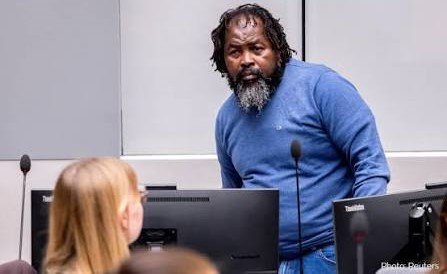
The International Criminal Court (ICC) has convicted former Central African Republic rebel commander Mahamat Said Abdel Kani of crimes against humanity linked to the torture and abuse of detainees during the country’s armed conflict.
Judges at the ICC delivered the verdict on Wednesday in The Hague, finding Said responsible for crimes committed at a detention facility in Bangui during the conflict involving Seleka rebels and anti-Balaka militias.
Presiding Judge Miatta Maria Samba described the harsh conditions prisoners endured while in detention.

Detainees Suffered Torture
During the trial, witnesses gave evidence about the conditions inside the detention facility.
Some described cramped cells with walls showing signs of violence, while others testified that detainees were beaten and whipped.
Another witness said victims were held in a windowless room beneath the floor of Said’s office.
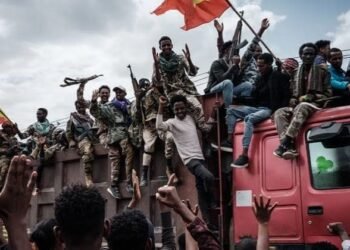
The allegations were linked to violence that erupted after the predominantly Muslim Seleka rebels seized power from then-President François Bozizé. The conflict later pitted Seleka forces against the mainly Christian anti-Balaka militia.
Victim Welcomes ICC Verdict
One of the victims, Marius Olivier Trésor Poussinga, who said he was tortured at the detention centre, welcomed the judgment.
He described the conviction as international recognition of what victims had endured.
Poussinga said the court’s decision gave him a sense that his suffering had finally been acknowledged.
CAR Government Welcomes Judgment
Central African Republic Justice Minister Arnaud Djoubaye Abazène also welcomed the conviction.
He said the judgment demonstrated that accountability for serious crimes could continue and that victims should not be forgotten.
The government has faced pressure to strengthen accountability for abuses committed during years of political instability and armed conflict.
Human Rights Watch Calls for Further Action
Lewis Mudge, Central Africa director at Human Rights Watch, described the conviction as an important development in efforts to address impunity.
However, he warned that serious human rights challenges remain in the Central African Republic.
Mudge said the verdict also highlighted the need for stronger support for both international and domestic justice mechanisms.
ICC Investigation Spanned 15 Years
The conviction comes near the end of the ICC’s investigation into crimes committed in the Central African Republic.
The investigation lasted approximately 15 years before then-ICC Prosecutor Karim Khan announced in 2022 that it would be closed, citing limited resources.
Said’s case was among the proceedings resulting from the ICC’s investigation.
The court has also prosecuted other individuals linked to the Central African conflict.
In July 2025, two senior anti-Balaka commanders were convicted of multiple war crimes and crimes against humanity.
Former Congolese Vice President Jean-Pierre Bemba was acquitted on appeal in 2018, while charges against a former Central African government minister were dropped in 2023.
Domestic Court Continues War Crimes Trials
The Central African Republic has also established a Special Criminal Court to prosecute serious crimes committed during periods of conflict and political violence since 2003.
The court began its first trial in 2021 and issued its first verdict in 2022.
More than 30 people have reportedly been indicted, with most of them in custody.
Former President François Bozizé is also facing proceedings at the court over alleged crimes against humanity. The case is being heard in his absence because he lives in exile in Guinea-Bissau.
Funding Concerns
The Special Criminal Court continues to face financial challenges.
Human rights organisations have warned that any interruption to its operations could create a significant gap in accountability, particularly because domestic judicial institutions still face limited resources.
Amnesty International has called for continued international support for the court.
The United Nations and European Union have also been urged to help sustain its work.
Sentence to Be Decided
Said pleaded not guilty when his trial began in 2021.
Following Wednesday’s conviction, the ICC will determine his sentence at a later stage.
He could face a prison sentence of up to life imprisonment.
The judgment represents another major development in international efforts to prosecute serious crimes committed during the Central African Republic’s years of conflict.
Source Africanews