


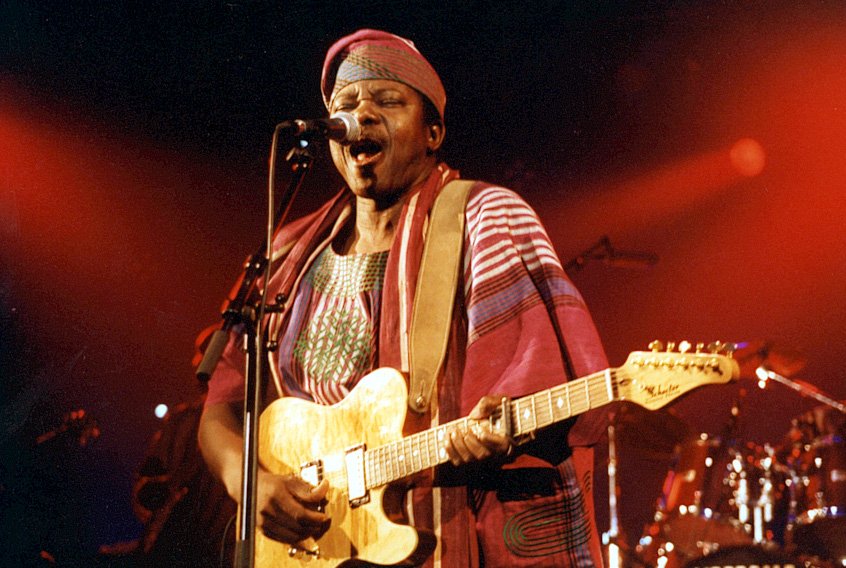
From Nigerian dance halls to major international stages, King Sunny Ade has spent more than six decades building a musical legacy that carried Jùjú music beyond Africa and introduced audiences around the world to the richness of Yoruba culture.
Born Sunday Adeniyi Adegeye on September 22, 1946, in Osogbo, present-day Osun State, King Sunny Ade has become one of Nigeria’s most influential musicians.
His career has crossed generations. It began during an era when highlife and Jùjú music dominated much of Nigeria’s popular music scene. Over the decades, he developed a distinctive sound that eventually attracted listeners far beyond the country.

From highlife to Jùjú music
Sunny Ade’s professional music journey took shape in the late 1960s.
After leaving school, he joined the highlife band led by Moses Olaiya, popularly known as Baba Sala. The experience exposed him to the professional music industry and helped shape his early musical development.
In 1967, he established his own group, the Green Spots. That decision marked the beginning of a remarkable chapter in his career.
Over time, Ade developed his own interpretation of Jùjú music, combining traditional Yoruba musical elements with modern instruments and stage performance.
Taking Nigerian music abroad
King Sunny Ade’s international breakthrough came in the early 1980s.
His music attracted the attention of Island Records, leading to the release of Juju Music in 1982. The album introduced his distinctive sound to a much broader international audience.
A year later, he released Synchro System. The album received a Grammy Award nomination, further raising his profile outside Africa.
At a time when African music had limited representation in the international mainstream, Sunny Ade’s success demonstrated that music rooted deeply in African traditions could find audiences across the world.
A bridge between cultures
His growing international reputation also brought him into contact with prominent figures in global music.
Ade worked with musicians including Stevie Wonder and performed for audiences outside Nigeria. Through these appearances and collaborations, his music became an important cultural link between Nigeria and the international music community.
His contribution went beyond entertainment.
His performances showcased Yoruba rhythms, instrumentation and musical traditions to listeners who may previously have had little exposure to them.
A legacy that spans generations
At 80, King Sunny Ade’s career provides a remarkable perspective on the development of Nigerian music.
Long before Afrobeats became a worldwide cultural force, Sunny Ade was demonstrating that Nigerian music could travel internationally without losing its connection to its cultural roots.
His journey from Nigerian stages to international record stores and concert halls helped create greater space for African music on the global stage.
Six decades after beginning his professional career, King Sunny Ade remains an important figure in Nigerian music and a symbol of the global reach of Jùjú music.