






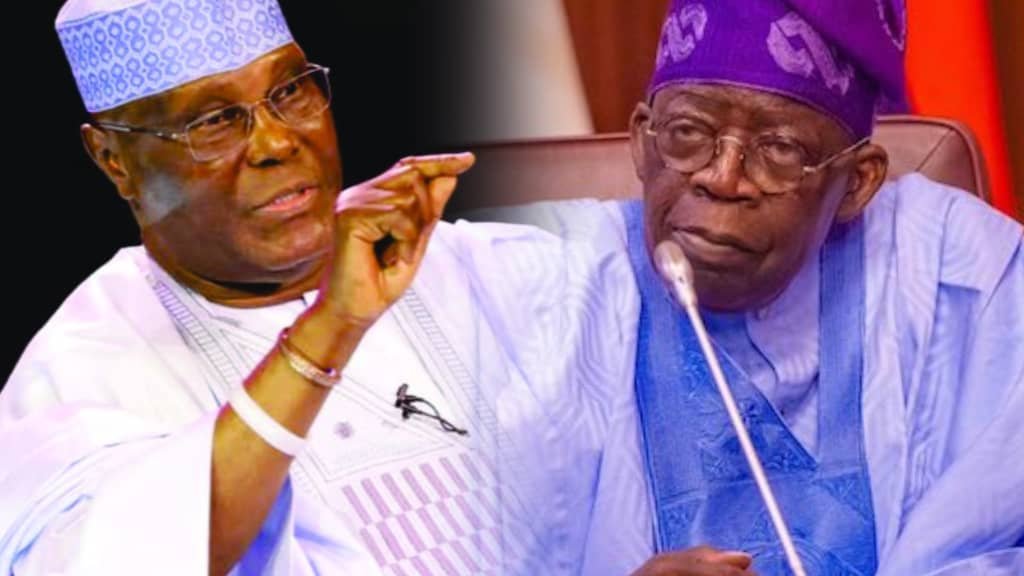
Former Vice President and 2027 African Democratic Congress (ADC) presidential candidate, Atiku Abubakar, has challenged the Federal Government to investigate and prosecute him if it has evidence linking him to alleged spending of about $16 billion on power projects during the administration of former President Olusegun Obasanjo.
Atiku made the challenge through a statement issued by his Senior Special Assistant on Public Communication, Phrank Shaibu, amid renewed political exchanges between the opposition and the Bola Tinubu administration.
The former Vice President accused the Federal Government of reviving old allegations concerning power-sector projects and privatisation as a way of diverting attention from questions surrounding the use of revenues generated after the removal of the petrol subsidy.
The controversy over the power sector spending dates back to the Obasanjo administration. After Obasanjo left office in 2007, questions were raised over billions of dollars committed to power projects, with the figure initially reported at about $11 billion before becoming widely associated with the $16 billion allegation.
Atiku, who served as Vice President and chaired the National Council on Privatisation, denied responsibility for the alleged misuse of funds.
He said successive governments had had ample opportunity to investigate the allegations but had failed to prosecute him over any proven wrongdoing.
According to Atiku, he was never invited by the National Assembly to answer allegations of corruption concerning the power projects.
He also maintained that although he chaired the National Council on Privatisation, he did not oversee the implementation of the power projects, which he said was handled by the relevant minister.
“It is still not too late. Investigate me. Invite me. Produce the evidence. Prosecute me if you have a case. But propaganda cannot substitute for evidence,” Atiku said.
The former Vice President also questioned the government’s management of additional revenues following the removal of petrol subsidy.
Atiku argued that Nigerians have endured higher fuel, transportation and food costs since the subsidy was removed, while the government has not adequately explained how the resulting revenues are being used to improve citizens’ welfare.
He asked the government to account for the resources generated since the subsidy removal, saying, “Where is the people’s money?”
The renewed dispute comes as Atiku positions himself as a major opposition contender ahead of the 2027 presidential election.
The ADC presidential candidate has increasingly focused his criticism of the Tinubu administration on economic reforms, particularly the removal of petrol subsidy and its impact on household incomes and the cost of living.
While government officials have defended the reforms as necessary measures to strengthen public finances and encourage economic growth, opposition figures continue to demand greater transparency over government revenues and expenditure.
The power-sector controversy is therefore likely to remain part of the wider political debate as Nigeria moves closer to the 2027 elections.
Atiku has maintained that if there is credible evidence connecting him to financial wrongdoing, the appropriate response should be a transparent investigation and prosecution rather than political allegations.
The allegations and counter-allegations remain part of an ongoing political dispute, while any question of criminal liability would ultimately depend on evidence and due process.