


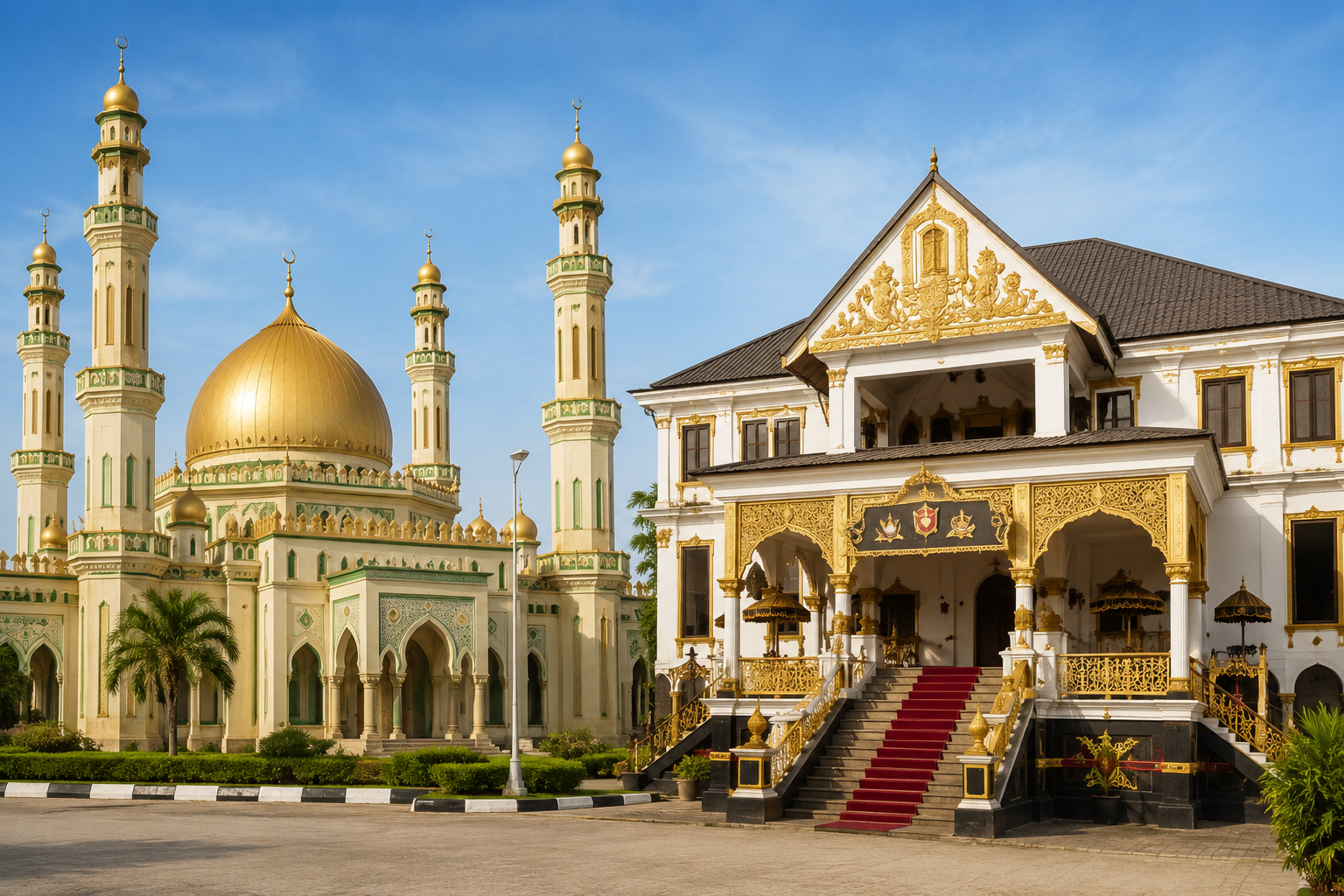
About 78 Ministries, Departments and Agencies (MDAs) of the Federal Government have earmarked nearly ₦400 billion in the proposed 2026 budget for the construction and rehabilitation of community halls, mosques, traditional rulers’ palaces, village market squares, civic centres and other constituency-related projects.
An analysis of the budget proposals shows that more than half of the allocation is dedicated to projects considered non-developmental, including the distribution of grains, motorcycles and tricycles, sponsorship of community thrift societies, construction of museums and mini-stadia, and other grassroots interventions.
Among the MDAs with such allocations are the Ministry of Defence Headquarters, Nigerian Air Force, Nigerian Defence Academy, Federal Ministry of Information and National Orientation, Federal Ministry of Industry, Trade and Investment, National Building and Road Research Institute (NBRRI), National Productivity Centre, Industrial Training Fund, Federal Cooperative College, and several other federal institutions.

The proposed expenditures have drawn criticism from economists and public finance experts, who argue that many of the projects fall outside the statutory responsibilities of the agencies involved and offer limited economic value at a time Nigeria is grappling with fiscal pressures.
According to analysts, the fragmentation of public funds into numerous small-scale projects undermines fiscal discipline and diverts scarce resources from critical sectors such as healthcare, education, power, security, transportation and other infrastructure capable of delivering broader national benefits.
They also warned that such projects often lack adequate transparency, measurable outcomes and effective oversight, reducing their overall developmental impact.
A review of the budget proposal shows that the National Building and Road Research Institute is expected to finance projects including the construction of village halls in Anambra State, an international market in Jigawa State, traditional rulers’ palaces in Rivers and Kogi states, market stalls in Borno State, a multipurpose hall in Kaduna State, and the renovation of mosques in Kebbi, Ekiti and Jigawa states.
Similarly, the National Productivity Centre has proposed funding for projects such as support for Ijaw musicians, construction of an Emir’s palace in Yobe State, refurbishment of Obas’ palaces in Ogun State, an econometrics laboratory in Ekiti State and the construction of an abattoir in Gombe State.
The National Mathematical Centre is also listed to finance the construction of a Sociology Department building at Ahmadu Bello University, Zaria, a project critics argue is unrelated to the institution’s primary mandate of promoting mathematical research and development.
Reacting to the development, consultant economist and former central banker Chukwunonso Ihuma blamed the National Assembly for what he described as weak budget oversight.
According to him, lawmakers are often responsible for inserting projects into the budgets of agencies where they have little or no connection to the agencies’ core functions.
The proposed allocations have renewed calls for stronger budget scrutiny, improved fiscal accountability and stricter adherence to the statutory mandates of government institutions to ensure that public funds are directed toward projects capable of delivering meaningful economic and social benefits for Nigerians.