






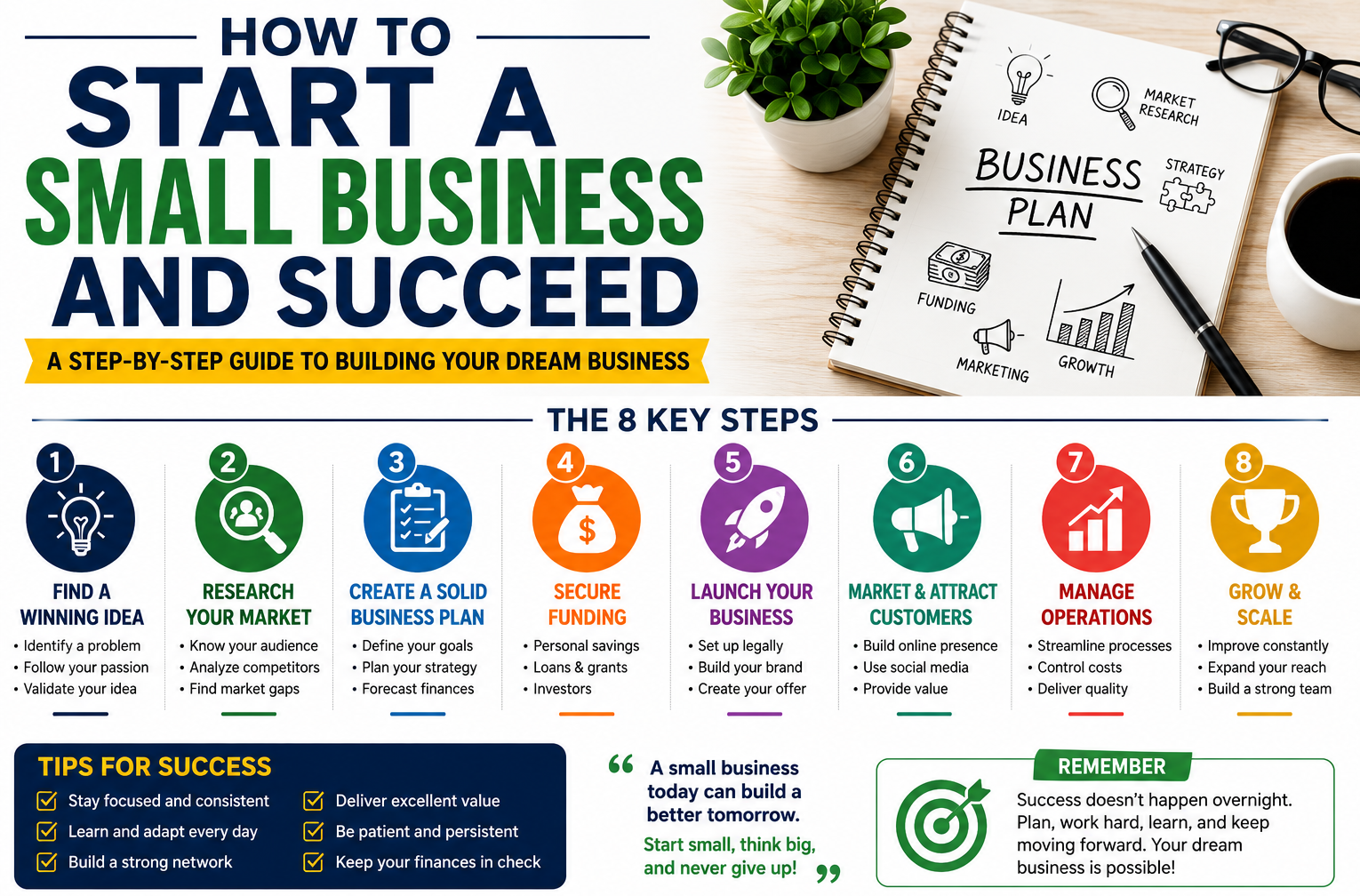
Starting a small business is one of the most rewarding journeys you can take. It offers the opportunity to become financially independent, create jobs, solve real problems, and build something that can benefit your family and community for years to come. However, success in business does not happen by chance. It requires planning, discipline, continuous learning, and a willingness to adapt.
Many people dream of becoming entrepreneurs but never move beyond the idea stage because they fear failure or lack clear direction. The good news is that every successful business—from a neighborhood shop to a global company—began with a single idea and a commitment to take action.
This guide will show you exactly how to start a small business and build it into a successful, sustainable enterprise.
Why Start a Small Business?
Owning a small business provides many benefits, including:
- Financial independence
- Greater control over your career
- The opportunity to build long-term wealth
- Flexible working hours
- The ability to create employment for others
- Personal fulfillment from solving customer problems
- The chance to leave a lasting legacy
While entrepreneurship involves risks, those risks can be managed with proper planning and informed decision-making.
Step 1: Identify a Profitable Business Idea
Every successful business begins with an idea that meets a genuine need.
Ask yourself:
- What skills or experience do I have?
- What problems do people frequently face?
- What products or services are in demand?
- What industries are growing?
- Can I improve an existing product or service?
Examples of business opportunities include:
- E-commerce
- Agriculture
- Food processing
- Fashion
- Import and export
- Commodity trading
- Logistics and transportation
- Digital marketing
- Construction
- Renewable energy
- Information technology
- Health and wellness
- Professional consulting
Choose a business that matches both your strengths and market demand.
Step 2: Conduct Market Research
Before investing money, understand the market you plan to enter.
Research should answer questions such as:
- Who are your ideal customers?
- What problems are they trying to solve?
- Who are your main competitors?
- What prices are customers willing to pay?
- What trends are shaping your industry?
Market research helps you make better decisions and avoid costly mistakes.
Step 3: Define Your Target Audience
Not every customer is the right customer.
Create a detailed customer profile by considering:
- Age
- Occupation
- Income level
- Location
- Interests
- Buying habits
- Common challenges
The better you understand your audience, the easier it becomes to develop products and marketing that meet their needs.
Step 4: Write a Business Plan
A business plan serves as the roadmap for your business.
Include the following sections:
Executive Summary
Provide a brief overview of your business and goals.
Business Description
Explain your mission, vision, and the value your business provides.
Products and Services
Describe what you offer and how it benefits customers.
Market Analysis
Summarize your target market, competitors, and industry opportunities.
Marketing Strategy
Explain how you will attract and retain customers.
Operations Plan
Describe your day-to-day business activities and processes.
Financial Plan
Include:
- Startup costs
- Operating expenses
- Revenue projections
- Cash flow forecast
- Profit estimates
- Break-even analysis
A strong business plan helps guide decisions and can also attract investors or lenders.
Step 5: Register Your Business
Choose a memorable and unique business name. Then complete the registrations, licenses, permits, and tax requirements that apply in your country or region.
Operating legally builds trust with customers, suppliers, and financial institutions.
Step 6: Calculate Your Startup Costs
Prepare a realistic budget before launching.
Typical expenses include:
- Business registration
- Equipment
- Inventory
- Office or shop rent
- Website development
- Marketing
- Utilities
- Transportation
- Insurance
- Salaries
Knowing your costs helps you manage your finances effectively from the beginning.
Step 7: Secure Funding
Depending on your business, funding may come from:
- Personal savings
- Family or friends
- Business partners
- Bank loans
- Investors
- Government grants or support programs
Borrow responsibly and ensure your repayment plan is realistic.
Step 8: Build a Strong Brand
Your brand is how customers recognize and remember your business.
Develop:
- A professional business name
- A memorable logo
- Consistent colors and typography
- A clear value proposition
- A reputation for honesty and quality
Strong branding helps build customer confidence and loyalty.
Step 9: Create a Professional Website
A modern business should have a website that is:
- Mobile-friendly
- Fast-loading
- Easy to navigate
- Secure
- Informative
Essential pages include:
- Home
- About Us
- Products or Services
- Contact
- Frequently Asked Questions
- Blog
- Privacy Policy
A website allows customers to learn about your business and find you through search engines.
Step 10: Use SEO to Grow Your Business
Search Engine Optimization (SEO) helps people discover your business online.
Good SEO practices include:
- Writing helpful, original content
- Using your target keywords naturally
- Creating descriptive page titles and meta descriptions
- Organizing content with clear headings
- Optimizing images with descriptive file names and alt text
- Improving page speed
- Linking related pages on your website
- Earning links from trusted websites
SEO is a long-term investment that can bring consistent, high-quality traffic.
Step 11: Market Your Business
Successful businesses actively promote their products and services.
Consider using:
- Content marketing
- Social media
- Email marketing
- Local networking
- Referral programs
- Partnerships
- Online advertising
Track your results so you know which strategies produce the best return.
Step 12: Deliver Outstanding Customer Service
Excellent customer service encourages repeat business and referrals.
Focus on:
- Responding quickly
- Being honest and transparent
- Solving customer problems professionally
- Asking for feedback
- Continuously improving your products and services
Happy customers are one of the most powerful drivers of business growth.
Step 13: Manage Your Finances Wisely
Good financial management is essential for long-term success.
Keep accurate records of:
- Sales
- Expenses
- Inventory
- Cash flow
- Taxes
- Profits
Review your financial reports regularly and make decisions based on reliable data.
Step 14: Build the Right Team
As your business grows, recruit people who share your values and have the skills needed to support your goals.
Encourage teamwork, provide training, and recognize good performance.
Step 15: Continue Learning and Improving
Markets, technology, and customer expectations change over time.
Successful entrepreneurs:
- Read business books
- Attend workshops and seminars
- Learn from mentors
- Follow industry trends
- Adapt to new opportunities
A commitment to continuous learning helps your business remain competitive.
Common Mistakes to Avoid
Many new businesses struggle because they:
- Skip market research
- Ignore customer feedback
- Spend beyond their budget
- Underestimate marketing
- Fail to manage cash flow
- Attempt to grow too quickly
- Resist adapting to change
Recognizing these mistakes early can help you avoid them.
Practical Tips for Long-Term Success
Businesses that succeed over time often have these qualities:
- Clear goals
- Strong leadership
- Financial discipline
- Customer focus
- High-quality products or services
- Effective marketing
- Ethical business practices
- Innovation
- Consistency
Success is built through steady improvement rather than overnight results.
Starting a small business is one of the best investments you can make in your future. Although the journey requires dedication, patience, and resilience, it also offers the opportunity to create lasting value for yourself, your customers, and your community.
By choosing the right business idea, understanding your market, planning carefully, delivering excellent customer service, managing your finances responsibly, and continuously improving, you can build a business that grows steadily and stands the test of time.
Remember, every successful entrepreneur started where you are today—with an idea and the courage to begin. Take the first step, remain committed, and keep learning. Your small business has the potential to become a lasting success.
Frequently Asked Questions (FAQ)
What is the first step to starting a small business?
The first step is identifying a business idea that solves a real problem and validating it through market research.
How much money do I need to start a business?
The amount depends on your business model. Some online businesses require relatively little capital, while retail or manufacturing businesses often require a larger investment.
Do I need a business plan?
Yes. A business plan provides direction, helps you manage finances, and is often useful when seeking investors or financing.
How can I attract customers?
Create a professional website, publish valuable content, optimize your site for search engines, engage on social media, encourage referrals, and provide excellent customer service.
How long does it take to become successful?
Success varies by industry and business model. Many businesses take months or several years to achieve consistent profitability. Patience, persistence, and continuous improvement are essential.