






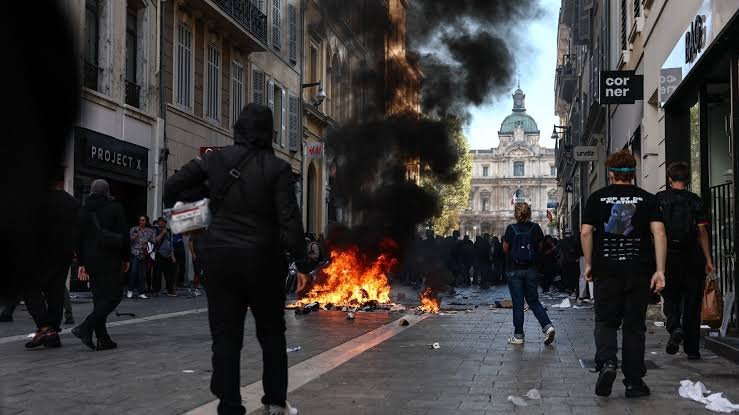
Hundreds of thousands of people took to the streets across France on Saturday, October 24, to protest rising living costs, pressure on public services, school conditions and economic inequality, prompting authorities to deploy approximately 70,000 police officers nationwide.
The demonstrations brought together students, workers, trade unions and other groups amid growing frustration with the government of President Emmanuel Macron.
The large-scale security operation was intended to prevent a repeat of the looting, arson and vandalism that marred demonstrations the previous weekend.
Student Protests Grow into a National Movement
The protest movement began with students demanding improvements in school conditions and funding. It subsequently expanded as workers and other groups joined calls for better living standards, higher wages and stronger public services.
According to Reuters, France’s Interior Ministry estimated that approximately 410,000 people participated in Saturday’s nationwide demonstrations. The CGT trade union put the turnout at a substantially higher figure of around 800,000.
The contrasting estimates reflect the different assessments of the scale of the demonstrations.
Protesters have expressed frustration over rising household expenses, strained education services and what they regard as growing inequality.
Heavy Security Deployment
Interior Minister Laurent Nuñez announced that approximately 70,000 security personnel would be deployed nationwide to manage the demonstrations and respond to potential violence.
Police used helicopters, armoured vehicles and other specialist equipment as authorities sought to protect public buildings, businesses and residents.
Some cities imposed restrictions on demonstrations, while businesses in parts of Paris closed or boarded up their premises in anticipation of possible unrest.
Police also used tear gas during isolated confrontations with demonstrators in some locations.
Fewer Incidents Than the Previous Weekend
The extensive security deployment helped prevent a repeat of the widespread destruction reported during the previous weekend’s demonstrations.
Reuters reported that authorities recorded 1,314 arrests during the latest protests, while approximately 50 police officers were injured. The number of officers injured was substantially lower than during the preceding weekend’s unrest.
Although isolated clashes occurred, the overall security operation limited the scale of the disorder that had previously raised questions about the authorities’ preparedness.
Government Faces Pressure to Respond
The demonstrations present a political challenge for Macron’s government, which must respond to public concerns over living costs, education and public services while maintaining public order.
The government has sought to distinguish peaceful protesters from individuals involved in looting, arson and attacks on property.
However, restrictions on demonstrations have also raised concerns among civil liberties advocates about the right to peaceful assembly.
The central challenge remains balancing public safety with the protection of democratic freedoms.
More Demonstrations Planned
French trade unions and protest groups have called for further demonstrations on October 31 and a nationwide strike on November 5, according to Reuters.
The planned actions indicate that public dissatisfaction has not been resolved by the latest security operation.
Whether the movement continues to expand will depend partly on the government’s response to demands for improvements in living standards, education and public services.
For now, France faces the twin challenges of managing social discontent and preventing further violence while preserving the right of citizens to protest peacefully.
Source: Reuters reporting on France’s October 24 demonstrations and the subsequent response from protest groups and trade unions.