






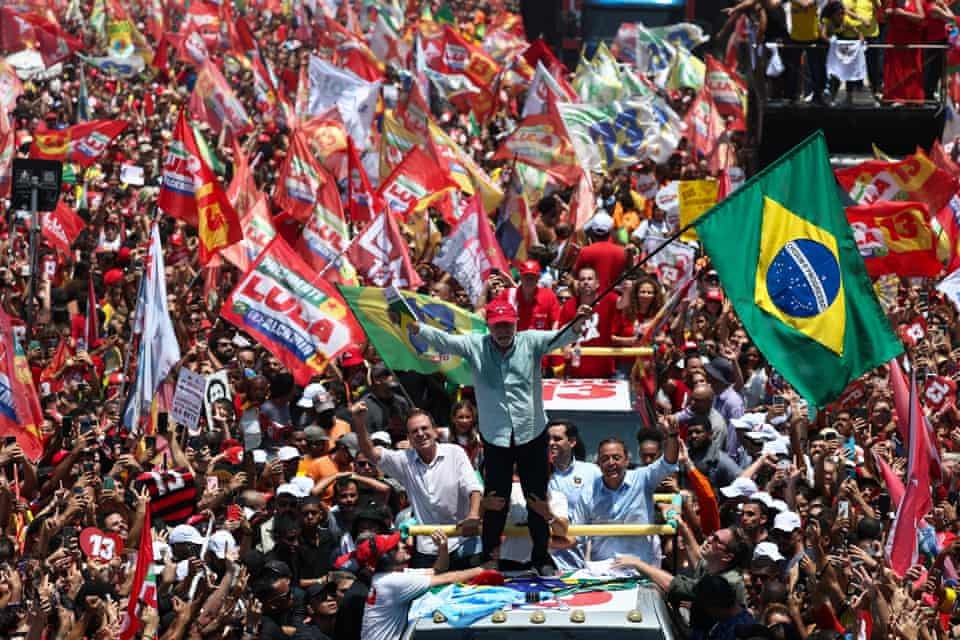
Brazilian President Luiz Inácio Lula da Silva has won a historic fourth, non-consecutive term in office, defeating conservative challenger Flávio Bolsonaro in the country’s presidential runoff election.
The 80-year-old left-wing leader secured 51.79 per cent of valid votes, while Bolsonaro received 48.21 per cent, according to Brazil’s Superior Electoral Court.
The result, announced on Sunday, October 25, 2026, marks a remarkable comeback for Lula, who finished behind Bolsonaro in the first round of voting earlier this month.
Lula Overturns First-Round Defeat
Flávio Bolsonaro, a senator and son of former Brazilian President Jair Bolsonaro, led the first round with 47.03 per cent of valid votes, compared with Lula’s 45.16 per cent.
However, Lula gained sufficient support in the runoff to reverse the result and secure another term leading Latin America’s largest economy.
His victory also represents an unprecedented milestone in Brazil’s modern presidential elections, as he became the first candidate to win a runoff after finishing second in the first round.
Lula previously served as president from 2003 to 2010 before returning to office in 2023.
International Leaders React
The result prompted congratulations from European leaders, according to the report.
European Commission President Ursula von der Leyen congratulated Lula, describing the outcome as a victory for democracy and multilateralism. She also highlighted opportunities for cooperation between Europe and Brazil on trade, climate ambitions and the international rules-based order.
French President Emmanuel Macron said France and Brazil had much to build together in pursuit of a more just world.
Spanish Prime Minister Pedro Sánchez also welcomed the result, describing it as a major victory for progressive politics.
Bolsonaro Challenges the Outcome
Flávio Bolsonaro reportedly described the result as inexplicable and called for it to be annulled, although any formal challenge would be subject to Brazil’s electoral procedures.
His father, Jair Bolsonaro, is serving a sentence connected to a coup-plotting conviction following his defeat in the 2022 presidential election.
The latest result underscores the deep political divisions in Brazil, where left-wing and conservative forces have remained sharply opposed over the country’s political and economic direction.
Lula now faces the task of governing a country whose electorate remains divided, while seeking to advance his domestic priorities and maintain Brazil’s international partnerships.