







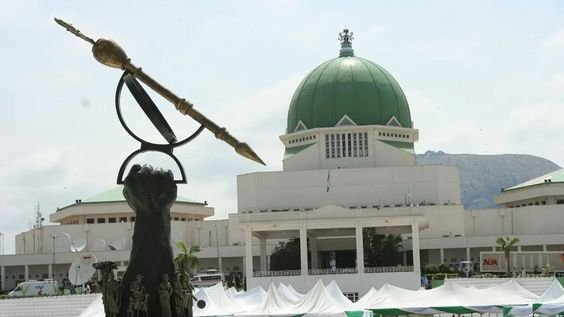
The Federal Government is considering a legal framework to promote continuity in economic policymaking, raising questions about whether future administrations could reverse major reforms introduced by President Bola Tinubu.
Nigeria’s Federal Government is considering ways to protect major economic policies from abrupt reversal by future administrations, as part of efforts to improve investor confidence and promote long-term economic stability.
Minister of Finance and Coordinating Minister of the Economy, Taiwo Oyedele, disclosed the proposal on Monday, October 26, while presenting the draft Nigeria Economic Policy Framework at the 32nd Nigerian Economic Summit in Abuja.
The proposed framework is intended to establish principles for economic decision-making that would remain relevant across successive governments, regardless of which political party is in power.
Oyedele said the government wanted to embed these principles in institutions, policy and potentially legislation to make them more enduring.
The proposal, however, remains at the consultation stage and has not become law.
Why the Government Wants Policy Continuity
Oyedele argued that frequent changes in government policy have discouraged investment, undermined confidence and weakened the impact of previous economic reforms.
He described policy uncertainty as an additional burden on businesses, particularly those making long-term investment decisions that depend on predictable regulations, taxation and market conditions.
The proposed framework would guide decisions involving taxation, tariffs, subsidies, investment and industrial development.
Its central objective is to encourage a more consistent approach to economic management while requiring policymakers to explain and justify major interventions.
The government hopes that clearer rules will help businesses plan for the future and reduce the disruption associated with sudden policy changes.
Petrol Subsidy Removal at the Centre of Debate
One of the most prominent reforms under Tinubu’s administration was the removal of the petrol subsidy in 2023.
The decision significantly changed Nigeria’s approach to fuel pricing and public expenditure. However, it also contributed to the economic pressures experienced by households and businesses.
Oyedele argued that Nigeria should not return to the previous subsidy arrangement, saying the government should focus on improving household incomes rather than artificially suppressing prices.
The position reflects the administration’s broader commitment to maintaining its economic reform programme.
Nevertheless, the long-term effectiveness of the reforms remains a subject of public debate, particularly regarding living costs, employment, purchasing power and poverty.
What Would the Proposed Framework Change?
The draft framework proposes a more structured process for introducing major economic policies.
Under the proposed arrangement, policymakers would be expected to explain the problem a policy seeks to solve, provide supporting evidence, identify its beneficiaries and those who would bear its costs, and specify the conditions under which the intervention should end.
These assessments would help the public and businesses understand the reasoning behind significant decisions.
The framework also proposes an annual National Economic Scorecard to measure whether economic policies are improving people’s lives.
The scorecard would focus on indicators such as real wages, productive employment and poverty reduction, rather than relying primarily on headline economic growth figures.
If implemented effectively, these measures could provide a clearer basis for assessing whether government reforms are delivering meaningful benefits.
Can Future Governments Reverse Tinubu’s Reforms?
The key question is whether the proposed framework could prevent a future president from reversing Tinubu’s economic policies.
At present, there is no enacted law under this proposal that prevents future administrations from changing Tinubu’s reforms.
The government is still consulting on whether the framework should be backed by legislation and how institutions could be strengthened to support policy continuity.
Even if legislation is eventually passed, its practical effect would depend on the wording of the law, its legal status and the powers it gives future governments.
A law could establish procedures, reporting requirements and principles that make abrupt policy changes more difficult. However, an ordinary law would not automatically make every economic policy permanent or necessarily prevent a future National Assembly from amending or repealing it through the applicable legal process.
Future governments would also need to respond to changing economic conditions, and a framework’s effectiveness would depend partly on how it balances continuity with the need to adjust policies when circumstances change.
The final provisions have not yet been settled.
Public Consultation Opens Until November 27
The draft Nigeria Economic Policy Framework is open for public consultation until November 27, 2026.
The government has invited Nigerians, businesses, professional organisations and other stakeholders to review the proposals and submit recommendations.
After the consultation and validation process, the framework is expected to proceed to the Federal Executive Council for approval and the National Economic Council for endorsement.
Further legislative action may be considered if the government decides that parts of the framework should be backed by law.
Until then, the proposal remains a draft rather than an approved legal restriction on future administrations.
Will Policy Stability Improve Nigerians’ Lives?
Predictable economic policies can help businesses plan, attract investment and make long-term commitments. However, stability alone does not guarantee lower prices, higher wages or more employment.
The impact of any framework will ultimately depend on its implementation, the quality of government decisions and whether the resulting economic activity benefits households across the country.
For Nigerians who continue to face pressure from living costs, the most important test will be whether the reforms deliver tangible improvements in purchasing power, jobs and access to economic opportunities.
For now, the government is seeking a lasting framework for economic policymaking, but it has not enacted a law preventing future administrations from reversing Tinubu’s reforms.