






International reserves remain one of the most important indicators of a country’s financial strength, economic stability and ability to withstand external economic shocks.
Countries around the world accumulate international reserves to support their currencies, pay for essential imports, meet international financial obligations and protect their economies against global uncertainties.
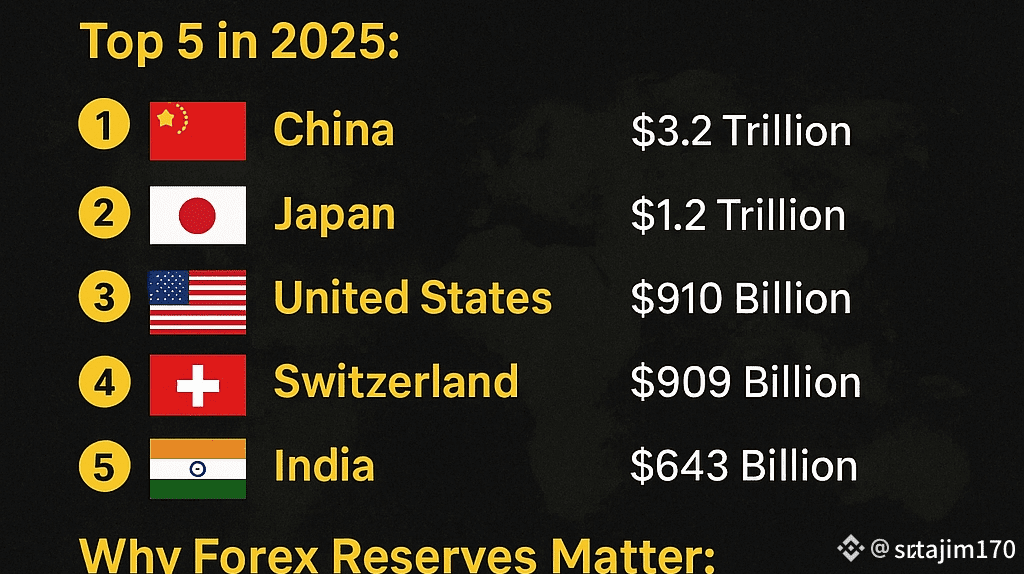
According to the World Bank’s World Development Indicators, using data sourced from the International Monetary Fund (IMF), China remains the world’s leading country in total international reserves, with approximately $3.75 trillion in 2025.
The United States and Japan follow, with Switzerland and India also maintaining substantial reserve holdings.
The historical period from 1964 to 2025 provides an opportunity to examine how international financial power has changed across the world over six decades.
What are total international reserves?
Total international reserves include:
- Foreign-exchange holdings.
- Monetary gold.
- Special Drawing Rights (SDRs).
- Reserve positions held by member countries at the IMF.
These assets help governments and central banks maintain financial stability and meet international payment obligations.
Countries with the largest reported total reserves
The following figures are reported in US dollars. Values are rounded to billions. The latest available observation is used where 2025 data is unavailable.
| Rank | Country/economy | Reserves (US$bn) |
|---|---|---|
| 1 | China | 3,748.74 |
| 2 | United States | 1,385.45 |
| 3 | Japan | 1,371.40 |
| 4 | Switzerland | 1,075.68 |
| 5 | India | 700.07 |
| 6 | Russia (2024) | 608.36 |
| 7 | Germany | 572.20 |
| 8 | Saudi Arabia | 505.16 |
| 9 | South Korea | 436.57 |
| 10 | Italy | 434.01 |
| 11 | Singapore | 432.11 |
| 12 | Hong Kong (2023) | 425.55 |
| 13 | France | 428.21 |
| 14 | Brazil | 358.51 |
| 15 | United Arab Emirates | 292.32 |
| 16 | Thailand | 282.26 |
| 17 | Poland | 271.81 |
| 18 | Mexico | 256.18 |
| 19 | Israel | 229.49 |
| 20 | United Kingdom | 214.36 |
| 21 | Türkiye | 185.57 |
| 22 | Czechia | 176.33 |
| 23 | Indonesia | 156.54 |
| 24 | Spain | 128.59 |
| 25 | Denmark | 127.76 |
| 26 | Malaysia | 125.63 |
| 27 | Canada | 125.63 |
| 28 | Netherlands | 118.06 |
| 29 | Philippines | 110.93 |
| 30 | Libya | 104.66 |
| 31 | Iraq | 98.45 |
| 32 | Romania | 90.65 |
| 33 | Peru | 90.39 |
| 34 | Norway | 85.49 |
| 35 | Vietnam | 85.58 |
| 36 | Algeria | 76.83 |
| 37 | South Africa | 76.02 |
| 38 | Sweden | 74.20 |
| 39 | Australia | 72.63 |
| 40 | Portugal | 68.84 |
| 41 | Colombia | 65.81 |
| 42 | Kazakhstan | 66.07 |
| 43 | Uzbekistan | 66.04 |
| 44 | Hungary | 59.09 |
| 45 | Belgium | 56.39 |
| 46 | Qatar | 55.85 |
| 47 | Austria | 53.44 |
| 48 | Kuwait | 51.74 |
| 49 | Chile | 49.45 |
| 50 | Egypt | 48.88 |
| 51 | Morocco | 48.45 |
| 52 | Nigeria | 46.02 |
| 53 | Argentina | 41.00 |
| 54 | Serbia | 34.15 |
| 55 | Lebanon (2024) | 33.30 |
| 56 | Guatemala | 32.75 |
| 57 | Macao | 30.64 |
| 58 | Bangladesh | 28.56 |
| 59 | New Zealand | 28.15 |
| 60 | Cambodia | 27.52 |
| 61 | Jordan | 26.56 |
| 62 | Pakistan | 26.46 |
| 63 | Greece | 24.05 |
| 64 | Finland | 22.46 |
| 65 | Nepal | 21.10 |
| 66 | Uruguay | 18.99 |
| 67 | Oman (2024) | 18.29 |
| 68 | Costa Rica | 17.09 |
| 69 | Ukraine | 57.27 |
| 70 | Ghana | 12.13 |
| 71 | Kenya | 12.39 |
| 72 | Mauritius | 10.31 |
| 73 | Honduras | 10.20 |
| 74 | Ecuador | 9.80 |
| 75 | Myanmar (2023) | 9.34 |
| 76 | Tunisia (2024) | 9.34 |
| 77 | Albania | 8.60 |
| 78 | Kyrgyzstan | 8.60 |
| 79 | Nicaragua | 8.32 |
| 80 | Iceland | 7.73 |
| 81 | Mongolia | 7.00 |
| 82 | Georgia | 6.16 |
| 83 | Latvia | 6.10 |
| 84 | Moldova | 6.01 |
| 85 | North Macedonia | 5.80 |
| 86 | Brunei | 5.49 |
| 87 | Trinidad and Tobago | 5.37 |
| 88 | Armenia | 5.09 |
| 89 | Cameroon (2024) | 5.06 |
| 90 | Laos | 3.71 |
| 91 | Mozambique (2024) | 3.84 |
| 92 | Ethiopia (2024) | 3.78 |
| 93 | Slovenia | 3.55 |
| 94 | Uganda (2024) | 3.48 |
| 95 | Botswana (2024) | 3.46 |
| 96 | Namibia | 3.10 |
| 97 | Luxembourg | 3.06 |
| 98 | Cyprus | 2.95 |
| 99 | Bahamas | 2.81 |
| 100 | Madagascar (2024) | 2.78 |
| 101 | Estonia | 2.44 |
| 102 | Aruba | 2.23 |
| 103 | Montenegro | 2.20 |
| 104 | Mauritania (2021) | 2.04 |
| 105 | Rwanda | 1.96 |
| 106 | West Bank and Gaza | 1.83 |
| 107 | Fiji | 1.66 |
| 108 | Suriname | 1.62 |
| 109 | Malta | 1.54 |
| 110 | Kosovo | 1.52 |
| 111 | Guinea (2024) | 1.35 |
| 112 | Guyana | 1.36 |
| 113 | Cabo Verde | 1.26 |
| 114 | Yemen (2022) | 1.25 |
| 115 | Bhutan | 1.19 |
| 116 | Equatorial Guinea (2024) | 1.08 |
| 117 | Lesotho (2024) | 1.01 |
| 118 | Maldives | 0.98 |
| 119 | San Marino | 0.86 |
| 120 | Timor-Leste | 0.81 |
| 121 | Seychelles (2024) | 0.77 |
| 122 | Republic of the Congo (2024) | 0.76 |
| 123 | Djibouti | 0.66 |
| 124 | Gambia (2024) | 0.63 |
| 125 | Vanuatu (2024) | 0.61 |
| 126 | Samoa | 0.60 |
| 127 | Bolivia | 0.58 |
| 128 | Belize | 0.56 |
| 129 | Eswatini (2024) | 0.54 |
| 130 | Zimbabwe (2024) | 0.48 |
| 131 | Sierra Leone (2024) | 0.43 |
| 132 | Tonga | 0.41 |
| 133 | Comoros | 0.41 |
| 134 | Grenada | 0.41 |
| 135 | Liberia | 0.34 |
| 136 | Cayman Islands | 0.27 |
| 137 | St. Kitts and Nevis | 0.28 |
| 138 | St. Vincent and the Grenadines | 0.28 |
| 139 | Dominica | 0.16 |
| 140 | Burundi (2023) | 0.09 |
| 141 | São Tomé and Príncipe (2024) | 0.06 |
Editorial note: This is a compilation of reported observations, not a complete 195-country ranking. Some countries and territories have no published observation in the displayed World Bank series. Figures for older years must not be interpreted as 2025 balances. The table is rounded and should be checked against the downloadable dataset before publication.
Africa’s international reserve position
Africa’s reserve holdings are particularly important because many African economies depend on imported machinery, fuel, medicines, industrial materials and food products.
Among the African countries with reported figures, Libya, Algeria, South Africa, Egypt, Morocco and Nigeria are notable reserve holders.
Nigeria’s reported total reserves stood at approximately $46.02 billion in 2025.
Other African countries with reported figures include:
- Ghana: approximately $12.13 billion.
- Kenya: approximately $12.39 billion.
- Mauritius: approximately $10.31 billion.
- Tunisia: approximately $9.34 billion (2024).
- Cameroon: approximately $5.06 billion (2024).
- Ethiopia: approximately $3.78 billion (2024).
- Mozambique: approximately $3.84 billion (2024).
- Uganda: approximately $3.48 billion (2024).
- Botswana: approximately $3.46 billion (2024).
- Namibia: approximately $3.10 billion.
- Rwanda: approximately $1.96 billion.
These figures demonstrate the different financial capacities of African economies. However, countries with missing data should not automatically be considered to have no reserves.
Why China dominates global reserve holdings
China’s position reflects decades of export growth, manufacturing expansion, international trade surpluses and the accumulation of foreign assets.
Its large reserves provide an important financial buffer and strengthen its ability to participate in international commerce.
Japan and Switzerland also maintain substantial international reserves, while India’s growing economy and international trade position have contributed to its significant reserve holdings.
Why international reserves matter to Nigeria
For Nigeria, maintaining strong international reserves is essential for:
- Supporting the stability of the naira.
- Financing essential imports.
- Meeting international payment obligations.
- Strengthening investor confidence.
- Supporting economic resilience during periods of falling oil revenue.
- Providing protection against external economic shocks.
Nigeria’s long-term ambition should include expanding non-oil exports, increasing manufacturing capacity, attracting foreign investment and strengthening foreign-exchange earnings.
Agriculture, solid minerals, petroleum products, industrial production and technology-driven exports can all contribute to stronger foreign-exchange earnings.
The global distribution of international reserves demonstrates the enormous differences in financial strength between countries.
China remains the dominant reserve holder, followed by the United States and Japan. Meanwhile, developing economies continue to work towards strengthening their financial positions through trade, investment, industrialisation and export diversification.
For African countries, building sustainable international reserves will require stronger production capacity, improved infrastructure, regional trade cooperation and greater participation in global markets.
Nigeria and other African economies have significant opportunities to improve their positions by expanding local industries and developing competitive export sectors.
OBASANJONEWS24 will continue to monitor global economic developments and report on issues affecting international trade, investment, financial stability and Africa’s economic future.
Source: World Bank, World Development Indicators, indicator FI.RES.TOTL.CD, sourced from the International Monetary Fund’s International Financial Statistics database.
Data reference: https://data.worldbank.org/indicator/FI.RES.TOTL.CD