






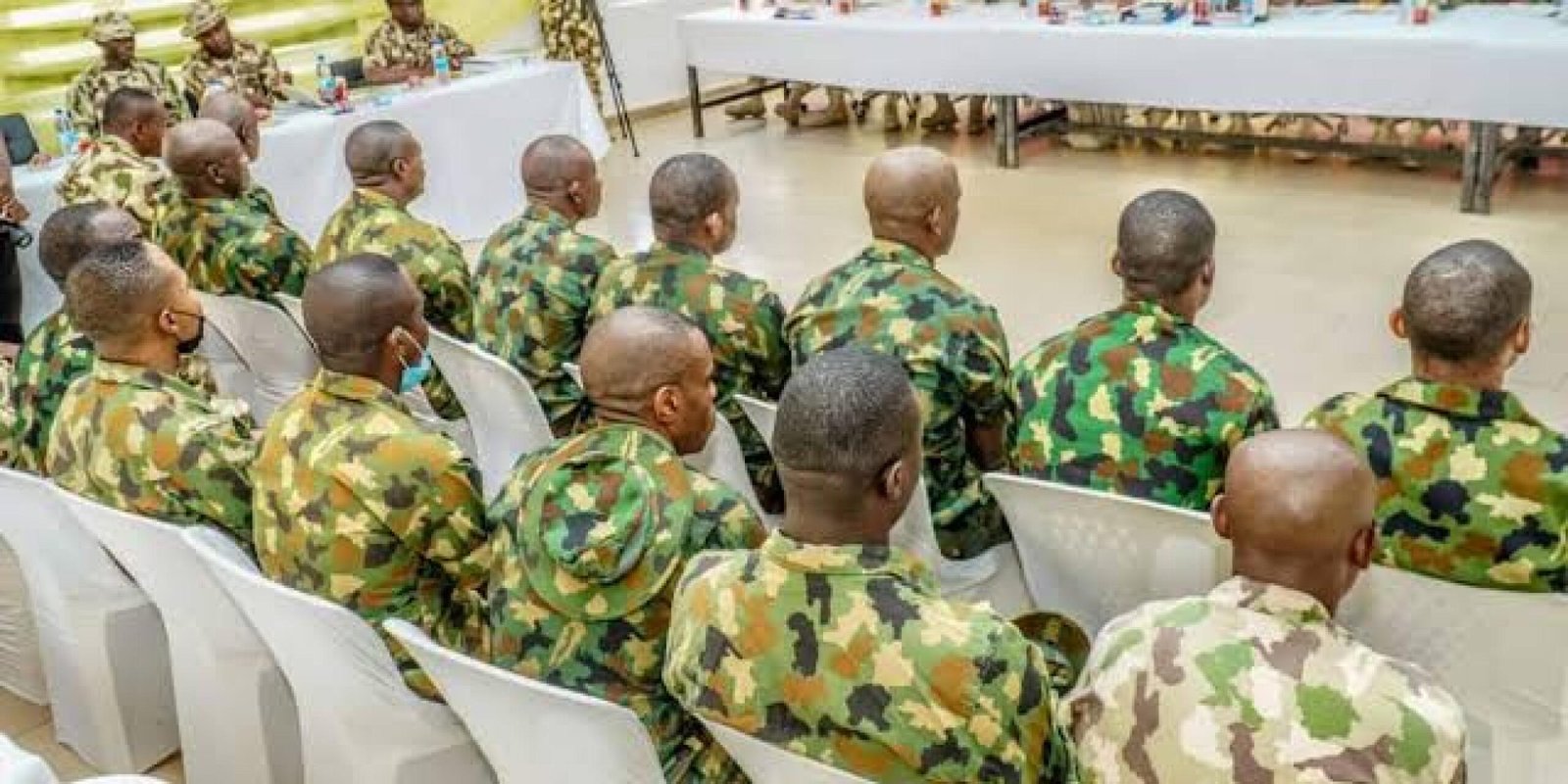
The President of the General Court-Martial sitting in Abuja, Air Vice Marshal H.I. Alhaji, has acknowledged concerns over the conditions under which 36 Nigerian military personnel accused of plotting to overthrow President Bola Tinubu’s government are being detained.
During proceedings, AVM Alhaji described the current detention facility as “not ideal” and acknowledged complaints about restricted access to the accused by their lawyers and family members.
The military personnel are facing allegations connected to an alleged plot to overthrow the democratically elected government. The allegations remain before the court, and the accused are entitled to a fair hearing.
Court Raises Concerns Over Access
Addressing concerns raised during the proceedings, the court-martial president said the authorities responsible for detention had raised issues concerning access to the accused personnel.
However, he stressed that restrictions on access could not continue indefinitely because they could interfere with the accused persons’ fundamental rights to a fair hearing and access to justice.
He said the court had already communicated its position to the relevant authorities and would continue discussions aimed at resolving the matter.
According to him, the restriction on access “cannot be a permanent position” because lawyers must be able to adequately represent their clients.
Lawyers Asked to Arrive Earlier
As an interim arrangement, the court has directed defence lawyers to arrive earlier so they can spend more time consulting with the accused before proceedings begin.
AVM Alhaji urged the lawyers to take advantage of the additional access while discussions continue over a more permanent solution.
He assured the defence that the existing restrictions would not remain indefinitely.
The court-martial president also emphasised that lawyers and counsel must ultimately have adequate access to their clients, particularly as the case progresses to the substantive trial.
Detention Conditions Described as Poor
One of the strongest observations from the proceedings concerned the condition of the facility where the accused personnel are currently being held.
AVM Alhaji said the court had examined detention facilities operated by the Department of State Services (DSS) and the police and described those facilities as significantly better than the one currently being used.
He said the current facility was not suitable, adding that he would personally find the conditions difficult to accept.
“I very much understand that the current detention facility is not ideal,” he said.
He nevertheless appealed for patience while efforts are made to address the situation.
Court Responds to Claims of Unequal Treatment
The court-martial president also addressed complaints regarding alleged unequal treatment of the prosecution and defence teams.
He disclosed that the prosecution had accused him of giving the defence too much opportunity during proceedings.
AVM Alhaji said criticism from both sides was inevitable in such proceedings but insisted that the court would continue to perform its responsibilities impartially.
He said the court would continue to face criticism from both sides as it carries out its duties.
Access Expected to Improve During Trial
The court-martial president made clear that the current access arrangements could not continue once the proceedings enter the substantive trial stage.
He said the court itself was dissatisfied with the limited access currently available to the accused personnel.
According to him, lawyers must have sufficient opportunity to consult with their clients, particularly when the substantive proceedings begin.
The court therefore appears to be seeking a balance between security considerations surrounding the detainees and their legal rights as defendants.
Fair Hearing Remains Central
The issue of access has become significant because of the seriousness of the allegations against the 36 military personnel.
While security authorities are responsible for ensuring the safe custody of the accused, their legal representatives must also be able to prepare an adequate defence.
The court-martial president’s comments indicate that the court recognises the importance of maintaining that balance.
He assured the defence team that the restrictions would not continue indefinitely and that arrangements would have to change as the case moves toward the substantive trial.
The proceedings continue in Abuja as the military court considers the allegations against the accused personnel.