







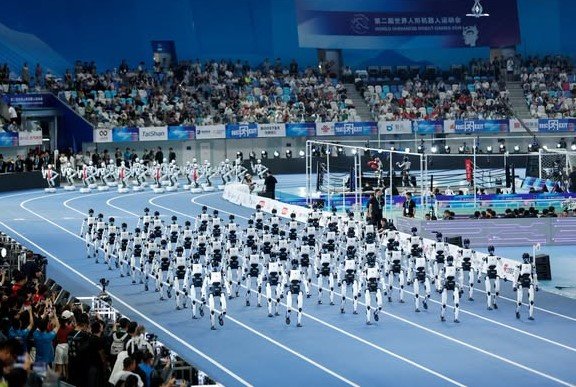
Sprinting and high jump are among the sporting events attracting attention at the World Humanoid Robot Games in Beijing, where robots are competing in a five-day showcase of rapidly developing artificial intelligence and robotics technology.
The event has drawn large crowds, with spectators watching humanoid robots attempt athletic challenges normally associated with human competitors.
Some robots have reportedly achieved record-breaking performances, including a 100-metre sprint record that organisers say surpasses the previous benchmark associated with Jamaican sprint legend Usain Bolt.
Spectators Fascinated by Robot Performances
The competition has generated a mixture of excitement and unease among spectators.
Li Yanfeng, one of those attending the event, said he initially felt uncomfortable about artificial intelligence because of concerns that robots could eventually replace humans.
“At first, I wasn’t very accepting of artificial intelligence,” Li said. “I was even a bit resistant to it because of the possibility that it might replace or displace humans. But now that I see this development is unstoppable, I decided to come and take a look.”
Other spectators said they were amazed to see robots performing physical activities that traditionally require human strength, balance and coordination.
Yang Shangzheng, another spectator, said the ability of robots to participate in familiar sports was particularly impressive.
“These sports are perfectly normal for humans, but now robots can do them. I find it amazing,” he said.
Children Among the Spectators
Children were also among those attending the games, with some parents saying they wanted their children to gain a better understanding of emerging technologies.
As artificial intelligence and robotics become increasingly integrated into everyday life, the event offers young people an opportunity to see the technology in action and consider how it could shape their future.
Five-Day Competition
The World Humanoid Robot Games are being held over five days in Beijing and mark the second edition of the competition.
The event combines sport, entertainment and technology, giving developers an opportunity to demonstrate the capabilities of humanoid robots in areas such as speed, agility and coordination.
While some spectators remain concerned about the potential impact of AI on human employment and society, the large crowds in Beijing suggest that there is also significant public curiosity about what humanoid robots can achieve.
The competition highlights the rapid progress being made in robotics and raises a broader question about how humans and increasingly capable machines will interact in the years ahead.