






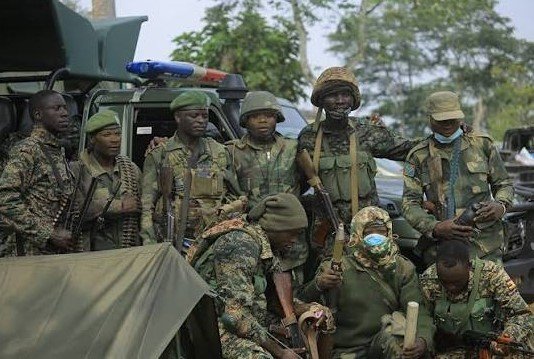
A mission to verify the ceasefire between the Congolese army and Rwanda-backed M23 rebels has begun in eastern Democratic Republic of the Congo, as diplomatic efforts seek to end years of conflict in the mineral-rich region.
The ceasefire verification mission got underway on Monday, with representatives of the Congolese government and M23, alongside observers from member countries of the International Conference on the Great Lakes Region (ICGLR).
The team travelled by United Nations helicopters to Minembwe in South Kivu Province, an area that has witnessed intense fighting in recent months.
The mission comes a day after Switzerland announced that the DRC government and M23 had agreed on a roadmap for peace negotiations following talks held from August 17 to 21.
Mission to Visit Key Conflict Areas
According to UN and government sources, the verification team is expected to travel to several locations affected by the conflict.
The mission will visit Uvira, where M23 withdrew in January, as well as Kalehe, where fighting has reportedly occurred in recent weeks.
Minembwe is considered particularly important because of the intensity of clashes in the surrounding area and the difficulty international organisations have faced in accessing parts of the region.
Neither the Congolese government nor M23 had immediately issued a detailed public response to Monday’s verification mission.
Ceasefire Monitoring at Centre of Peace Roadmap
The verification mission follows an agreement by the DRC and M23 to establish a mechanism for monitoring alleged ceasefire violations.
The parties agreed on a standardised method for reporting allegations of violations and established a mechanism to review progress and address challenges in implementing commitments under the Doha Framework Agreement.
The latest negotiations involved representatives from the United States, Qatar, Switzerland, the African Union Commission and Togo, which is participating as an African Union mediator.
The developments have raised cautious hopes that the latest diplomatic initiative could help restore momentum to a peace process that has repeatedly stalled.
Fighting Continues Despite Peace Efforts
Eastern DRC has endured decades of conflict involving numerous armed groups competing for territory and influence in a region rich in minerals.
International mediation efforts led by the United States and Qatar previously produced agreements involving Kinshasa, M23 and Rwanda. However, fighting has continued despite repeated ceasefire commitments.
The DRC government and M23 have regularly accused each other of violating ceasefires and carrying out attacks.
In its latest statement, Kinshasa accused M23 of committing alleged crimes and serious human rights violations in territories under its control. The government also alleged that more than 300 people were killed in June and July.
M23, meanwhile, accused government forces of launching an artillery attack on a village near Minembwe.
The allegations have not been independently verified, and both sides have repeatedly traded accusations during the conflict.
Human Rights Concerns
The conflict has also generated widespread concerns over alleged abuses against civilians.
Reports by humanitarian organisations and UN experts have accused armed groups in eastern Congo of serious violations, while M23 has also been accused of suppressing dissent, including against journalists and human rights activists in areas under its control.
With the ceasefire verification mission now entering the field, its ability to independently assess alleged violations and establish facts on the ground could prove critical to rebuilding trust between the two sides.
For communities in South Kivu and other conflict-affected areas, the central test will be whether the latest diplomatic commitments can translate into a sustained reduction in violence and eventually pave the way for lasting peace.