






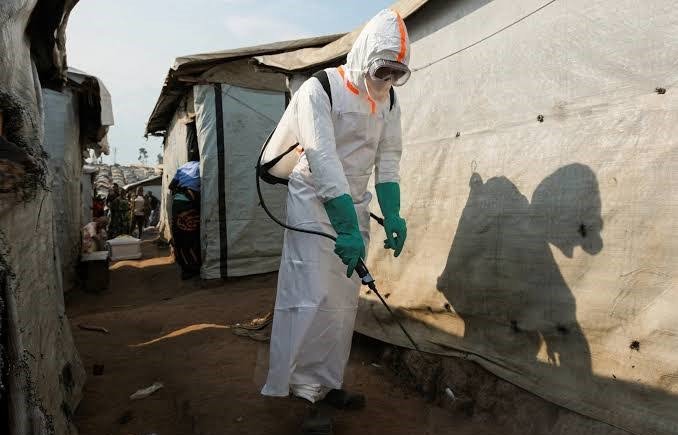
Every day, Gédéon Banga Ngbape leads his contact-tracing team across communities in Nizi, in eastern Congo’s Ituri Province, searching for anyone who may have come into contact with the country’s fastest-spreading Ebola outbreak on record.
As head of contact tracing in the area, Ngbape says his teams handle an average of 60 to 70 alerts a day — investigating reports, tracking down people exposed to suspected or confirmed cases, and trying to get care to anyone showing symptoms before the virus can spread further.
But the response is straining under mounting pressure. Ngbape says health workers in the region haven’t been paid in more than three months, a crisis that came to a head on Thursday when staff at the Nizi Treatment Center walked off the job, forcing the facility to temporarily shut its doors. He also pointed to limited mobility for field teams as a persistent obstacle to reaching people in time.
The result, Ngbape says, is a surveillance system increasingly unable to keep pace with the virus — and he stressed that when surveillance falters, the entire response effort is undermined.
The numbers underscore the urgency. Government data released Tuesday put the outbreak at 4,381 confirmed cases, including 2,011 deaths — a toll that has climbed nearly three times faster than during the 2014–16 West Africa Ebola outbreak, the deadliest on record. Though the outbreak was formally declared on May 15, health authorities say genomic sequencing suggests it actually began months earlier, in February.
(Editor’s note: WHO’s most recent situation report, dated August 12, puts the toll higher still — 4,665 confirmed cases and 2,184 deaths — reflecting how rapidly the outbreak continues to evolve even day to day.)
In Nizi, community health worker Ana Ndroy Kasime visits homes daily to educate residents about Ebola and flag suspected cases to health officials. But she says workers routinely lack even basic protective equipment for the job.
Complicating the response further is the pathogen itself: this outbreak is being driven by the rare Bundibugyo strain of Ebola virus, for which no approved vaccine or treatment currently exists, though clinical trials are underway.
Taken together, unpaid and striking health workers, threats from armed rebel groups, deep distrust among traumatized communities, and persistent misinformation claiming Ebola isn’t real have combined to make this one of the most difficult Ebola responses in recent memory.