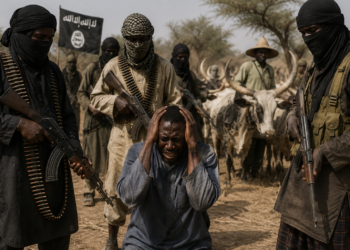



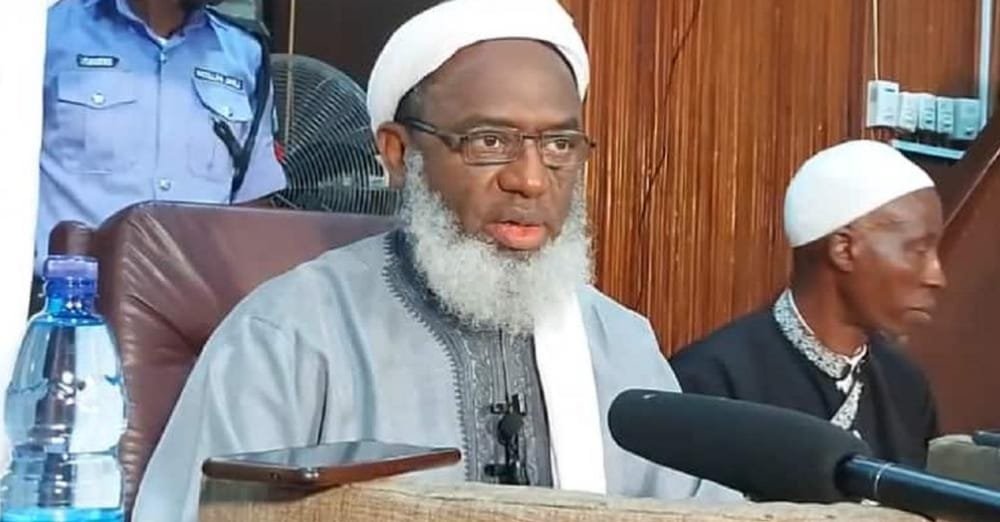
Islamic scholar Sheikh Ahmad Gumi has raised concerns about the Federal Government’s strategy for addressing insecurity. He questioned who would be willing to engage with Boko Haram insurgents and armed bandits, much like the previous administration under former President Goodluck Jonathan did with Niger Delta militants during its peace process.

During a public engagement, Gumi emphasized that while military operations are necessary, dialogue should not be entirely dismissed in the effort to end the prolonged insurgency and banditry in northern Nigeria, which have claimed thousands of lives.
He cited the Niger Delta Amnesty Programme introduced by the late President Umaru Musa Yar’Adua and continued under President Goodluck Jonathan, where government officials and mediators engaged directly with militant leaders to persuade them to disarm. Gumi questioned whether a similar approach could be applied to the current security challenges.
He asked who would visit Boko Haram and the bandits in the manner people approached Niger Delta militants, suggesting that achieving lasting peace may require both dialogue and security operations.
Gumi argued that many violent conflicts worldwide have ultimately been resolved through negotiations, urging the government to explore every legitimate option that might help save lives and restore peace in affected areas.
His comments have sparked mixed reactions among Nigerians. Some believe negotiations might encourage fighters to surrender and reduce violence, while others feel that engaging with terrorists and bandits could reward criminality and undermine justice for victims.
Over the years, Gumi has been vocal about advocating for dialogue with armed groups in the North-West. His visits to bandit camps and his calls for negotiation have received both support and criticism from political leaders, security experts, and civil society organizations.
The Federal Government has maintained that while it is open to insurgents surrendering under established deradicalization programs, it will continue its military operations against terrorist organizations like Boko Haram and the Islamic State West Africa Province (ISWAP), as well as armed bandit groups targeting communities.
Security analysts note that the debate over dialogue versus military action remains one of the most contentious aspects of Nigeria’s fight against insecurity. Many insist that any peace initiative must prioritize justice for victims, national security, and adherence to the rule of law.