






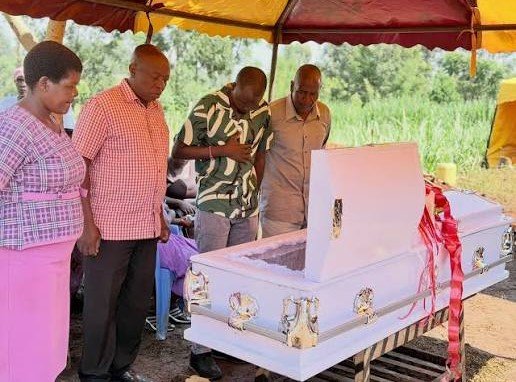
Penina Zawadi should have been celebrating the birth of her son. Instead, her family was left mourning her death after severe bleeding during childbirth exposed serious weaknesses in access to emergency maternal healthcare.
Zawadi had reportedly enjoyed a healthy pregnancy. But after she began bleeding during labour, she was taken to Malindi General Hospital, where doctors performed a caesarean section to deliver her baby.
Her condition remained critical, and her family said she waited for hours before being referred to Kilifi County Referral Hospital, about an hour away by road. Doctors eventually performed further surgery, including an operation to remove her uterus in an attempt to save her life.
After spending several days in intensive care, Zawadi died on June 23. Her newborn son survived.
Her story reflects a wider maternal health crisis across Kenya and much of sub-Saharan Africa. The region accounts for about 70% of maternal deaths worldwide, with around 180,000 pregnancy-related deaths recorded annually across the continent.
Government data from 2022 showed that Kilifi County recorded 532 maternal deaths per 100,000 live births, significantly higher than Kenya’s national average of 355.
Emergency care remains a major challenge
Severe bleeding is among the leading causes of maternal deaths, alongside obstructed labour, pregnancy-related high blood pressure and infections.
Health experts and reproductive health organisations say many of these deaths can be prevented when women receive timely emergency treatment. However, shortages of medical equipment, limited healthcare facilities and difficulties transporting patients to referral hospitals continue to put mothers at risk.
In rural communities, some clinics remain poorly equipped and may lack the resources needed to handle life-threatening complications.
The situation has also been complicated by reductions in international health funding. Aid cuts have placed additional pressure on healthcare systems serving some of Kenya’s poorest communities.
The Kilifi County government says progress is being made, pointing to expanded healthcare facilities and other measures designed to bring services closer to mothers. Officials reported 81 maternal deaths over an 18-month period and described the figure as an improvement.
But for families such as Zawadi’s, the challenge remains painfully real.
Her death has left her husband raising their children without a stable income, while relatives and members of the community have stepped in to provide support.
Zawadi’s story highlights the urgent need for stronger maternal healthcare, better-equipped hospitals, reliable emergency transport and faster access to life-saving treatment so that giving birth does not become a tragedy for families across Kenya.