






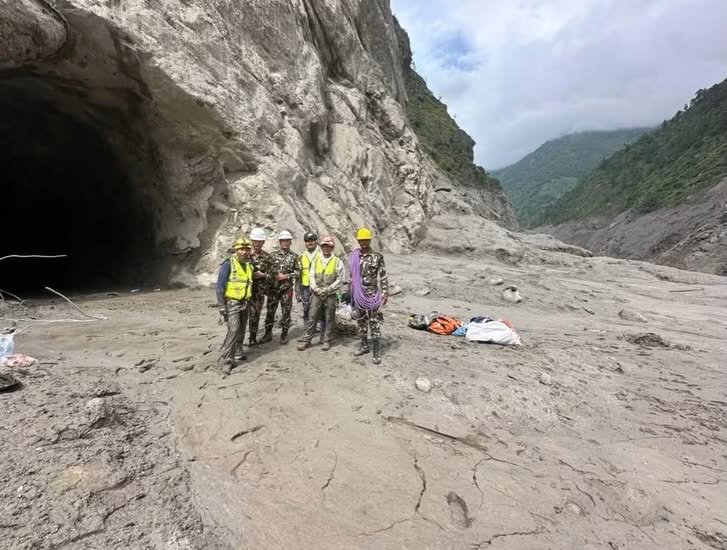
Rescue operations are continuing in Nepal as military personnel search deep underground for workers feared trapped after devastating mudslides struck the country’s mountainous region near the Tibet border.
Six days after the disaster, Nepali army rescue teams have entered tunnels connected to the Rasuwagadhi hydroelectric power station in an effort to locate workers who may still be alive.
Authorities estimate that about 100 people could remain trapped inside tunnels at several hydropower facilities affected by the disaster. Across the wider region, however, the number of people still unaccounted for has risen to approximately 933.
Rescue Teams Face Dangerous Conditions
The search operation has been complicated by the scale of the destruction.
Mudslides and flooding damaged roads, blocked access routes and affected infrastructure serving hydropower projects in the remote mountainous area.
Rescuers are being forced to work through narrow and damaged underground passages while dealing with unstable terrain and debris left behind by the disaster.
The possibility that some workers survived by taking shelter inside tunnels has increased pressure on rescue teams to reach inaccessible areas as quickly as possible.
Nepal’s Mountainous Regions Remain Vulnerable
Nepal has a long history of deadly floods and landslides, particularly during the annual monsoon season.
In September 2024, exceptionally heavy rainfall triggered widespread flooding and landslides that claimed more than 250 lives and damaged roads, bridges and other critical infrastructure.
The Rasuwagadhi area also suffered severe flooding the following year, causing further damage to infrastructure along the Nepal-Tibet border.
The latest disaster has once again highlighted the risks faced by communities and workers living and operating in Nepal’s mountainous environment.
Hydropower Sector Under Pressure
Nepal has increasingly turned to hydropower as a major source of electricity and an important part of its economic development strategy.
But the expansion of hydropower projects into difficult mountainous terrain also exposes workers and infrastructure to natural hazards, including landslides, flash floods and glacial-related disasters.
The latest mudslides have demonstrated how quickly extreme natural events can overwhelm infrastructure in remote areas.
Families Await News
As rescue workers continue their underground search, families of the missing workers remain desperate for information.
Authorities are focusing on locations where workers are believed to have been present when the mudslides and flooding struck.
The coming hours and days could be crucial.
While the government believes some workers may have survived underground, rescuers must overcome blocked tunnels, damaged infrastructure and hazardous terrain to determine whether those trapped can still be reached.
For now, the search continues at Rasuwagadhi and other affected hydropower sites as Nepal races against time to find the missing.