






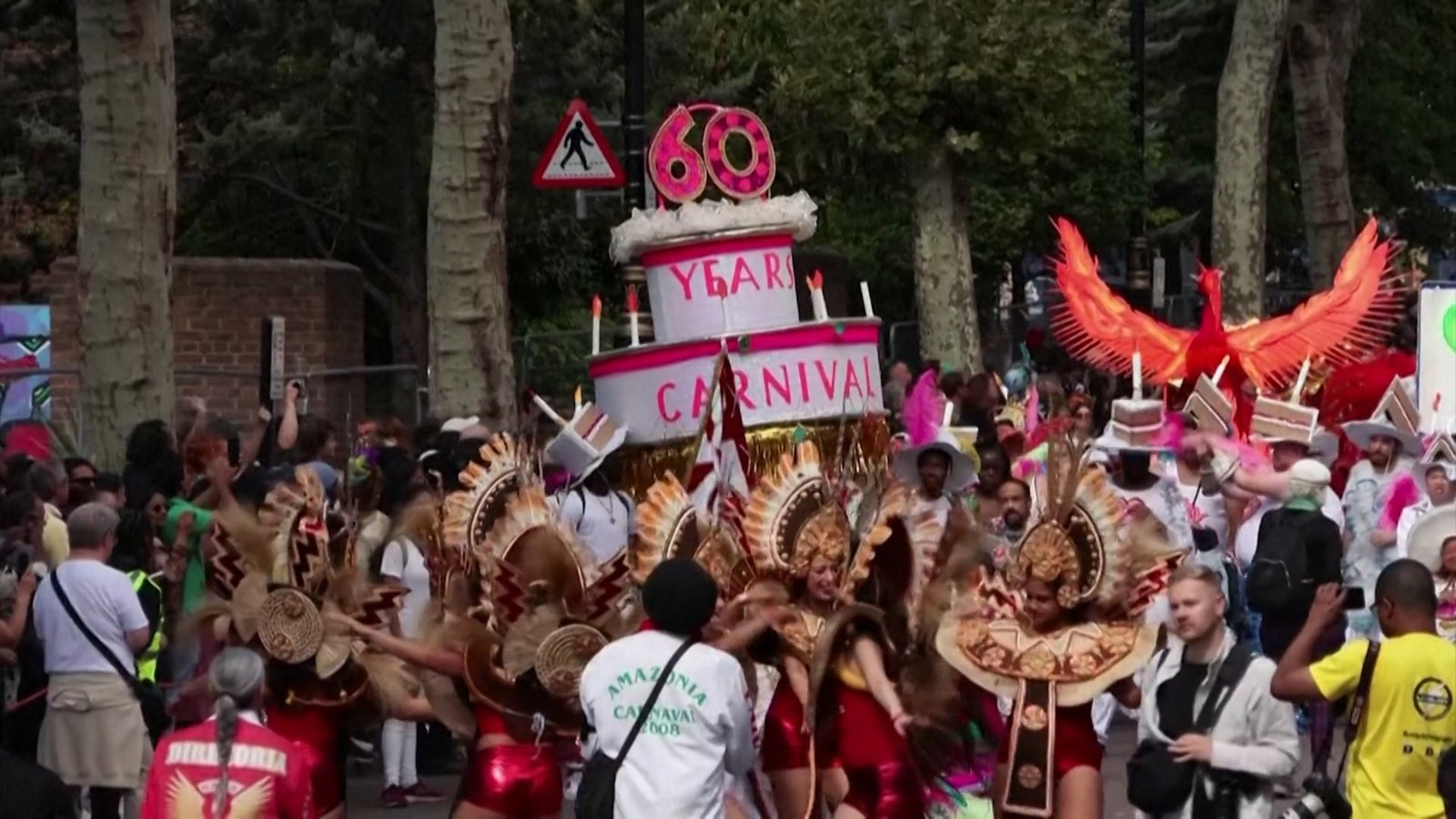
The streets of London have once again been transformed by music, colourful costumes and Caribbean traditions as thousands of people gather for the Notting Hill Carnival.
This year’s celebration carries special significance as the iconic London street festival marks its 60th anniversary, highlighting six decades of Caribbean culture, community and creativity.
Held during the August Bank Holiday weekend, the carnival brings together residents, visitors, performers and communities from across London for one of the city’s most recognisable cultural events.
From Community Celebration to Global Attraction
The story of Notting Hill Carnival began against the backdrop of difficult race relations in London.
During the late 1950s, Caribbean immigrants living in the Notting Hill area faced racism, discrimination and racial violence.
Trinidadian activist Claudia Jones responded by helping create a platform for Caribbean culture in London. In 1959, she organised an indoor Caribbean Carnival, giving members of the community an opportunity to celebrate their heritage at a time when tensions remained high.
Several years later, another important chapter began.
In 1966, local social worker Rhaune Laslett organised a street festival in Notting Hill. The event is widely regarded as the beginning of the modern Notting Hill Carnival.
Six Decades of Caribbean Expression
What began as a community gathering has grown into one of Europe’s largest street festivals.
The carnival has become a powerful showcase for Caribbean traditions, featuring vibrant masquerade costumes, steelpan performances, calypso, soca music and the famous sound-system culture associated with the event.
For many participants, however, the celebration represents much more than entertainment.
It is a reflection of the contribution of Caribbean communities to the cultural identity of London and Britain.
A Celebration of Community
Over the decades, Notting Hill Carnival has developed into a major annual event that brings people from different backgrounds together.
The streets become filled with dancers, musicians, food vendors, performers and spectators, creating an atmosphere that reflects London’s multicultural character.
The 60th anniversary provides an opportunity to look back at the festival’s origins while celebrating the generations that have helped keep its traditions alive.
From its roots in a community responding to racial tensions to its status today as an internationally recognised cultural celebration, Notting Hill Carnival remains an important part of London’s social and cultural history.
As the music fills the streets once again, the 60th anniversary serves as a reminder of how culture, resilience and community can transform difficult beginnings into a celebration shared by millions.