






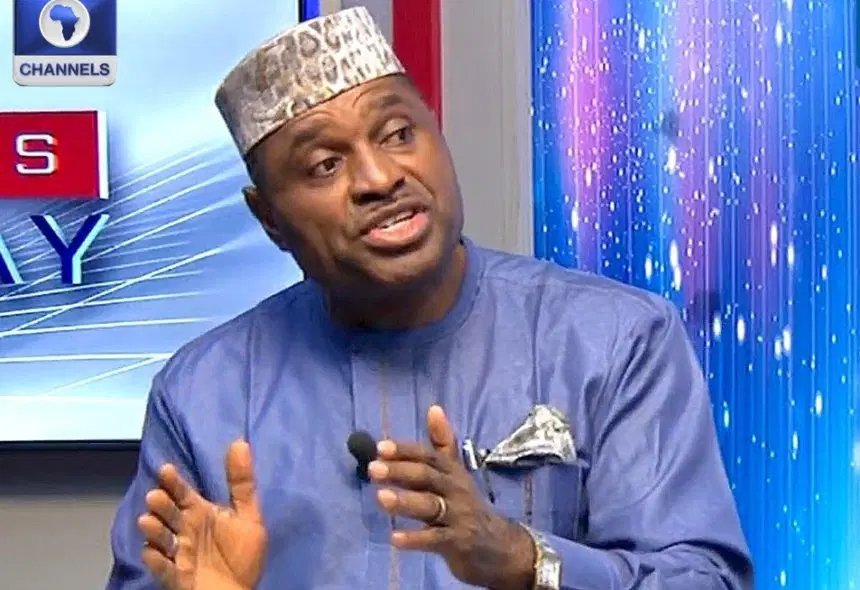
Kenneth Okonkwo, spokesperson for the African Democratic Congress (ADC) presidential candidate, Atiku Abubakar, has criticised the Federal Government’s removal of the petrol subsidy, arguing that the policy has worsened economic hardship and weakened the purchasing power of the naira.
Okonkwo made the remarks during an appearance on Channels Television’s Sunday Politics, where he defended Atiku’s proposal to make petrol more affordable if elected president in 2027.
He described the subsidy removal as “ill-advised”, arguing that it had failed to provide sufficient benefits to ordinary Nigerians despite the Federal Government’s position that the policy had freed resources for development.
Okonkwo: Petrol Prices Have Increased Pressure on Nigerians
According to Okonkwo, petrol now sells for about N1,300 per litre, making the cost of transportation and other basic necessities increasingly difficult for households and businesses.
He illustrated the pressure by comparing the cost of filling a 100-litre vehicle tank with Nigeria’s minimum wage.
“N130,000 is almost two times the minimum wage of a Nigerian,” Okonkwo said.
He argued that a worker earning N70,000 could spend almost his entire monthly income on fuel without having enough left for other basic needs.
“Meaning 70,000 naira paid to a Nigerian can only afford him half a tank of his vehicle. No rent, no food, no medical, nothing,” he said.
ADC Defends Atiku’s Position
Okonkwo said Atiku’s proposed approach would seek to make petrol more affordable while addressing broader economic challenges affecting Nigerians.
He argued that the government should consider policies that reduce the burden on households and businesses rather than measures that, in his view, have increased the cost of living.
The ADC spokesperson also linked high petrol prices to increased transportation costs, arguing that the impact extends beyond motorists to food prices, production, logistics and household expenses.
Debate Over Fuel Subsidy Continues
The removal of the petrol subsidy remains one of the most consequential economic policies of the Tinubu administration.
The Federal Government has maintained that ending the subsidy was necessary to reduce the financial burden on government and redirect public resources towards infrastructure and other development priorities.
Critics, however, argue that the immediate impact on fuel prices and living costs has placed significant pressure on Nigerians, particularly low-income households.
With the 2027 presidential election approaching, fuel prices, inflation, purchasing power and economic reforms are expected to remain major issues in the political debate.
Okonkwo’s comments therefore add to the growing opposition criticism of the government’s economic policies and the competing proposals being presented ahead of the election.