







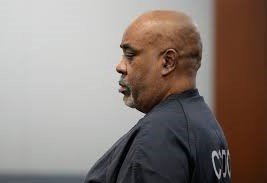
Duane Davis, popularly known as “Keffe D”, has been sentenced to 40 years to life in prison for his role in the 1996 murder of American hip-hop star Tupac Shakur.
A court in Las Vegas, Nevada, delivered the sentence on Tuesday, nearly three decades after Shakur was fatally shot in a drive-by attack near the Las Vegas Strip.
Davis was convicted of first-degree murder on August 31, 2026, following a trial that revisited one of the most widely discussed killings in music history.
During the sentencing hearing, Judge Carli Kierny said Davis must face the consequences of taking Shakur’s life and depriving his family of the opportunity to share a future with the rapper.
“You don’t get to take a man from his family,” the judge said, referring to the lasting impact of the killing.
Davis was credited with 731 days already spent in custody. He has indicated that he intends to appeal his conviction.
How Tupac Shakur was killed
Shakur was 25 when he was shot on September 7, 1996, while travelling in a car with Marion “Suge” Knight, the co-founder of Death Row Records.
The shooting followed a confrontation at the MGM Grand hotel involving members of Shakur’s entourage and Orlando Anderson, Davis’s nephew.
Prosecutors argued that Davis helped organise the attack in retaliation for the earlier altercation. Their case was that he arranged the shooting, although he was not accused of personally firing the fatal shots.
Shakur suffered multiple gunshot wounds and died in hospital on September 13, 1996.
Davis, a former leader of the Southside Compton Crips gang, became the only person charged in connection with the murder after his arrest in 2023.
Family recounts decades of grief
Shakur’s sister, Sekyiwa Shakur, addressed the court during the sentencing proceedings, describing the emotional and psychological toll her brother’s death had taken on the family.
She said the loss had affected them for decades and that she had spent years without the protection and support she associated with her brother.
The rapper’s stepbrother, Maurice “Mopreme” Shakur, also spoke about the devastating consequences of the killing, noting that Tupac never had the opportunity to raise children or witness important milestones in the lives of his nieces and nephews.
The family’s statements highlighted the enduring impact of the murder long after the initial investigation stalled.
Evidence used in the prosecution
Investigators relied partly on Davis’s previous statements in interviews, documentaries and his 2019 memoir, in which he discussed events surrounding the killing.
Prosecutors used those accounts to support their argument that he had helped arrange the attack. The jury ultimately found him guilty of first-degree murder.
The conviction has renewed public attention on the unsolved 1997 murder of fellow rapper Christopher Wallace, widely known as The Notorious B.I.G. or Biggie Smalls.
Davis has also made allegations involving music executive Sean “Diddy” Combs in discussions surrounding the wider events. Combs has denied those allegations, which should not be treated as established facts.
Davis’s sentencing marks a major development in the long-running Tupac Shakur murder case, although his planned appeal could lead to further legal proceedings.
Source: International news reports on the court proceedings.