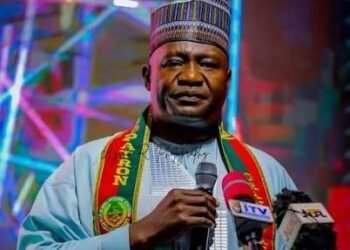




Former Director of the Department of State Services (DSS), Dennis Amachree, has attributed the worsening insecurity witnessed during the administration of former President Muhammadu Buhari to what he described as government inaction, widespread corruption, and the payment of ransom to criminal groups.

Amachree made the remarks in his newly released book, “DSS @ 40: My Journey Behind the Shield,” in which he reflected on Nigeria’s security challenges and the country’s intelligence operations over the past four decades.
According to the former intelligence chief, the Buhari administration failed to respond decisively to the growing threats of Boko Haram insurgency, banditry, kidnapping, and other violent crimes, allowing insecurity to spread across many parts of the country.
Describing the period as one of the most critical in Nigeria’s security history, Amachree wrote that the government appeared to pay little attention to the escalating threats despite Buhari’s military background.
“The period of the Muhammadu Buhari administration is viewed as a critical time when security threats metastasized, and government indifference became palpable,” he stated.
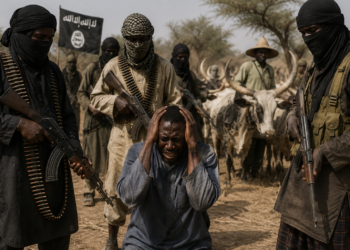
Amachree also criticised what he described as the high level of corruption among senior government officials, alleging that billions of naira were secretly paid as ransom to kidnappers and bandits.
According to him, such payments effectively financed terrorism and organised crime, strengthening the same criminal groups the government claimed it was fighting. He further noted that public confidence was damaged after notorious bandit leader Bello Turji allegedly contradicted official denials that ransom payments had been made.
The former DSS director also argued that Nigeria’s security crisis should not merely be viewed as ethnic or religious conflicts but as a consequence of poor political leadership.
He maintained that the country’s political elite had consistently placed personal interests above national security and the welfare of ordinary citizens.
“The true impediment to peace and stability is the political class, which refuses to allow citizens to pursue their daily lives in a stable environment,” Amachree wrote.
He further lamented that while the country’s economic challenges worsened and insecurity deepened, many politicians continued to pursue personal ambitions instead of implementing meaningful reforms to improve national security.
Amachree’s comments have reignited debate over the security record of the Buhari administration, which governed Nigeria from 2015 to 2023. During that period, the country witnessed persistent attacks by insurgents, armed bandits, kidnappers, and other criminal groups despite increased security spending and multiple military operations.
The book offers a rare insider’s perspective on Nigeria’s intelligence and security architecture, while calling for stronger political leadership, improved intelligence coordination, and greater accountability in the fight against insecurity.