


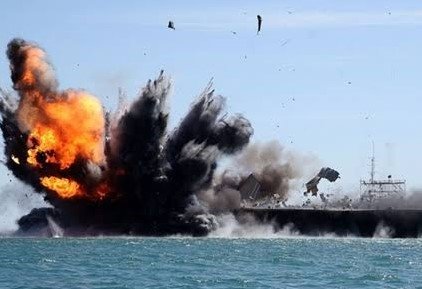
The United States and Iran engaged in another series of missile strikes on Thursday, heightening fears of an extended regional conflict and diminishing chances for a quick diplomatic solution.
This latest bout of hostilities followed a brief pause in fighting that had sparked hope that international mediation might bring both parties back to the negotiating table. Instead, the new exchange has raised alarm that the conflict could further engulf the Middle East.
The violence is already impacting neighboring nations. Jordan reported its air defense systems intercepted multiple Iranian missiles for the second day in a row. Kuwait confirmed an Iranian strike on a northern commercial building resulted in one casualty. Additionally, reports indicated that drone attacks ignited fires at an Egyptian port earlier this week, while Saudi Arabia accused Iran-backed militias in Iraq of launching attacks on its land.

The United States stated its recent military actions targeted numerous facilities connected to Iran’s Islamic Revolutionary Guard Corps (IRGC), including missile and drone sites, command centers, and coastal defense positions.
According to U.S. Central Command, these strikes were in response to an earlier Iranian missile attack on a U.S. military base in Jordan. President Donald Trump pledged a robust counteraction, warning that any assault on U.S. forces would be met with overwhelming force.
Iranian state media reported the death of three people and injuries to two others after a U.S. strike hit Qeshm Island, near the strategic Strait of Hormuz, an essential passageway for global oil transportation.
This escalation follows a joint U.S.-Saudi military operation earlier in the week that reportedly targeted Iran-backed militias in Iraq, resulting in the deaths of several fighters and Iranian military advisers.
Beyond the battleground, the conflict is exerting growing pressure on the global economy. Rising fuel prices, supply chain disruptions, and mounting concerns about regional stability are affecting international markets. Military analysts have also cautioned about the stress on U.S. weapons stockpiles needed to protect its forces and allies.
Despite the renewed fighting, diplomatic efforts have not completely stalled. Pakistan, which previously facilitated an interim agreement between the two nations, indicated that negotiations aimed at easing tensions are still progressing.
Speaking to journalists, Pakistani Foreign Ministry spokesperson Tahir Andrabi mentioned that discussions are focused on restoring stability, particularly around the Strait of Hormuz, and preventing further military escalation.
However, with military exchanges continuing between Washington and Tehran, hopes for an immediate ceasefire seem to be diminishing as the conflict enters another perilous stage.