


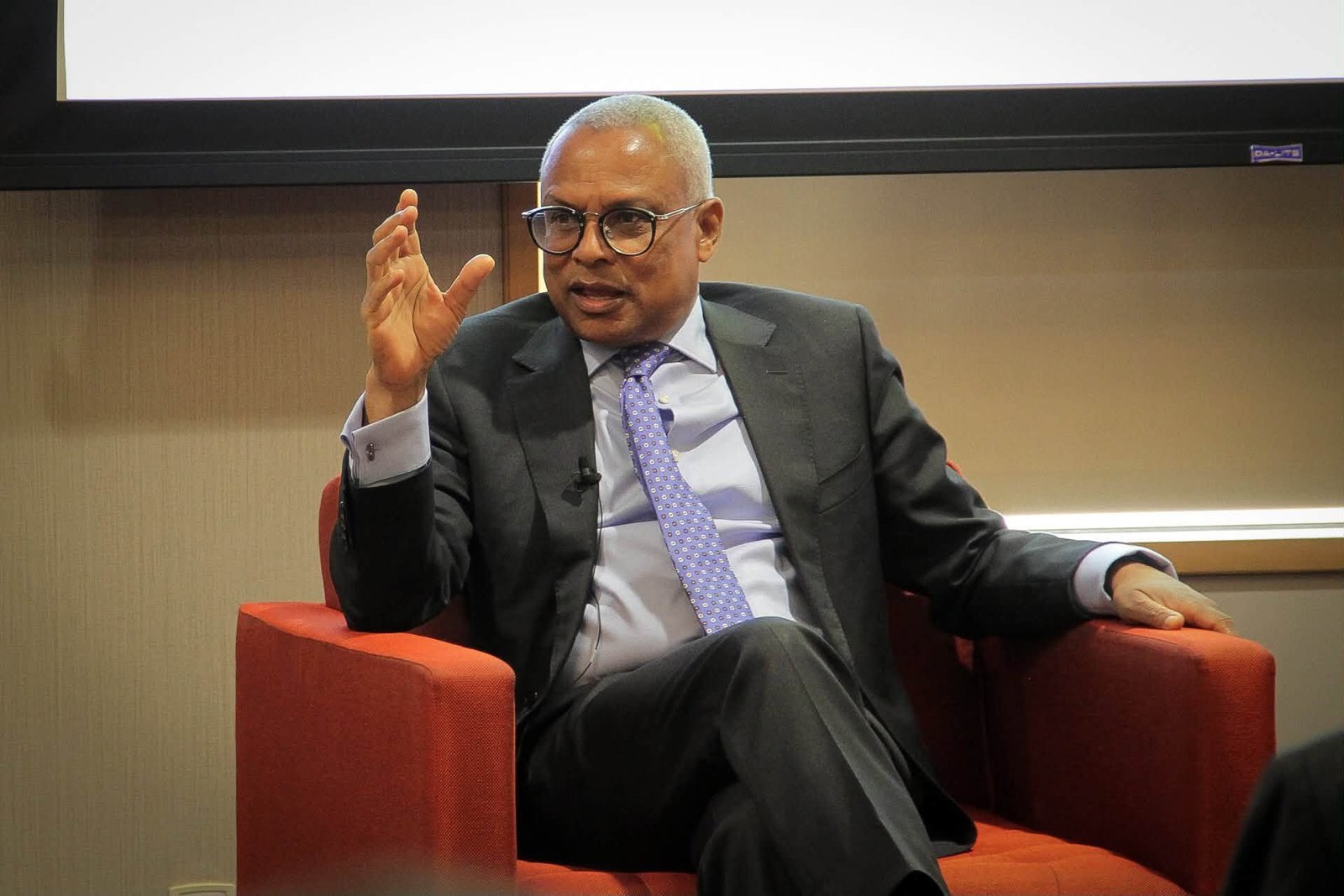
Cape Verde President José Maria Neves has announced that he will seek a second five-year term in the country’s presidential election scheduled for November 15.
Neves, 66, made the announcement on Monday during a press briefing in Praia, the country’s capital.
He said his decision was driven by a desire to use his experience to help shape Cape Verde’s future.

“I will run for a new five-year term to put the experience I have gained at the service of the future,” Neves said.
He also said he wanted to continue promoting causes he has pursued during his first term and contribute to building what he described as a prosperous nation.
Neves Seeks Another Term
Neves was elected president in 2021 after previously serving as Cape Verde’s prime minister from 2001 to 2016.
His decision to seek re-election comes ahead of a presidential contest that could feature several candidates.
At least nine people have already declared their intention to run. However, prospective candidates must submit the required documents to the Constitutional Court before Wednesday.
Interim President to Take Over
Following Neves’ announcement, National Assembly President Janira Hopffer Almada will serve as interim president for the next two months.
Cape Verde’s presidential system requires candidates to be put forward by individuals from civil society.
Political parties can support candidates, although the president is not allowed to belong to a political party.
Neves has indicated that he is seeking the backing of the African Party for the Independence of Cape Verde (PAICV), which he previously led.
At the same time, he has appealed for support beyond the party.
Cape Verde’s Democratic Reputation
Cape Verde is an Atlantic archipelago located about 600 kilometres off the coast of West Africa, near Senegal.
The former Portuguese colony gained independence in 1975.
It is widely regarded as one of Africa’s more stable democracies.
The country held its first free elections in 1991 and has largely avoided electoral violence.
Cape Verde has also experienced periods of political cohabitation, with different parties controlling the government and presidency.
Poverty and Youth Unemployment Remain Challenges
Despite its democratic reputation, Cape Verde continues to face economic and social difficulties.
Poverty remains a concern, while youth unemployment is another major challenge.
These issues are likely to remain important during the presidential campaign as voters consider the country’s economic future.
With Neves now seeking another term, Cape Verde is heading into an election that will test both his record in office and the strength of the opposition.