






The Federal Government is planning to identify and equip Ebola treatment centres in states with designated ports of entry as Nigeria intensifies preparedness following the identification of 53 contacts linked to its confirmed case.
The measures are aimed at strengthening Nigeria’s capacity to detect, isolate and manage suspected infections quickly should the disease spread beyond the current case.
According to the Nigeria Centre for Disease Control and Prevention’s (NCDC) Ebola situation report dated October 24, 2026, the country has one confirmed case of Bundibugyo Ebola disease in the Federal Capital Territory (FCT). The patient remains in isolation and has reportedly improved remarkably.
Government Assesses Isolation Facilities
As part of the response, the authorities have assessed isolation and treatment capacity at the University of Abuja Teaching Hospital.
The situation report stated that a needs assessment and optimisation exercise had been completed at the facility to strengthen its readiness to manage Ebola patients.
An infection prevention and control assessment is also planned at Karu General Hospital in Abuja to determine whether it can accommodate a potential increase in isolation requirements.
The assessments are intended to identify gaps in infrastructure, infection control and patient management before any additional cases emerge.
States to Get Treatment and Referral Arrangements
The Federal Government has listed the identification and optimisation of treatment centres in states with designated ports of entry among its next priorities.
Authorities also plan to establish referral mechanisms that will enable suspected cases to be transferred promptly from the point of detection to appropriate treatment facilities.
The measures are particularly important for states that receive international travellers and may need to respond rapidly to suspected infections.
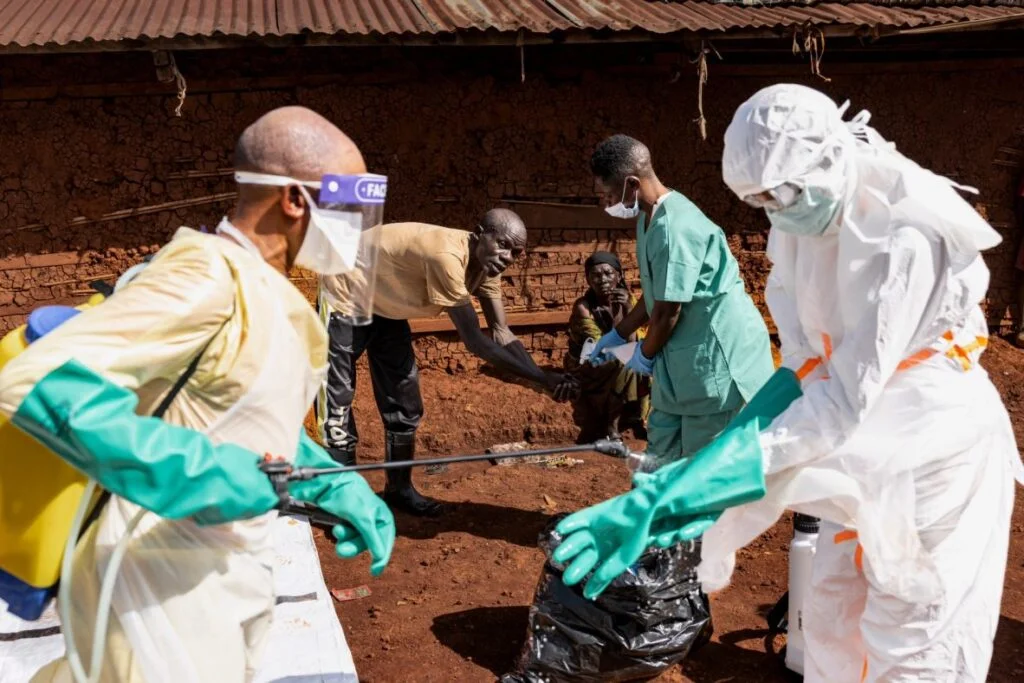
Strengthening surveillance at airports and other entry points, improving healthcare workers’ capacity and ensuring access to protective equipment are also part of the wider preparedness effort.
Contacts Under Monitoring Rise to 53
The number of identified contacts linked to Nigeria’s confirmed case has increased from the initial 44 to 53, according to the NCDC.
The contacts include healthcare workers, the patient’s spouse and domestic staff, as well as other people who may have been exposed during her medical visits.
The NCDC is continuing to categorise and monitor the contacts while investigating possible secondary contacts.
Being identified as a contact does not mean that a person has Ebola. It means health officials are assessing possible exposure and monitoring for symptoms.
The NCDC’s October 24 situation report recorded no positive tests among the identified contacts and no deaths from the confirmed case. A separate suspected case reported in Rivers State also tested negative.
Government Strengthens National Preparedness
The national incident management system has been activated to coordinate the response, while authorities are strengthening surveillance, infection prevention and control, laboratory capacity and public communication.
The government is also working with state authorities and health partners to ensure that suspected infections can be identified and referred without unnecessary delays.
The expansion of preparedness measures comes as Nigeria seeks to contain the imported case and prevent further transmission.
Health officials continue to urge Nigerians to rely on verified information, cooperate with public health teams and avoid spreading unconfirmed claims about the disease.
The immediate priority remains effective monitoring, safe patient care and ensuring that treatment and referral facilities are prepared to respond if additional cases are detected.