


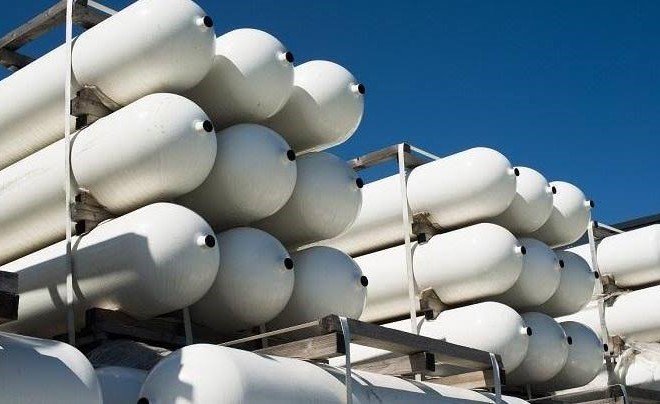
States across Nigeria are taking different approaches to the Federal Government’s plan to reduce transportation costs through Compressed Natural Gas, CNG.
The Federal Government wants Nigerians to begin seeing measurable reductions in transport fares from October 1.
However, the rollout has exposed major challenges.

These include a shortage of refuelling stations, long queues, high vehicle conversion costs and concerns among some transport operators about the availability of CNG.
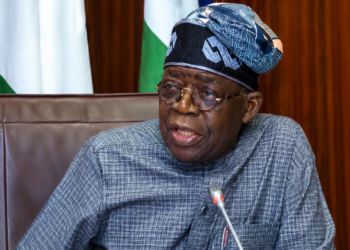
President Bola Ahmed Tinubu announced the National Affordable CNG Transit Programme after meeting with the 36 state governors on August 27.
The implementation committee is operating under the Nigeria Governors’ Forum and is chaired by Kwara State Governor AbdulRahman AbdulRazaq.
The President has urged state governments to work with transport unions and commercial operators.
He also asked them to support vehicle conversions and fleet deployment.
Most importantly, the government wants the savings from cheaper energy to reach passengers through lower fares.
CNG stations face pressure
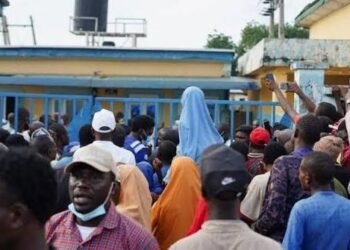
The growing number of CNG vehicles is putting pressure on existing refuelling facilities.
In Lagos, motorists have reported long queues at some stations, including the NIPCO facility around Ibafo on the Lagos-Ibadan Expressway.
Commercial drivers say they can spend several hours waiting to refuel.
Some operators have also complained that the limited number of stations makes it difficult to depend entirely on CNG.
For vehicle owners who have not yet converted, the cost of conversion is another major concern.
Some operators quoted conversion costs of between N750,000 and N1m, depending on the vehicle and cylinder configuration.
This has made the transition difficult for many commercial drivers.
NARTO calls for more stations
The National Association of Road Transport Owners has acknowledged the problem.
NARTO President Yusuf Othman said long queues were costing transport operators valuable working time.
He said the number of CNG stations must increase if the programme is to deliver its expected benefits.
Othman, however, said more stations were being developed through government intervention, including projects supported by the Midstream and Downstream Gas Infrastructure Fund.
He maintained that CNG could reduce fuel expenses for operators once the infrastructure becomes more accessible.
The Federal Government has also announced plans to expand the national CNG network, with transport unions recently welcoming a proposal for 500 CNG stations across the country.
Plateau combines subsidies with CNG challenges
Plateau State provides an example of how governments are using subsidised transport to reduce the burden on commuters.
The state government said its buses charge N200 for journeys covering roughly 18km to 20km within Jos.
Transport officials said the subsidised service was introduced to cushion the impact of higher transportation costs.
However, transport operators in the state said CNG infrastructure remains inadequate.
They said some CNG buses supplied to the state have faced difficulties because of the lack of a convenient refuelling facility.
Kaduna operates free CNG buses
Kaduna State has taken a different approach.
The state government said its free CNG bus service has been operating since July 2025.
The programme began with 100 CNG buses and covers several routes within the state.
According to the state government, the service is available to students, civil servants, traders, artisans and other residents.
Officials said the programme would continue indefinitely.
Gombe seeks more infrastructure
In Gombe State, operators said CNG was becoming useful for city transportation but remained difficult for long-distance journeys.
They said a shortage of refuelling facilities could result in drivers spending several hours waiting to refuel.
The state is considering additional CNG substations to improve access.
Operators also pointed to the cost of conversion as a major obstacle.
Kwara records limited conversions
In Kwara State, transport officials said only about 100 commercial vehicles belonging to union members had been converted.
Some vehicle owners remain reluctant because of concerns about conversion costs and possible maintenance problems.
Transport representatives also said greater consultation with unions was needed.
Kwara has two major CNG refuelling stations in Ilorin.
Concerns remain in Borno
Some transport operators in Borno State said safety concerns were affecting the adoption of CNG.
Drivers have received information about conversion, but some remain worried about possible accidents involving gas-powered vehicles.
The concerns highlight the need for continued public education and strict compliance with safety standards.
Edo plans more CNG buses
Edo State is preparing to introduce more CNG buses.
The state government said more than 50 buses with 52-seat capacity would be deployed in October.
Officials said the buses would be distributed according to commuter demand across the three senatorial districts.
The government expects cheaper public transport to put pressure on other operators to review their fares.
However, transport representatives said long queues and maintenance costs remain challenges for CNG operators.
Kano expands alternative transport
Kano State said it would collaborate with the Federal Government on CNG-powered mass transit.
The state plans to use CNG buses for urban and interstate transportation.
It has also procured 500 electric tricycles and announced plans for a Rapid Bus Transit system.
The objective is to provide more affordable transport options within the metropolitan area.
Bayelsa operators seek support
Transport operators in Bayelsa said they were interested in CNG but wanted government assistance with conversion costs and infrastructure.
They said cheaper gas could reduce operating expenses.
However, they noted that other costs, including spare parts, maintenance, financing and government levies, also affect transport fares.
Rivers prepares palliative buses
Rivers State is also preparing to return palliative buses to the roads.
The state government said additional buses would be deployed from October.
Some would transport civil servants, while others would provide free services to commuters across different routes.
The state has yet to fully implement the CNG programme.
Federal Government expands infrastructure
The Federal Government has continued to invest in CNG infrastructure.
In May 2026, President Tinubu commissioned four CNG projects supported by the Midstream and Downstream Gas Infrastructure Fund in Lagos, Abuja and Owerri.
The government has also introduced financing arrangements to reduce the burden of paying the full conversion cost upfront.
Under one federal financing arrangement, motorists and commercial operators can access structured credit for CNG conversions.
The Presidential Initiative on CNG and Electric Vehicles has also been directed to accelerate the deployment of conversion kits and mobile refuelling units.
Lower fuel costs do not automatically mean lower fares
The CNG programme has already produced lower transport costs on some routes where subsidised buses are operating.
However, the experience of commercial operators shows that fuel price is only one part of the transport equation.
Conversion costs, availability of CNG, waiting times, maintenance, spare parts, financing and road conditions can all affect fares.
This means that expanding CNG infrastructure will be crucial if the savings are to reach a larger number of commuters.
With October 1 approaching, states are under pressure to move beyond pilot programmes and isolated subsidised routes.
The Federal Government wants cheaper energy to translate into cheaper transportation.
For that to happen on a wider scale, transport operators will need reliable access to CNG, more conversion facilities and a larger network of refuelling stations.