


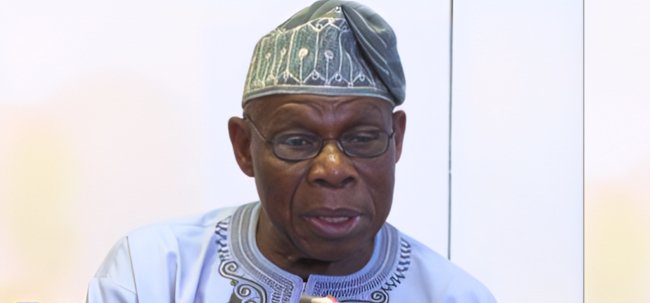
Former President Olusegun Obasanjo has described his decision to select former Vice President Atiku Abubakar as his running mate in the 1999 presidential election as the biggest mistake of his presidency.
Obasanjo made the remark on Friday during a fireside conversation with veteran entertainer and activist Charles Oputa (Charly Boy) at the public presentation of Charly Boy’s foundation and memoir, 999: A Memoir in Tribute to Late Justice Chukwudifu Oputa*, held in Lagos.
Reflecting on his years in office, the former President said every leader makes mistakes but maintained that choosing his vice president remained the decision he regretted most.

According to Obasanjo, if he had known then what he later discovered about Atiku, he would never have selected him as his running mate.
“The man I picked as my running mate, my number two. If I had known him as I came to know him later, I would not have picked him,” Obasanjo said.
When Charly Boy sought clarification on whether he was referring to Atiku Abubakar, the former President replied:
“My vice president. I don’t know what name you want to give him, but my vice president, I mean that.”
Obasanjo said the experience reinforced the importance of understanding the character of those entrusted with high public office.
“Of course, what I know about him later… I would not have picked him. Thank God that God did not allow his actions and reactions to overwhelm me, divert my focus from Nigeria or harm Nigeria,” he added.
Despite the criticism, Obasanjo insisted he bore no personal bitterness toward his former deputy.
“There is no bitterness because he did what he believed he should do, and God did what God had to do, which enabled me to achieve what I was able to achieve,” he said.
Obasanjo and Atiku served as Nigeria’s first democratically elected President and Vice President after the return to civilian rule in 1999 under the platform of the Peoples Democratic Party (PDP).
Their relationship later deteriorated into one of Nigeria’s longest-running political rivalries, marked by disagreements over governance, succession and constitutional issues.