






The controversy surrounding records held by United States authorities concerning President Bola Tinubu has resurfaced in Nigeria’s political space, with opposition figures Peter Obi and Hakeem Baba-Ahmed separately questioning the handling of the matter.
Both politicians raised concerns on Monday, August 31, 2026, although they addressed the issue from different platforms.
Obi, the presidential candidate of the Nigeria Democratic Congress (NDC), issued a statement titled A President and the Endless Question of His Past, while Baba-Ahmed discussed the matter during an opposition political gathering in Abuja.
The two opposition figures questioned why records being sought from US agencies remain the subject of a legal dispute.
Obi argued that matters concerning a public official’s past should be addressed openly when they are of legitimate public interest.
He also criticised efforts to restrict access to documents held by American authorities, arguing that transparency should be an important consideration for anyone occupying the nation’s highest political office.
The controversy relates to documents held by agencies including the Federal Bureau of Investigation (FBI), the Department of Justice (DOJ) and the Drug Enforcement Administration (DEA).
The records are being sought through a Freedom of Information Act case in the United States. The dispute relates to investigations dating back to the early 1990s and a 1993 civil forfeiture proceeding involving approximately $460,000 associated with Tinubu.
However, the legal dispute should not be confused with a criminal prosecution.
US authorities have resisted the release of some of the documents, citing provisions of American freedom-of-information law. The agencies have argued that releasing certain material could reveal sensitive law-enforcement techniques, confidential sources or other protected information.
Tinubu’s legal representatives have also challenged the disclosure of some records, maintaining that they are protected under US law.
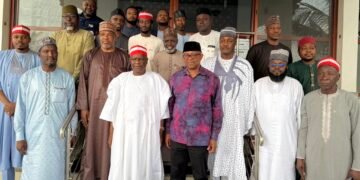
Baba-Ahmed raised the issue separately at the opposition summit in Abuja, where he also questioned Tinubu’s absence from Nigeria.
He asked who was constitutionally and politically responsible for the country while both the President and Vice President Kashim Shettima were outside the country.
Baba-Ahmed further suggested that Tinubu’s foreign trip could be connected to the dispute over the US records. However, no independent evidence establishing such a connection has been presented.
Obi was not present at the Abuja opposition meeting. Former Vice President Atiku Abubakar and Oyo State Governor Seyi Makinde were also among notable opposition figures absent from the gathering.
With political parties already preparing for the 2027 elections, the renewed debate over Tinubu’s past and the US documents is expected to remain a prominent issue in Nigeria’s political discourse.
It is important to note that Tinubu has not been convicted of drug trafficking or money laundering in the United States, and the current US case concerns access to government records rather than a criminal trial against the Nigerian President.