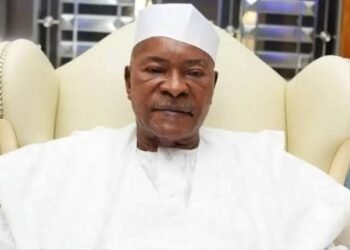




Nobel Laureate Prof. Wole Soyinka has called on President Bola Tinubu to urgently end extrajudicial killings and all forms of violence perpetrated by state actors, warning that Nigeria’s silence over such abuses continues to fuel impunity.
Soyinka made the appeal on Thursday during the 28th Wole Soyinka Lecture held in Port Harcourt, Rivers State, with the theme, “Reclaiming the Nigerian State through Accountability, Justice and Civic Courage.”
The literary icon dedicated this year’s lecture to victims of extrajudicial killings, describing the continued devaluation of human life as one of Nigeria’s greatest tragedies.

According to him, the country’s failure is not only the unlawful killings but also the collective silence that allows perpetrators to escape justice.
“Today is dedicated to the 18 Ughelli residents butchered by state agencies for no reason at all, simply for minding their own business; to the young man shot dead in broad daylight by a policeman while under suspicion; and to Deborah, the youth hunted through the city by her own classmates, necklaced and set ablaze,” Soyinka said.
He lamented that Nigerians often remain silent even when perpetrators openly admit to their crimes without facing consequences.
“The crime is the silence of the rest of us. The killers of that girl could even go on television, hold up a match and say, ‘This is the match with which I set her on fire.’ Yet the justice system failed us completely,” he added.
Soyinka dismissed accusations that speaking against such abuses amounted to promoting religious or ethnic divisions, insisting that defending human life should remain the country’s highest priority.
READ MORE: Atiku Criticises Tinubu’s Europe Vacation, Says Nigeria Needs Stronger Leadership
He urged Nigerians to remain vigilant and continue demanding justice, particularly in cases involving police brutality and unlawful killings.
Delivering the keynote address, former Minister of Aviation Chief Osita Chidoka argued that justice in Nigeria begins long before court proceedings, stressing that fairness starts with the conduct of law enforcement officers.
Chidoka expressed concern over the country’s criminal justice system, revealing that about 64 per cent of inmates in Nigerian custodial centres—more than 50,000 people—are awaiting trial despite not being convicted of any offence.
According to him, prolonged detention without trial amounts to state-inflicted violence that destroys lives and families.
He further maintained that justice must protect every citizen equally, regardless of political affiliation, social status or public opinion.
Earlier, former Managing Director of the Niger Delta Development Commission (NDDC), Chief Timi Alaibe, said accountability remains the foundation of sustainable development, stressing that no society can achieve lasting progress where justice is absent.