


President Bola Ahmed Tinubu on Monday opted not to meet personally with a special delegation from South Africa, sent by President Cyril Ramaphosa regarding the ongoing xenophobic attacks in South Africa targeting Nigerians and other African nationals. Instead, he directed them to meet with the Minister of State for Foreign Affairs, Ambassador Sola Enikanolaiye.

The South African delegation, led by Ronald Lamola, the Minister of International Relations and Cooperation, arrived in Abuja with a message from President Ramaphosa and sought to meet with President Tinubu. According to sources within the Presidency, the delegation was initially informed that meeting the President required prior approval. Although they were asked to return on Monday, Tinubu later indicated they would need to engage with the Minister of State for Foreign Affairs, who would then update him on their discussions.
This diplomatic move occurs amidst rising tensions between Nigeria and South Africa, following renewed violence against Nigerians and other African immigrants, resulting in fatalities, injuries, business destruction, and the evacuation of hundreds of Nigerians back home.
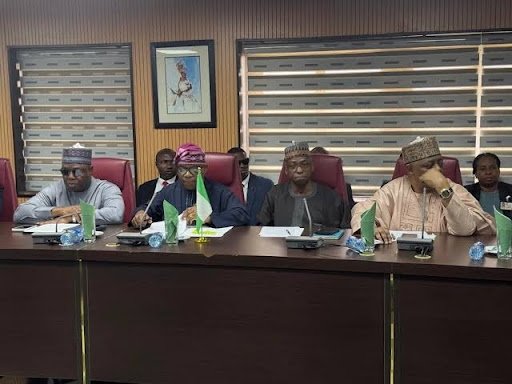
During the meeting in Abuja, Ambassador Enikanolaiye stated that President Tinubu is very concerned about the safety of Nigerians living in South Africa and has tasked the Foreign Affairs Ministry with working with the South African government to find a lasting solution to these recurrent attacks.
He termed the violence “Afrophobia,” highlighting that Nigerians have frequently been major victims of such attacks seen in 1995, 1998, 2006, 2015, 2016, 2019, 2021, 2024, and 2026. He noted that since 2022, 98 Nigerians have reportedly died in mob attacks and hate-related incidents, with many others suffering injuries, losing businesses, or needing to flee South Africa.
Enikanolaiye reminded that Nigeria played a significant role in supporting South Africa during its anti-apartheid struggle, making it particularly painful that Nigerians who supported this effort are now facing hostility. He emphasized that while Nigeria doesn’t tolerate criminal activities, individuals accused of crimes should be dealt with legally rather than through mob violence.
He also voiced concern over the apparent inability of South African security agencies to prevent attacks on African migrants, suggesting that such deficiencies raise questions about state responsibility in safeguarding foreign nationals.
The minister mentioned that Nigeria had previously evacuated nearly 1,500 citizens from South Africa after similar incidents, describing the humanitarian situation as deeply troubling.
Speaking for President Ramaphosa, Ronald Lamola stressed South Africa’s commitment to combat xenophobia, racism, discrimination, and all forms of intolerance. He reiterated that while the South African government condemns violence against foreign nationals, it also holds the responsibility to enforce its immigration laws and address criminal activities domestically.
Lamola pointed out that migration represents a continental challenge requiring robust cooperation among African governments. He expressed optimism that Nigeria and South Africa would continue collaborating to enhance bilateral relations and protect citizens in both countries.
Despite President Tinubu’s decision not to meet the delegation personally, officials from both nations viewed the ministerial-level discussions as a critical diplomatic step toward reducing tensions and dealing with the repeated attacks on Nigerians residing in South Africa.